Tokenized Equities Hit a New Record: Why DeFi Rails Are Moving Beyond Crypto Collateral
 Karim Daniels
Across a handful of regulated crypto venues in May, traders matched tokenized Apple and Tesla shares against stablecoins and closed in seconds—no correspondent bank in sight. The settlement clock didn’t blink.
At the same time, derivatives desks posted a record month for real‑world‑asset (RWA) perpetuals, while tokenized stocks quietly set a new all‑time high in circulating value. Liquidity is no longer just about ETH or wrapped BTC.
The rails of decentralized finance are widening, and they’re carrying securities that live far beyond crypto’s native assets.
Tokenized assets reached a new all‑time high market capitalization of $28.9 billion in May 2026, led by tokenized Treasuries at roughly $16.1 billion and a 20.4% jump in tokenized stocks to $2.41 billion, according to CoinDesk Research. Parallel to spot growth, RWA perpetual futures volumes hit a record $211 billion in May, with equity perps alone up 121% to $54.0 billion that month, the same report shows.
DeFi is relocating its collateral base—away from exclusively endogenous crypto and toward exogenous assets that banks, auditors, and risk officers already understand.
Why now? Three forces are converging: stable, programmable dollars; maturing compliance rails; and institutional demand for assets with established cash flows or rights. The transition affects exchanges, broker‑dealers, asset managers, DeFi protocols, and market makers who arbitrage between centralized and on‑chain venues.
From Crypto‑Collateral to Real Assets: The Shift Underway
Early DeFi was built on crypto‑native collateral: ETH, governance tokens, and later, staked derivatives. That stack enabled composability but amplified reflexivity—when token prices fell, collateral quality and liquidity fell with them. For institutions with mandates around drawdowns and duration, that combination was a non‑starter.
Why real assets now clear the bar
Tokenized Treasuries bring transparent yield curves and regulatory familiarity. In May 2026, they made up the largest bucket of tokenized assets—about $16.1B—per CoinDesk Research. As technical plumbing (whitelisting, transfer agency, attestations) improves, the same logic extends to equities: predictable corporate actions, established disclosures, and robust hedging markets.
Implications for protocol design
With less volatile, income‑bearing or rights‑bearing assets in the mix, credit modules can tighten haircuts, treasurers can better match liabilities, and structured products teams can build exposures that reference both on‑chain and off‑chain risk factors. It’s a shift from speculative leverage to balance‑sheet efficiency.
How Tokenized Equities Actually Trade On‑Chain
Tokenized equities boil down to regulated issuance and compliant secondary trading, stitched to on‑chain settlement. The specifics differ by venue, but the flow typically looks like this:
- Issuance: A transfer agent or regulated platform creates digital representations of shares on a permissioned network or a public chain with whitelist controls.
- Onboarding: Investors complete KYC/AML and—where relevant—accreditation; approved wallets are whitelisted to hold and transfer the security token.
- Order routing: Orders are placed either on a regulated alternative trading system (ATS) or a compliant on‑chain venue. In May 2026, Securitize announced a collaboration with Jump Trading Group and Jupiter to enable fully on‑chain, regulated trading for tokenized equities, signaling how market‑making and DeFi interfaces can combine (Securitize / PR).
- Settlement: Delivery‑versus‑payment (DvP) completes atomically—securities for stablecoins in the same block—if the venue supports it. In May, Securitize gained expanded permissions allowing custody of tokenized securities and atomic on‑chain settlement against stablecoins, a first‑of‑its‑kind approval for a U.S. broker‑dealer (Securitize PR).
- Lifecycle events: Corporate actions (dividends, splits, votes) are processed by the issuer/agent and reflected on‑chain, with entitlements mapped to whitelisted holders.
Atomic settlement and DvP
Atomic DvP compresses settlement risk: if either leg fails, the entire trade reverts. That contrasts with legacy T+2, which exposes participants to counterparty and intermediary risk. When combined with programmable stablecoins, collateral can be reused quickly across strategies—subject to compliance constraints.
Liquidity, price discovery, and perps
Not all tokenized equities enjoy deep spot liquidity yet. That’s where market makers and derivatives come in. The surge in equity perpetuals—up 121% to $54.0B in May 2026—suggests speculators and hedgers are bootstrapping price discovery alongside spot tokens (CoinDesk Research). As regulated ATS venues interface with DeFi front‑ends, spreads can tighten and funding bases diversify.
Signals From 2026: Volumes, Launches, and Permissions
Three developments in Q2 2026 capture where tokenized equities sit on the adoption curve:
1) Records across spot and derivatives
Tokenized assets hit $28.9B in May; tokenized stocks reached $2.41B after a 20.4% monthly jump; RWA perps set a $211B volume record with equity perps at $54.0B for the month. Together, those prints point to parallel tracks: regulated spot growth plus speculative and hedging activity via perps (CoinDesk Research).
2) Regulated trading goes fully on‑chain
Securitize’s tie‑up with Jump Trading Group (liquidity) and Jupiter (retail‑friendly interface) shows how capital and UX from crypto markets are meeting securities‑law plumbing (Securitize / PR).
3) Permissions for custody and atomic DvP
The expanded FINRA permissions for Securitize Markets LLC—explicitly allowing custody of tokenized securities and atomic on‑chain DvP versus stablecoins—are noteworthy because custody, control, and settlement are the crux of securities regulation (Securitize PR).
Policy still sorting itself out
In late May, reports indicated the U.S. SEC delayed publication of a proposed “innovation exemption” for tokenized stocks amid concerns about synthetic tokens and enforcement of shareholder rights on chain (Cointelegraph). The signal: regulated pathways are emerging, but policy will prioritize investor protections and clarity on what constitutes a “real” share versus a derivative representation.
Why DeFi Wants Dollars, Bonds, and Stocks
Balance‑sheet efficiency over reflexive leverage
Stablecoin collateral and tokenized Treasuries reduce mark‑to‑market swings. Equities add upside with established disclosures and corporate actions. For lending protocols and market‑neutral funds, these instruments can improve haircuts and duration matching.
Broader user base and new distribution
Wealth managers and corporate treasurers recognize familiar assets, even if they sit in a qualified custodian tied to a blockchain address. That opens distribution beyond crypto‑native users, provided the onboarding process stays smooth.
More ways to hedge and structure risk
With equities and bonds on chain, structured products can reference cross‑asset baskets, and derivatives desks can hedge on centralized or decentralized venues, using perps, options, or basis trades. The recent jump in RWA perps suggests those hedging circuits are forming.
Market Designs: Which Rails and Venues Are Winning?
There is no single “right” architecture. Instead, venues arrange tradeoffs among compliance, composability, and liquidity. Here’s a snapshot of common patterns:
| Design pattern | Where the asset lives | Liquidity path | Pros | Trade‑offs |
|---|---|---|---|---|
| Regulated platform + permissioned L2 | Security recorded by transfer agent on a controlled ledger | ATS order books; whitelisted on‑chain transfers | Strong compliance, clean cap table, atomic DvP possible | Restricted access, limited open composability |
| Public chain token with whitelist | ERC‑20‑like security token with transfer controls | Bridged to compliant venues; selective DEX liquidity | Programmability, potential DeFi integrations | Investor‑eligibility checks add friction; regulatory scrutiny |
| Off‑chain register + on‑chain cash leg | Official register off‑chain; settlement represented on chain | Custodian nets trades; stablecoins for payment | Minimal change to capital markets ops; faster cash cycles | Less transparent on‑chain ownership; slower composability |
Compliance and identity are the bridge
Wallet‑level KYC, transfer restrictions, and programmable investor tiers are the connective tissue between securities law and open networks. The design goal is to let value move programmatically while ensuring only eligible holders can receive it.
Interoperability without fragmentation
As more issuers tokenise, cross‑chain mobility must avoid splintering liquidity. Standards around attestations, chain‑agnostic identity, and messaging can keep settlement fast while limiting bridge risk.
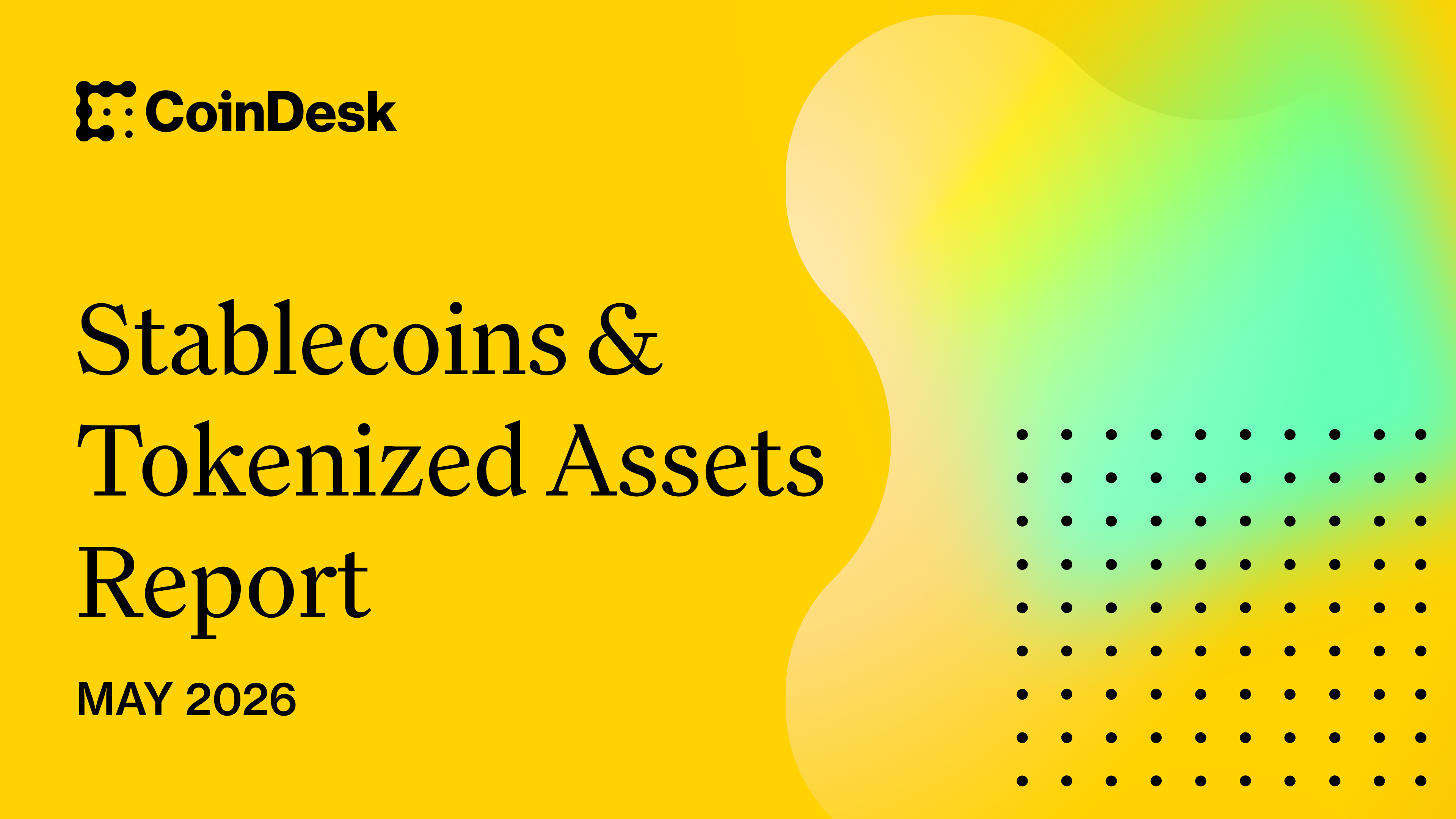
Cover graphic from CoinDesk’s May 2026 Stablecoins & Tokenized Assets Report — the report contains the data visualizations showing the $28.9B tokenized‑assets total and the $2.41B tokenized‑stocks milestone, making it a direct visual pointer to the figures cited. — Source: CoinDesk Research
What to Watch Next: Catalysts and Constraints
Tokenized equities could expand along several fronts, but timing depends on policy, plumbing, and demand:
Catalysts on the horizon
- Broader broker‑dealer adoption of atomic DvP and stablecoin settlement, reducing fails and freeing collateral faster.
- Integration of tokenized equities into portfolio management tools and risk engines, enabling mandate‑compliant exposure with wallet custody.
- Growth in on‑chain credit that accepts regulated RWAs as collateral, tightening spreads and enabling longer‑dated financing.
- Hedging depth: deeper perps and options tied to tokenized underlyings can reduce basis risk and attract arb capital.
Constraints that may slow the curve
- Regulatory clarity on shareholder rights, beneficial ownership, and cross‑border transfers, especially in the U.S. after the SEC’s delayed “innovation exemption” discussion (Cointelegraph).
- Operational readiness at custodians and transfer agents to process corporate actions on chain and reconcile across ledgers.
- Standardization of identity and compliance proofs that work across multiple chains and venues without exposing sensitive data.
Risks & What Could Go Wrong
- Regulatory mismatch: Tokens that mirror equities synthetically may be treated as unregistered securities; holders could face rescission risk or trading halts.
- Custody and key risk: Losing access to a whitelisted wallet can complicate entitlement claims; recovery workflows remain uneven across venues.
- Smart‑contract and oracle risk: Bugs or manipulated data feeds could misroute corporate actions or misprice collateral, triggering liquidations.
- Liquidity fragmentation: Multiple chains and permissioning models can split order flow, widen spreads, and reduce price discovery quality.
- Settlement dependencies: If stablecoins used for DvP face banking or regulatory interruptions, settlement could pause even if trading continues.
- Counterparty concentration: Reliance on a small set of regulated platforms or market makers can concentrate operational and liquidity risk.
Tokenized does not mean risk‑free—investors should validate the legal claim, the settlement mechanics, and who controls the register before sizing exposure.
Nothing in this article is investment advice. Assess legal, market, and operational risks carefully and consider independent counsel.
For ongoing coverage of tokenization, regulation, and on‑chain market structure, you can follow analysis and news from Crypto Daily, which tracks both protocol launches and policy updates shaping these rails.
Frequently Asked Questions
What exactly are tokenized equities?
They are regulated digital representations of company shares recorded on a blockchain or controlled ledger. A transfer agent or authorized issuer maintains the cap table, while whitelisted wallets hold and transfer the tokens under applicable securities laws.
How are tokenized equities different from synthetic stock tokens?
Tokenized equities are intended to represent direct, regulated ownership interests with corporate rights administered by an issuer/agent. Synthetic tokens only track price via derivatives or baskets and typically do not convey voting or dividend rights, which can create legal and market risks if misrepresented.
Do holders get voting and dividend rights on chain?
Often yes, but it depends on the issuer’s structure and jurisdiction. Rights may be exercised through on‑chain attestations or off‑chain processes tied to whitelisted addresses. Always check offering documents to confirm how entitlements are handled.
Can U.S. retail investors trade tokenized stocks today?
Access depends on the venue and exemptions used. Some platforms limit participation to accredited or institutional investors; others operate in specific jurisdictions. The U.S. policy picture remains in flux after reports that the SEC delayed an “innovation exemption” for tokenized stocks.
What is atomic DvP and why does it matter?
Atomic delivery‑versus‑payment settles securities and cash simultaneously on chain—either both legs clear or neither does. This reduces settlement risk versus T+2 systems and can release collateral faster for reuse.
How do equity perpetuals relate to tokenized stocks?
Equity perps are derivatives that reference stock prices and trade 24/7. Their record volumes in May 2026 suggest growing hedging and speculation around on‑chain equity exposure. They don’t represent ownership, but they can help liquidity providers manage risk.
How are taxes and accounting handled?
Generally, the same rules that apply to traditional securities apply to their tokenized forms. However, wallet‑based custody, cross‑border transfers, and on‑chain events can complicate reporting. Work with tax and accounting professionals familiar with digital assets and security tokens.
Disclaimer: This article is provided for informational purposes only. It is not offered or intended to be used as legal, tax, investment, financial, or other advice.
Related Stories