Aha is portrayed as a knowledge-based Q&A platform where users can seek answers from specialists in various domains. It's suggested that by asking questions, providing responses, and engaging in content curation, users can earn digital assets, potentially generating additional revenue. Aha also claims to address issues like intrusive advertising and promotional content.
It serves an informational purpose only and should not be interpreted as legal, tax, investment, financial, or similar advice. Investing in cryptocurrencies carries risks, including the possibility of loss of principal.
What is AhaToken?
AhaToken (AHT) is the core of Aha's reward system, merging blockchain technology with a knowledge-sharing platform. Participants can earn AHT by asking and answering questions and curating content, promoting activity within the network. This decentralized model encourages contributions while ensuring the credibility and quality of shared information.
On the Aha platform, AHT is utilized to incentivize meaningful involvement with experts from varied sectors. This system nurtures a collaborative space where knowledge is not only appreciated but also monetized. By tackling unwanted advertisements and promotional content, AhaToken enhances the user experience, leading to a more focused and effective community.
Beyond merely dispensing rewards, AHT is crucial in maintaining the platform's integrity. Users can spend their tokens within the ecosystem, fostering a self-sustaining cycle of knowledge exchange and digital asset growth. The use of blockchain provides transparency and security, essential for building user trust.
In this thriving knowledge economy, AhaToken empowers individuals to convert their knowledge into valuable digital assets, supporting both personal and community development.
What is the technology behind AhaToken?
AhaToken (AHT) operates on a blockchain developed to support a knowledge-based Q&A platform, where users can accumulate digital assets by participating in activities like asking questions, answering, and curating content. This decentralized utility token system aims to transform how blockchain technology is utilized and value is exchanged.
The blockchain that powers AhaToken uses a decentralized ledger system, ensuring that all transactions are verified across multiple nodes, making it challenging for malicious actors to alter the system. Altering any transaction would require agreement from the majority of nodes in the network, typically achieved through mechanisms like Proof of Stake (PoS) or Proof of Work (PoW), although AhaToken's specific method isn't specified.
Security is paramount for AhaToken's blockchain. By distributing the ledger across many nodes, it reduces the risk of single points of failure. Cryptographic techniques also secure transactions, ensuring only authorized parties can initiate and verify transactions, preventing double-spending and other fraudulent activities.
The platform also tackles issues like intrusive advertising and promotional content, common on traditional Q&A platforms. By using blockchain, AhaToken makes content curation transparent and ensures fair user rewards for their contributions, encouraging high-quality content and fostering a trustworthy knowledge environment.
AhaToken's decentralized blockchain supports the concept of yield generation. Users can earn AHT through participation, whether in content creation, curation, or other activities, not only providing financial incentives but also promoting active community engagement.
Regarding scalability, AhaToken's blockchain is designed to handle a high volume of transactions efficiently, vital for supporting a global user base, ensuring fast transaction processing without significant delays. Scalability solutions, like sharding or layer-2 protocols, might be used to boost performance, although specific details aren't provided.
The technology includes mechanisms to prevent spam and abuse, requiring users to stake AHT or other resources to engage with the platform, deterring malicious activity. This staking requirement acts as a barrier, as bad actors risk losing their staked assets if engaged in harmful behavior.
Furthermore, AhaToken's blockchain supports smart contracts, self-executing contracts with terms directly coded, enabling automated and trustless transactions, reducing intermediary need, and enhancing platform efficiency. These contracts manage user rewards, content curation, and other platform activities.
By integrating decentralized ledger systems, cryptographic security, and smart contracts, AhaToken creates a robust ecosystem that empowers users to share knowledge and earn rewards securely and transparently.
What are the real-world applications of AhaToken?
AhaToken (AHT) is designed to enrich the Aha knowledge Q&A platform experience, enabling users to ask questions and receive expert answers. A key real-world use of AhaToken is as a reward system, allowing users to earn AHT by engaging in activities like posting questions, supplying answers, and curating content, thus promoting high-quality contributions and active community involvement.
AhaToken is also utilized for accessing premium platform features. Users can spend AHT to receive answers from top-rated experts, ensuring they get reliable and valuable information, thereby linking the token directly to the quality of knowledge shared and improving the overall user experience.
Moreover, AhaToken offers passive income opportunities through staking. Users can stake AHT to earn rewards over time, contributing to the network's security and stability, which appeals to those seeking income generation without active involvement.
Additionally, AhaToken is integrated into decentralized finance (DeFi) applications, allowing users to leverage AHT for financial activities like lending, borrowing, and liquidity provision, thus extending its utility beyond the Aha platform and enabling interaction with the wider cryptocurrency ecosystem.
The token is also applicable in transactions and donations. Users can use AHT for peer-to-peer transactions within the community or donate tokens to support particular causes or projects, increasing the token's appeal and usability in various contexts.
AhaToken aims to combat unwanted advertising and promotional content by creating a more transparent and user-driven platform. By rewarding authentic contributions and penalizing abusive activities, AHT helps maintain the integrity and quality of shared information on the Aha platform.
What key events have there been for AhaToken?
AhaToken (AHT) plays a crucial role in the Aha platform, enabling users to earn digital assets by engaging in content curation activities like asking questions and providing answers. This platform strives to minimize unwanted ads and PR content, enhancing the user experience.
A significant milestone for AhaToken was its launch as the platform's native cryptocurrency, allowing users to earn AHT by interacting within the ecosystem. This encouraged quality contributions and nurtured a strong knowledge-sharing community.
In 2020, AhaToken underwent important policy adjustments that affected its use and distribution. These changes were made to boost user engagement and ensure fair token distribution among active participants, part of a larger strategy to refine the reward system and enhance the user experience.
Another notable development was a series of membership promotions initiated by AhaToken. These promotions aimed to draw new users and increase activity among existing ones. By offering extra incentives in AHT, the platform effectively increased user participation and expanded its community.
The Aha platform also implemented various system updates, including user interface enhancements and the introduction of new features, which were crucial in maintaining competitiveness and meeting evolving user needs. These improvements made the platform more accessible and engaging, increasing its overall value.
Recently, AhaToken has gained popularity, with its price seeing significant rises. This spike in interest is due to the platform's ongoing innovation efforts and value provision to its users. AhaToken's growing recognition in the crypto market has solidified its status as a valuable asset within the Aha platform.
Despite these advancements, specific details about certain events, like exact dates and the full extent of policy changes, are not readily available. However, AhaToken's general trajectory reflects a consistent effort to enhance its utility and cultivate a vibrant community of knowledge contributors.
The platform's mission to offer a reliable and rewarding Q&A service, along with the strategic use of AhaToken, highlights its commitment to developing a sustainable and engaging ecosystem. As the platform continues to evolve, AhaToken remains central in driving user involvement and enabling decentralized knowledge exchange.
Who are the founders of AhaToken?
AhaToken (AHT) is a digital asset that integrates with the Aha platform, a knowledge Q&A service where users earn tokens by participating in content curation activities. Despite its innovative approach to rewarding user engagement and tackling issues like intrusive advertising, information about the founders of AhaToken is not publicly available. There are no details regarding their backgrounds, roles in the creation of the cryptocurrency, other projects, public perception, or any controversies.
S&P 500 Futures Today: $110 Oil and Netflix Earnings Put AI Rebound to the Test
S&P 500 futures edged up less than 0.1% to 7,735.25 as Brent crude reached $110.75 a barrel and Netflix prepared to report Q3 results.
cryptodaily.co.uk/2026/10/sp-500…
Turkey Confirms Richard Heart Detention and Seizure of Cash, Cold Wallets and Firearms
Turkey confirmed Richard Heart’s Istanbul detention under an Interpol Red Notice, reporting $7.15 million, six cold wallets and weapons seized.
cryptodaily.co.uk/2026/10/turkey…
Circle Targets Expansion Into 40 Emerging Markets as USDC Demand Broadens
Circle is targeting about 40 emerging markets as its Tazapay deal and renewed Binance agreement broaden $USDC distribution routes.
cryptodaily.co.uk/2026/10/circle…
Bitcoin Back in Bullish Structure, but Overbought Conditions and Firm Resistance Weigh on Price
The bulls have managed to avoid a Bitcoin breakdown out of a rising channel pattern with a 4.2% rally. However, now that the $BTC price is back inside the rising channel can it stay
Nine US Companies Object to Tokenized Share Trading on OKXICE
Nine issuers, including Broadcom and Verizon, objected to OKXICE tokenized-share trading under the SEC’s temporary venue-specific framework.
cryptodaily.co.uk/2026/10/nine-i…
World Launches Bank-Focused World ID Suite and Makes Zoom Deepfake Checks Generally Available
World unveiled a banking and finance identity suite at Money20/20, while World ID for Zoom became globally available to enterprise customers.
cryptodaily.co.uk/2026/10/world-…
Marqeta and Coinbase Partner on Stablecoin-Backed Cards With Base Settlement
Marqeta and Coinbase will combine custody, fiat conversion, Base settlement and card issuing for enterprise stablecoin-backed card programs.
cryptodaily.co.uk/2026/10/marqet…
Crypto.com and Novig Sue Missouri Over Sports Event-Contract Enforcement
Crypto.com-linked North American Derivatives Exchange and Novig filed separate federal cases challenging Missouri sports-contract enforcement.
cryptodaily.co.uk/2026/10/crypto…
Cysic Suspends Bridge After Unauthorized CYS Mint Lets Attacker Move $727K to Ethereum
Cysic suspended its cross-chain bridge after 10 million unauthorized CYS were minted and about $727,000 in $ETH reached Ethereum.
cryptodaily.co.uk/2026/10/cysic-…
Venice Token VVV Rebounds Above $24 After a Volatile Week — What Comes Next?
Venice Token $VVV traded near $24.86 after a 10.83% daily rise. Key support at $23.3712 and resistance at $25.6408 now shape the outlook.
cryptodaily.co.uk/2026/10/venice…
Bitcoin holds on: Breakdown not confirmed - Is the rally back on?
Despite the sell-off in the AI and precious metals sectors due to poor U.S. inflation data, Bitcoin came back from the brink on Thursday, having broken down below its ascending channel. The bulls rallied back
LayerZero Reclaims $2: The ZRO Technical Setup Behind a Possible $2.30 Retest
LayerZero’s $ZRO trades near $2.10 with bullish RSI readings, but resistance at $2.1538 and an October 20 token unlock shape its $2.30 outlook.
cryptodaily.co.uk/2026/10/layerz…
Federated Hermes Partners With Prometheum to Issue Tokenized Securities Funds
Federated Hermes and Prometheum plan tokenized securities funds for brokerage accounts, with the first product expected in Q1 2027.
cryptodaily.co.uk/2026/10/federa…
Coinbase Publishes Its Case for a Phased Bitcoin Post-Quantum Migration
Coinbase says Bitcoin’s post-quantum transition could take seven years, putting governance over exposed and abandoned $BTC at the centre of planning.
cryptodaily.co.uk/2026/10/coinba…
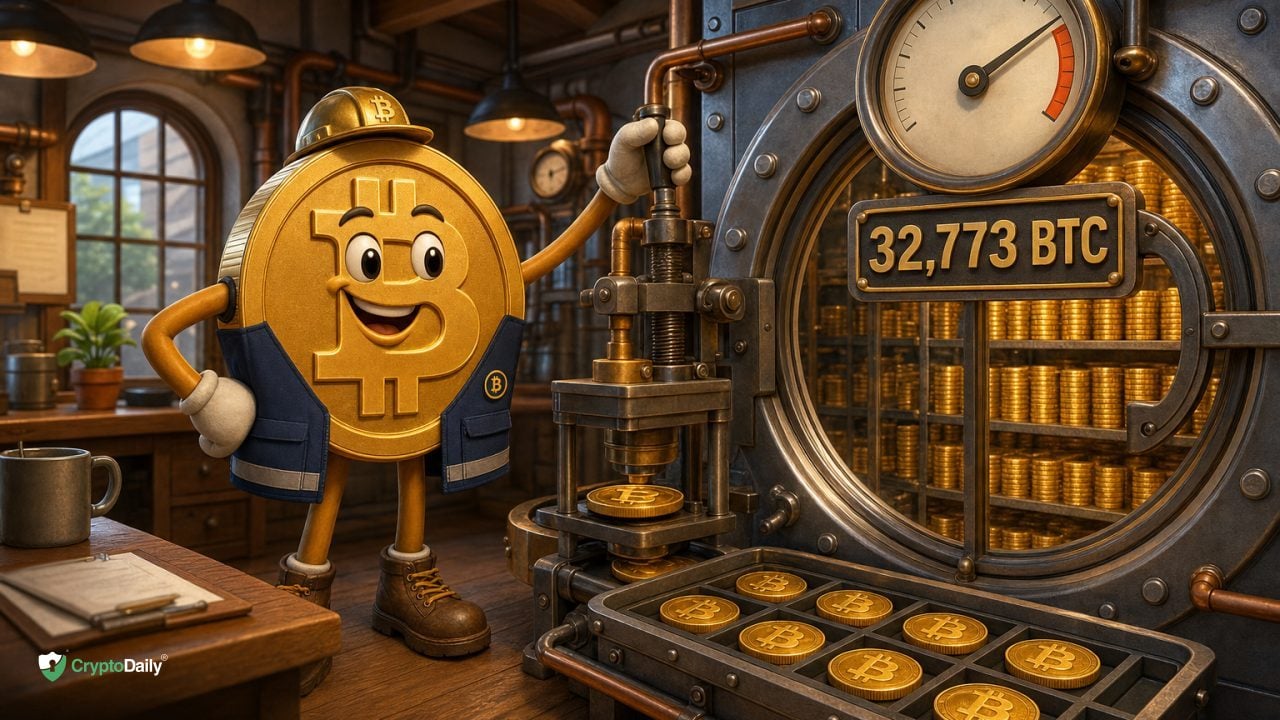
Strive Adds 3,311 Bitcoin as Its Treasury Reaches 32,773 BTC
Strive bought 3,311 $BTC for about $280 million between October 5 and 9, raising its treasury to 32,773 BTC as cash reached $310.3 million.
cryptodaily.co.uk/2026/10/strive…
UK High Court Says Chinese Law Governs Claims to 61,000 Seized Bitcoin
UK High Court ruled Chinese law governs property claims over more than 61,000 seized bitcoin, leaving ownership and distribution unresolved.
cryptodaily.co.uk/2026/10/uk-hig…
Bitcoin breaks down as stocks slide on inflation data
US price increases went from an annual rate of 3.4% in August, to 3.7% in September, dealing a blow to the U.S. stock market and pushing Bitcoin into a potential breakdown. With the S&P 500 facing a further fall at the open
Blur Will Close Its Frontend and Stop New Blend Loans in November
Blur will deprecate its blur.io frontend on November 12 and halt new Blend loan matching, while its marketplace protocol remains on-chain.
cryptodaily.co.uk/2026/10/blur-f…
Metaplanet Issues Zero-Coupon Convertible Bonds as It Refinances Bitcoin-Backed Debt
Metaplanet is issuing ¥52 billion in zero-coupon convertibles to repay Bitcoin-backed debt and fund buybacks, shifting risk to dilution and refinancing.
cryptodaily.co.uk/2026/10/metapl…