TRON’s Quantum-Resistant Testnet: Why TRX Is Selling Security While Bitcoin Bleeds
 Elliot Veynor
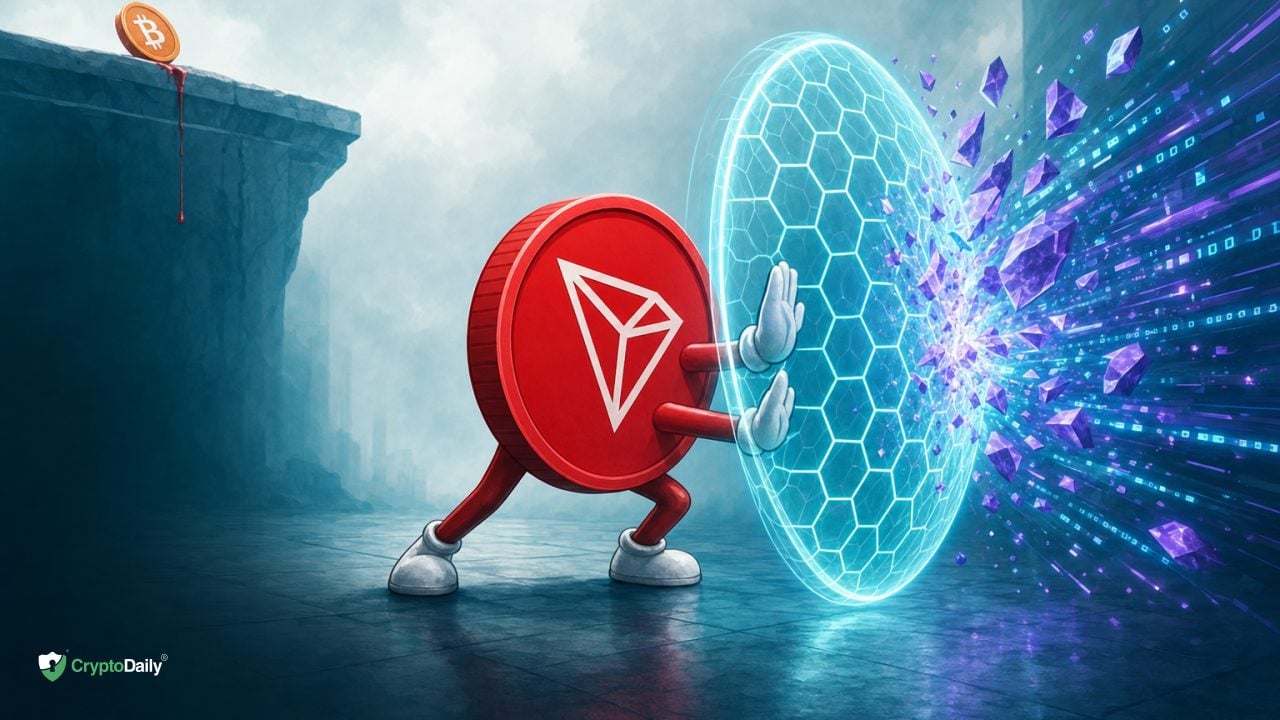
TRON is leaning into a different story right now: don’t chase memes, buy security. The pitch is a quantum-resistant testnet. While Bitcoin chops lower and sentiment looks tired, TRX is trying to sell a future where your keys still hold up when the cryptography goalposts move.
Is the quantum threat around the corner? No one can say for sure. But the framing is clever. If the market’s bleeding, remind people what really matters when the music stops: ownership that survives the next wave of computing.
Let’s unpack what “quantum-resistant on TRON” could actually mean, the trade-offs it implies, and how it stacks up against Bitcoin’s current mood.
| Point | Details |
|---|---|
| What TRON is testing | A testnet focused on post-quantum signature schemes and potential hybrid key models to harden accounts against future quantum attacks. |
| Why now | Security narrative cuts through while Bitcoin sells off; positions TRX as a chain planning ahead rather than chasing short-term pumps. |
| How it could work | Optional PQ wallets, hybrid signatures (classical + PQ), test contracts, and validator/RPC changes to accept new signature types. |
| Main risks | Implementation bugs, UX friction, larger signatures impacting fees, limited wallet support, and unproven assumptions about attacker timelines. |
| Who should care | Custodians, exchanges, power users with long-dated cold storage, and devs eyeing account formats that can migrate without breaking apps. |
| What to watch | Open repos, audits, wallet integrations, exchange custody pilots, and whether mainnet paths are opt-in or enforced. |
What “quantum-resistant” means on TRON, in plain English
Most crypto networks today, TRON included, rely on ECDSA over secp256k1 for signatures. That’s the same class of math Bitcoin uses. In a world with a sufficiently powerful, error-corrected quantum computer, Shor’s algorithm could theoretically break that signature scheme, revealing private keys from public keys. No, that machine doesn’t exist at consumer scale today. But the concern is real, and long-dated assets don’t get to wait until the last minute.
NIST has already selected post-quantum standards for public-key operations, including CRYSTALS-Dilithium and Falcon for signatures, and CRYSTALS-Kyber for key establishment. You can browse the work and rationale straight from the source at NIST’s PQC project page (NIST).
So when TRON talks about a quantum-resistant testnet, think of it like a sandbox to try out these modern signature systems on-chain. That might look like new transaction types, new account formats, or a hybrid approach where you sign with both classical and post-quantum keys until the industry is confident enough to flip fully to the new stuff.
If you want the baseline on TRON’s current cryptography, its developer stack documents ECDSA usage similar to Ethereum’s model (TRON Dev Docs). A quantum-ready path would sit on top of (or eventually replace) that.
Under the hood: how a PQ testnet could work
Signature options on the menu
For signatures, the realistic short list is Dilithium, Falcon, and SPHINCS+. Each has trade-offs in key size, signature size, speed, and implementation complexity. NIST’s selections reflect different balance points. If you’re a developer, you’re not just picking speed. You’re picking what your users can carry in a wallet, what an RPC can verify at scale, and what can be implemented safely without footguns.
Background reading, if you want to go deep on the standardization: NIST Selected Algorithms.
Hybrid rollouts so nothing breaks overnight
The cleaner path for a live chain is a hybrid approach. An account or transaction includes a classical ECDSA signature plus a PQ signature. Nodes accept both, wallets guide users through a one-time upgrade, and funds move to addresses that can be validated under either scheme. If something goes wrong with the PQ implementation early on, you still have the classical side as a safety net while you iterate.
What validators and RPCs need
To support PQ signatures, nodes need to validate new cryptographic primitives and carry the overhead of larger signatures. RPCs need endpoints that can accept and relay the new transaction formats. Explorers need to display them intelligibly. You don’t want users staring at blob-like hex and guessing.
Pro tip: if you’re testing anything PQ-related, confirm your toolchain is consistent end-to-end. Same address format in wallet, in SDK, and in explorer. If one link in the chain assumes ECDSA-only, you’ll burn hours on phantom bugs.
Why sell security when Bitcoin bleeds
When Bitcoin is sliding, alt L1s usually go quiet or pivot to memes to soak up attention. TRON’s angle is different: anchor the conversation around longevity. “While the market chops, we’re making sure your keys will still verify in 2030.” That resonates with institutions, custodians, and anyone running vault-like cold storage. It also stands out in a feed full of short-term noise.
It helps that the broader policy world is already moving. Government and industry bodies have transition guidance to start migrating critical systems to post-quantum cryptography over the next few years. NIST continues to publish migration materials for operators planning rollouts (NIST Migration). That doesn’t mean your seed phrase melts tomorrow. It means serious players need roadmaps now.
Meanwhile, Bitcoin’s current pain points are familiar: risk-off flows, miner economics in flux after halvings, and ETF-driven rotations that can starve liquidity elsewhere. If your brand can’t win the price war, win the narrative about being here when the dust settles. TRON is trying exactly that.
Trade-offs: fees, speeds, and UX
There’s no free lunch. Post-quantum signatures tend to be larger than ECDSA. Larger payloads can mean higher fees and fatter blocks if you’re not careful. Verification cost also changes, which can nudge throughput. You can offset some of this with engineering tricks, but the UX tax is real at first.
Here’s how to think about the main signature families at a high level:
- Dilithium: balanced and well-supported in the standards process. Larger signatures, decent performance, simpler implementation than some lattice cousins.
- Falcon: compact signatures and fast verification, but trickier to implement correctly. More footguns for wallet devs who aren’t careful.
- SPHINCS+: stateless hash-based signatures. Conservative design, but signatures can be much larger and slower for common use.
Developers on TRON would have to weigh:
- Contract compatibility. Does the VM or precompile set support your verification function without kludges?
- Gas economics. How are fees metered for verify ops and larger calldata?
- Wallet UX. Can a mobile wallet handle keygen and signing smoothly on-device, or do you need hardware support?
- Audits. New crypto primitives mean new edge cases. Rushing here is how you get weird signature malleability or key recovery bugs.
Rule of thumb: if an implementation choice looks a bit too clever, it probably is. Default to boring, well-reviewed code paths with wide scrutiny.
Migration paths and what users should do today
If you’re a regular TRX holder, you don’t have to do anything right now. A testnet is for experimentation and devs. But if you’re a power user, custodian, or builder, a short checklist helps.
- Read the docs and repos before you click anything. Look for plain-language migration guides, not just code snippets. If public repos aren’t open yet, wait.
- Test with burner keys first. New account formats and signature types have sharp edges. Don’t expose production funds.
- Track wallet support. If your main wallet can’t generate PQ keys or verify hybrid signatures, you’ll be stuck in read-only mode.
- Map your dependencies. SDKs, indexers, analytics, MPC custody, HSMs, cold storage devices — all of it needs to agree on formats.
- Plan the cutover. If you adopt hybrid signatures, set a policy for when to move to PQ-only. Write it down. Future you will thank you.
On the Bitcoin side, the dynamic is different. Bitcoin uses ECDSA today (Bitcoin.org). Any full migration to PQ signatures would likely require careful soft-fork engineering and, realistically, a multi-year social process. That’s not a ding; it’s the price of ossified money. But it does explain why smaller, more agile chains try to show progress sooner.
Red flags and risk checks before you trust a “quantum” label
- “Quantum-safe” without specifics. Which scheme? Which parameters? Link me to an audit or it didn’t happen.
- No hybrid path. If you’re forced to abandon ECDSA day one, you’re signing up for avoidable breakage.
- Closed repos. Security by press release is not security.
- No wallet or exchange integrations. If custody can’t adopt it, it’s a demo, not a solution.
- Benchmark theater. Microbenchmarks that ignore network overhead or calldata sizes are marketing, not engineering.
Pro tip: treat new crypto primitives like you’d treat a brand-new bridge: assume something’s off until independent reviewers get months of time with it.
Signals to track next, if you care about TRX
- Public testnet specs. Look for concrete parameters: algorithm choices, key and signature sizes, and how these map to transaction formats.
- Audits with teeth. Independent reviews from teams that specialize in cryptography, not just general smart contract audits.
- Wallet roadmap posts. Mobile and hardware support, MPC compatibility, and seed phrase handling for PQ keys.
- Major exchanges can safekeep PQ accounts on testnet, that’s a meaningful step.
- Gas and throughput measurements. Real, on-chain tests that include signature verification and data footprint.
- Upgrade path clarity. Is mainnet adoption opt-in? Will legacy ECDSA accounts stay valid indefinitely? Timelines matter.
One more sanity check: the quantum timeline is still debated. Some researchers think we’re decades away from a break that threatens widely used curves; others warn about harvest-now-decrypt-later risks where attackers store today’s ciphertexts and wait for tomorrow’s computers. NIST’s posture is to move deliberately now to avoid crunch-time panic later (NIST).
How this plays against Bitcoin sentiment
Bitcoin’s drawdowns tend to pull everything with them. Liquidity thins, risk appetite fades, and even good news gets ignored. That’s why security-focused messaging can hit differently: it isn’t trying to fight the tape. It’s signaling competence and long-term thinking while waiting for the next risk-on window.
If you’re a TRX holder, ask a few blunt questions:
- Is this testnet more than a press cycle? Code, docs, and integrations are the tell.
- Does it change who builds on TRON? Custodians, payment rails, and enterprise pilots should perk up if it’s real.
- What happens if Bitcoin rips again? Does the security narrative keep attention, or does it get drowned out by price action?
Security isn’t a quick trade. It’s a reason to stick around. If TRON can turn this into actual mainnet readiness without kneecapping UX, it’s a competitive edge that survives cycles.
Developer corners and integration notes
Contract-level considerations
If signature verification touches contracts, you’ll want efficient precompiles or native opcodes. Shifting verification into contracts without help will make gas bills ugly. If the plan is purely account-level verification by nodes, make sure tooling exposes clean APIs so dapps don’t need to reinvent the wheel.
Key management in the real world
MPC and HSM vendors need PQ-friendly curves and storage for larger keys. If you’re a custodian, test key generation ceremonies, backups, and recovery steps end-to-end. Don’t assume your current racks just swallow bigger keys without hiccups.
Interoperability
Bridges, sign-in standards, and message formats need upgrades too. If you use EIP-4361-style sign-in on TRON, how do you represent PQ signatures? Standards bodies are still catching up. Keep an eye on cross-ecosystem conversations.
What not to do when testing this
- Don’t migrate treasury funds first. Try tiny balances, automate checks, and run chaos tests.
- Don’t assume the UX is intuitive. Put non-crypto teammates in front of it. If they’re lost, your customers will be too.
- Don’t skip rollbacks. Have a playbook for moving assets back to classical-only addresses if needed.
- Don’t depend on single-wallet support. If only one wallet works, you’re one update away from downtime.
Bottom line on TRX right now
If the goal is to differentiate while Bitcoin is under pressure, a quantum-resistant testnet is a smart card to play. It aligns with policy momentum, talks directly to institutions, and gives builders a sandbox to get ready for what’s next. The weight will come from code, audits, and integrations — not headlines.
If you’re considering touching it, start with test keys, measure costs, and write down your migration plan. If you’re just watching the tape, add “PQ readiness” to the checklist you use to judge L1s. It won’t replace price action. It might explain it on the next bounce.
If you want a concise rolling view on this and everything else moving the market, Crypto Daily keeps tabs on both the tech and the tape. You can find the latest coverage at CryptoDaily.co.uk.
Frequently Asked Questions
Is quantum risk real for current crypto wallets?
Yes, in theory. Most chains use ECDSA, which a sufficiently powerful quantum computer could break. We’re not there yet, but long-term holders and institutions care because migration takes time.
What exactly is TRON testing?
A quantum-resistant testnet typically trials post-quantum signature schemes and new transaction formats, possibly in a hybrid setup alongside ECDSA. Look for concrete docs and repos before you assume production readiness.
Will fees go up with quantum-safe signatures?
They could. PQ signatures are usually bigger, which can increase data costs. Verification costs also change. The net effect depends on implementation and fee metering.
Do I need a new seed phrase for PQ wallets?
Maybe. Some implementations can derive PQ keys from the same mnemonic using new paths, while others may recommend separate backups. Wait for clear wallet guidance and never mix test and production keys.
How does this compare to Bitcoin’s roadmap?
Bitcoin prioritizes stability. A PQ transition would require broad consensus and careful engineering over years. TRON can iterate faster on a testnet and potentially offer opt-in features sooner.
Is hybrid (classical + PQ) safer than going all-in on PQ?
For migrations, hybrid is practical. It lets you keep classical verification as a backstop while PQ code matures. Long term, the goal is to lean fully into standardized PQ schemes once they’re battle-tested.
What should I check before moving funds to a PQ account?
Audit reports, wallet support, recovery steps, exchange compatibility, and fee impact. Start small, verify end-to-end, and have a rollback plan.
Disclaimer: This article is provided for informational purposes only. It is not offered or intended to be used as legal, tax, investment, financial, or other advice.
Related Stories