Bitcoin ETF Cost Basis Problem: Why 2025 Flow Buyers Are Now Under Pressure
 Darnell Whitaker
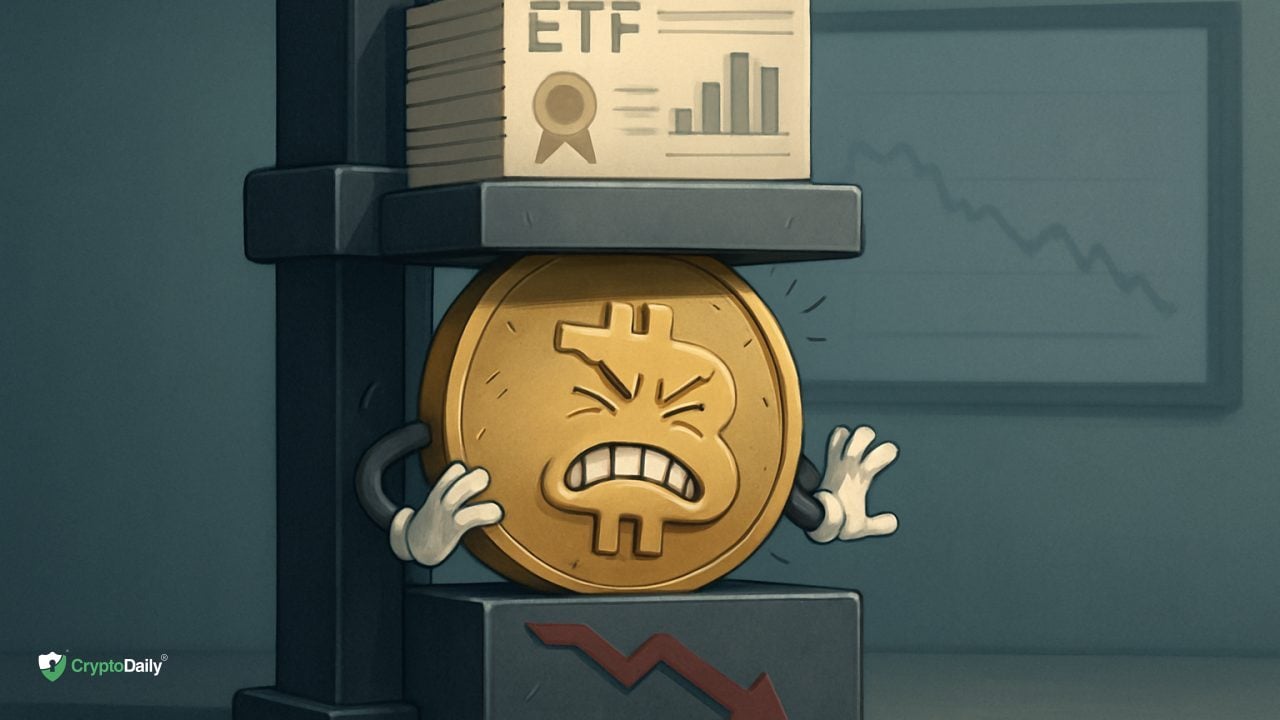
Bitcoin’s spot ETF era supercharged demand through 2025, but the same cohort that chased the rally is now wrestling with a cost-basis overhang. As price rallies into prior buying zones, breakeven sellers are meeting the bid, and ETF flows have cooled from a tailwind to a headwind.
U.S. spot Bitcoin ETFs posted a record ten-session outflow streak totaling $2.97 billion from May 15 to May 29, 2026, according to SoSoValue figures cited by CoinDesk. Meanwhile, on-chain cost basis analysis reported by The Block shows a thick band of investor supply clustered near roughly $86,900, intensifying breakeven pressure when price approaches that zone (The Block).
Add in an off-exchange block trade of ~29.2 million IBIT shares (~$1.29 billion) on May 26, followed by one of the fund’s largest single-day outflows the next session ($527.84 million on May 27), and you have a market digesting position transfers and redemptions at scale (CoinDesk).
Put simply: the 2025 flow buyers are now meeting a colder tape. Here’s how the cost-basis problem formed, why it matters for 2026, and what investors can practically track.
| Point | Details |
|---|---|
| Record ETF outflow streak | Ten straight sessions, $2.97B out between May 15–29, 2026, reducing AUM and weakening the ETF bid (CoinDesk). |
| Overhead cost-basis band | On-chain realized-price clusters from Nov–Feb sit near ~$86.9k, creating heavy breakeven supply when rallies test that zone (The Block). |
| IBIT block trade + redemptions | ~29.2M IBIT shares (~$1.29B) crossed in a dark pool on May 26, then $527.84M net outflow on May 27—one of IBIT’s largest daily redemptions (CoinDesk). |
| 2026 accumulation stall | Spot ETFs had absorbed only ~4,500 BTC YTD by late May; the month flipped into net distribution (CoinDesk reporting Swissblock). |
| Implication for 2025 buyers | Large cohorts now sit near breakeven, increasing sell-the-rip behavior and dampening trend strength until the band is absorbed. |
How the ETF Cost-Basis Turned Into a 2026 Headwind
Editor's note: The ten-session ETF outflow stretch was a tell — buyers weren’t absorbing, and breakeven supply kept reappearing. Several PMs I speak with rotated risk into AI leaders while using ETF blocks to tidy up Bitcoin exposure. The IBIT block followed by a large redemption fit that pattern. I’m focused less on one green flow print and more on whether discounts vanish as price re-approaches the band; that alignment, not headlines, would signal that the overhang is finally being chewed through. — Darnell Whitaker
Cost basis isn’t a single price; it’s a distribution. Through late 2024 and 2025, spot ETF demand pulled forward returns and concentrated entries during the ramp. By May 2026, that distribution mattered: The Block highlighted a substantial realized-price cluster near ~$86,900 for positions built from November through February (The Block).
When price rallies into a thick cost-basis band, sellers who want out at breakeven supply inventory. That supply doesn’t have to come from ETFs exclusively—funds, prop desks, and retail can all be participants—but ETFs amplified the cohort size, so the band is heavy.
As breakeven sellers emerge, the tape “trends less.” Failed breakouts are common, and rallies are sold earlier. That feedback loop is visible in May’s flows: $2.97B in net ETF outflows over ten sessions (CoinDesk) and a month that flipped to distribution after a year of stop‑start accumulation (CoinDesk reporting Swissblock).
Inside the Flows: How Creations, Redemptions, and Arbitrage Drive Pressure
Why ETFs can “pull” and “push” spot liquidity
Spot Bitcoin ETFs translate secondary market demand into primary creations and redemptions via authorized participants (APs). When shares trade at a premium to net asset value (NAV), APs can deliver cash or bitcoin to the trust in exchange for new shares, arbitraging the spread. When shares trade at a discount, they can redeem shares for cash or bitcoin, shrinking the fund. Both processes ripple into spot markets through the APs’ hedging and sourcing.
The cost-basis feedback
When large cohorts near breakeven sell ETF shares, secondary prices can slip toward a discount. That invites redemptions, which in turn pressure spot liquidity as APs unwind hedges or source cash/bitcoin to settle. The result is a negative flywheel that only stops when sellers exhaust or new buyers pay through the offer decisively.
What your screen won’t show
- Intraday prints do not equal primary creations/redemptions. Primary activity is netted at the end of day.
- Not all large blocks represent inflow or outflow—off-exchange transfers can simply move risk between holders before any primary action.
- NAV spreads can be tiny most days; watch persistence, not just a single wide print.
Pro tip: Track the daily net creations/redemptions from issuer reports alongside price. Persistent discounts during selloffs are more informative than one-off dislocations.
The IBIT Block Trade: Rotation, Not Just “Selling”
On May 26, roughly 29.2 million shares of BlackRock’s iShares Bitcoin Trust (IBIT) crossed in an off-exchange block, about $1.29 billion in value. The next day, IBIT logged $527.84 million in net outflows—one of its largest daily redemptions on record (CoinDesk).
What to make of that sequence?
- Ownership change first, redemption next: Dark-pool blocks can facilitate risk transfer between institutions without moving the lit tape. A following-day outflow suggests some of that risk exited the ETF complex via primary redemption.
- Not all blocks are bearish: A block can also represent a “hand-off” to stronger hands. The signal is what happens afterward—discounts, continued outflows, and price response.
- Context matters: The block landed amid a broader ten-session $2.97B outflow streak (CoinDesk), pointing to systemic, not idiosyncratic, pressure.
Where the Bid Went in 2026
Two things changed from the 2025 playbook:
- Flows slowed materially: By late May, U.S. spot ETFs had taken in only ~4,500 BTC year-to-date, with May turning net negative (CoinDesk reporting Swissblock).
- Overhead supply thickened: A cost-basis band near ~$86.9k created sell-the-rip dynamics as price rallied into prior ETF buying zones (The Block).
Through May, risk capital also rotated aggressively into AI-led equities, per market commentary accompanying the outflow reports (CoinDesk). Whether that persists is uncertain, but it helps explain why marginal bids for bitcoin weakened just as overhead supply thickened.
What to Track Next: Practical Flow and Tape Signals
1) Daily ETF net flows and AUM drift
- Watch for the transition from “less negative” to consistently positive prints over several sessions, not one green day.
- Accelerating outflows into lower prices are a caution signal for further distribution.
2) NAV premiums/discounts and volume migration
- Sustained discounts can precede primary redemptions and further spot pressure as APs unwind hedges.
- Rising on-exchange volumes at prior resistance can flag absorption of the cost-basis band—or another rejection.
3) Block trades and dark-pool prints
- Monitor for large off-exchange transfers followed by issuer-reported outflows; that pairing is stronger evidence of position exits.
- Isolate repetitive blocks in the same fund—can indicate a large holder rebalancing program.
4) On-chain realized price distributions
- Look for thinning supply near the ~$86.9k area cited by The Block; multiple attempts and higher lows can denote progress in “chewing through” the band.
5) Derivatives context
- Rising basis or positive funding during outflows can mean speculative longs are offsetting ETF selling—fragile if flows don’t turn.
- Conversely, depressed basis with stabilizing flows often marks late-stage liquidation.
Pro tip: Build a simple dashboard that overlays ETF net flow (daily), NAV discount, and price versus the overhead band. You want alignment—discounts narrowing and flows stabilizing as price re-approaches resistance.

Three Paths From Here—and How to Think About Them
Scenario A: Range below the band
Price oscillates under the ~$86.9k overhead supply. ETF flows stay choppy, flipping between small inflows and outflows. In this case, positioning patience matters: use limit orders, respect liquidity pockets, and avoid extrapolating one-off green prints into a trend.
Scenario B: Acceptance above the band
A strong breakout sees price build value above the prior cost-basis cluster. ETF flows turn net positive for multiple sessions, discounts vanish, and blocks trend toward transfers rather than redemptions. This scenario requires fresh marginal buyers—potentially from wealth platforms, treasury allocators, or global funds. It’s worth watching but not guaranteed.
Scenario C: Deeper drawdown and distribution
Persistent discounts, continued outflows, and failed retests could extend distribution. In such phases, defensive execution—smaller sizing, wider stops, and avoidance of illiquid hours—helps limit slippage. For long-only ETF holders, periodic rebalancing can control exposure without timing perfection.
Risk reminder: Bitcoin is volatile. ETFs concentrate operational, custody, and liquidity considerations alongside market risk. None of the above scenarios are assured.
A Practical Playbook for ETF Buyers Under Pressure
- Expense ratios and friction: Fee drag matters most in extended ranges. Compare total cost (expense ratio + trading spread + any platform fees) before swapping funds.
- Liquidity where you trade: Choose the fund with tight spreads and deep books at your broker or platform—not just the biggest by AUM.
- Order discipline: Use limit orders, especially into volatile opens and closes. Avoid market orders during thin liquidity windows.
- Tracking check: Glance at 1-, 5-, and 30-day tracking versus NAV and spot. Persistent underperformance may indicate execution or fee headwinds.
- Tax lens: Understand local capital-gains treatment for ETF share sales versus spot holdings; redemptions at the fund level don’t automatically pass through gains to you, but your own trades do carry tax implications.
- Custody preference: ETFs remove self-custody risk but add intermediary and policy risk. Decide deliberately which risks you prefer.
- Flow awareness: Alignment of positive flows, narrowing discounts, and strong breadth is a better signal than price alone.
Pro tip: If rotating between funds, compare their historical average spreads at the times you actually trade (e.g., 30 minutes after the open). Execution costs can outweigh a few basis points of fee savings.
Common Pitfalls in the Cost-Basis/Flow Narrative
- Assuming ETFs “are the market”: They’re a large slice of marginal demand, but not the whole picture. Derivatives and offshore spot still matter.
- Equating every block with bearish flow: Many blocks are internal crosses or rotations. Look for the follow-through in issuer flow data.
- Ignoring NAV behavior: A persistent discount tells you more about pressure than any single daily outflow number.
- Forgetting timeframes: A weekly trend can stay intact while daily flows chop violently. Match your decisions to your horizon.
- Overfitting on-chain levels: The ~$86.9k band is meaningful, but markets can overshoot, undershoot, or front-run it. Treat it as a zone, not a line.
For continued, level-headed coverage of flows, market structure, and ETF mechanics, Crypto Daily breaks down the signal from the noise at cryptodaily.co.uk.
Frequently Asked Questions
What does “ETF cost basis” actually mean in this context?
It refers to the price levels where large cohorts of buyers—many via spot ETFs in 2025 and early 2026—acquired exposure. When price revisits those levels, breakeven sellers can emerge, increasing supply. On-chain realized-price distributions and ETF flow behavior help infer where those cohorts sit.
How can a cost-basis band near ~$86.9k pressure price?
When price rallies toward a zone where many buyers are near breakeven, some opt to exit, turning into near-term supply. If that coincides with ETF share discounts and redemptions, the selling can cascade via AP hedging and spot sourcing, amplifying pressure. The ~$86.9k cluster was highlighted by The Block’s report in May 2026.
Do ETF redemptions always force selling of bitcoin on exchanges?
Not necessarily. The creation/redemption process can involve in-kind transfers or cash, and APs may already be hedged. However, persistent redemptions typically translate to some combination of selling pressure or reduced demand as hedges unwind.
What is the significance of the May 26 IBIT dark-pool block?
The ~29.2M-share (~$1.29B) off-exchange block showed a large risk transfer. The following day’s $527.84M outflow suggested part of that exposure exited the ETF complex. Alone, a block isn’t bearish; paired with ongoing discounts and outflows, it reinforced the distribution regime.
Why did ETF flows weaken in May 2026 after a strong 2025?
Multiple factors likely contributed: a heavy cost-basis overhang near prior highs, a rotation in broader markets, and simple exhaustion of marginal buyers. By late May, spot ETFs had absorbed only ~4,500 BTC year-to-date, and the month flipped net negative.
What signals would indicate the overhang is being absorbed?
Look for multi-session net inflows, vanishing NAV discounts, heavy-volume acceptance above the prior band, and reduced sensitivity to sell-the-rip headlines. If price revisits the zone and holds higher lows, that suggests supply is thinning.
How should long-term investors react to these flows?
Long-term holders often focus on periodic rebalancing, cost control (fees and spreads), and position sizing rather than short-term flow noise. Be mindful of volatility, smart-contract/custody risks, and taxes. Nothing is risk-free, and past ETF-led rallies don’t guarantee future performance.
Disclaimer: This article is provided for informational purposes only. It is not offered or intended to be used as legal, tax, investment, financial, or other advice.
Related Stories