Pendle is an innovative protocol that focuses on the tokenization and trading of future yield. By introducing a cutting-edge automated market maker (AMM) that accommodates assets with time-sensitive decay, Pendle empowers users with greater flexibility and possibilities for utilizing future yield.
What is Pendle?
Located in the decentralized finance (DeFi) sector, Pendle is a protocol dedicated to the forward-thinking concept of tokenizing and trading future yield. It offers a unique way to handle assets that generate yield by allowing the division of the underlying asset's ownership from its anticipated yield. This separation facilitates the creation of novel financial instruments available for trade on Pendle's platform.
At the heart of Pendle's offerings is an automated market maker (AMM) specifically crafted to handle assets that experience time decay—a critical feature for future yield tokens. This AMM is essential as it tackles the challenge of evaluating future yields, which can vary due to multiple factors such as market dynamics and the performance of the foundational asset.
Through future yield tokenization, Pendle gives liquidity providers and traders the option to either liquidate their future yield for immediate funds or speculate on the yield of diverse DeFi assets. This system introduces new strategies for optimizing yields and managing risks, enabling users to personalize their investment strategies according to their own financial objectives and risk preferences.
Pendle's emphasis on future yield tokenization and trading marks a noteworthy progression in the DeFi arena, providing users with inventive tools to enhance their earnings and manage risk in a decentralized setting. As is the case with any investment in cryptocurrencies and DeFi, individuals should conduct comprehensive research and consider their personal financial circumstances and risk appetite before engaging with these financial tools.
How is Pendle secured?
The security of Pendle is established through a layered approach, employing both proactive and reactive methods to protect its ecosystem. For starters, its security is fortified by thorough audits carried out by well-respected firms in the industry. These audits are vital for spotting vulnerabilities and ensuring that the smart contracts and base code meet the highest security standards.
In light of past challenges, such as a security breach, Pendle has greatly strengthened its security measures. The protocol has added extra layers of defense that exceed standard practices. These enhancements include improved operational security protocols, more rigorous code reviews, and continuous system monitoring to quickly identify and address potential threats.
Pendle's security commitment is further demonstrated through its emphasis on transparency and community involvement. By making its codebase available for review on platforms like GitHub, Pendle encourages community participation in its ongoing security improvement efforts. This open-source strategy fosters a collaborative atmosphere and allows continuous evaluation and enhancement of the protocol's security.
Pendle's innovative approach to future yield tokenization and trading, through its unique AMM designed for assets with time decay, highlights the necessity of strong security measures. Given the complexity and novelty of its offerings, ensuring the protection and safety of user funds is crucial.
As with any crypto investment, it’s important for individuals to conduct their own research and understand the associated risks. Pendle's dedication to security, shown through comprehensive audits, added safeguards, and transparent practices, is aimed at providing a secure environment for its users. Nevertheless, vigilance and informed choices remain essential for ecosystem participants.
How will Pendle be used?
Pendle serves as a groundbreaking protocol in the crypto ecosystem, concentrating on the tokenization and trading of future yield. This forward-thinking approach empowers users to manage and leverage future yield in a more adaptable and strategic way. Featuring a unique automated market maker (AMM) designed for assets with time decay, Pendle enhances efficiency and utility in managing yield-generating assets.
The primary use of Pendle revolves around staking within the protocol, which is crucial for securing the network and supporting various operations within the Pendle ecosystem. Through staking, participants help maintain the protocol’s stability and are rewarded in return, aligning their interests with the network’s well-being.
In addition to staking, Pendle is utilized in several important areas of DeFi, such as yield farming, governance, and liquidity provision. Yield farming with Pendle enables users to earn rewards by strategically managing their yield-bearing assets, maximizing their earning potential in a dynamic and shifting market.
For governance, holding Pendle allows users to take part in decision-making processes that shape the protocol’s development and future path, ensuring a decentralized and community-oriented governance model where users’ preferences and insights significantly impact the protocol’s evolution.
Providing liquidity is another vital aspect of Pendle. By adding to the liquidity pools within the Pendle ecosystem, users facilitate smoother transactions and trading of future yield tokens. This effort not only improves market liquidity and efficiency but also provides liquidity providers with the chance to earn transaction fees as a reward for their contributions.
As always, individuals should thoroughly research and consider their investment goals and risk tolerance before engaging with cryptocurrencies and protocols like Pendle. The DeFi space’s dynamic nature offers numerous opportunities and risks, making informed decision-making crucial for participants.
What key events have there been for Pendle?
Pendle has experienced several pivotal events that have shaped its journey and expansion within the crypto sphere. The protocol's creation laid the groundwork for its innovative approach to tokenizing and trading future yield, offering users a more adaptable way to manage and capitalize on future yield.
Following its launch, Pendle underwent extensive audits by respected firms to ensure the platform's security and reliability, mitigating potential vulnerabilities and building trust with the community.
A significant technical achievement for Pendle was the forking of repositories like Ethereum Improvement Proposals (EIPs) and Ethereum Request for Comments (ERCs). This involvement with the broader Ethereum ecosystem emphasizes Pendle's role in advancing blockchain technology standards.
Beyond foundational developments, Pendle has actively sought partnerships to broaden its ecosystem and enhance its impact. Collaborations with other projects and platforms have likely played a role in increasing its utility and adoption.
Pendle tokens have been listed on various exchanges, boosting their accessibility for users and investors. Such listings are crucial for improving liquidity and enabling broader participation in Pendle token trading.
The introduction of new pools has been another essential milestone, providing users with more options for yield generation and investment. These pools likely leverage Pendle's unique future yield tokenization approach, offering unique opportunities in the DeFi environment.
Pendle maintains an active and engaged community, issuing regular updates and announcements. This interaction is critical for cultivating a supportive ecosystem, collecting feedback, and promoting ongoing improvements.
Resources like whitepapers, social media channels, blockchain explorers, and news articles offer invaluable information for those interested in Pendle, aiding education and transparency essential for informed involvement in the crypto market.
Individuals should conduct their own research and consider their investment goals and risk tolerance when exploring opportunities in cryptocurrencies, including projects like Pendle.
JUST IN: @fomo is hosting Web3v3, a charity basketball tournament in New York City on November 4, bringing Web3 players together to compete for the title of best basketball hooper in Web3. 🏀
Player registrations are still open. Anyone in NYC interested in participating can https://t.co/JESRDAJFri
JUST IN: FOMO app introduces a new social feature that lets users discover the biggest and most profitable positions held by top traders.
You can now see how much they invested, their entry points, and how much profit they’ve made, all in one place. 👀
Explore the leaderboard https://t.co/janxrStXTk
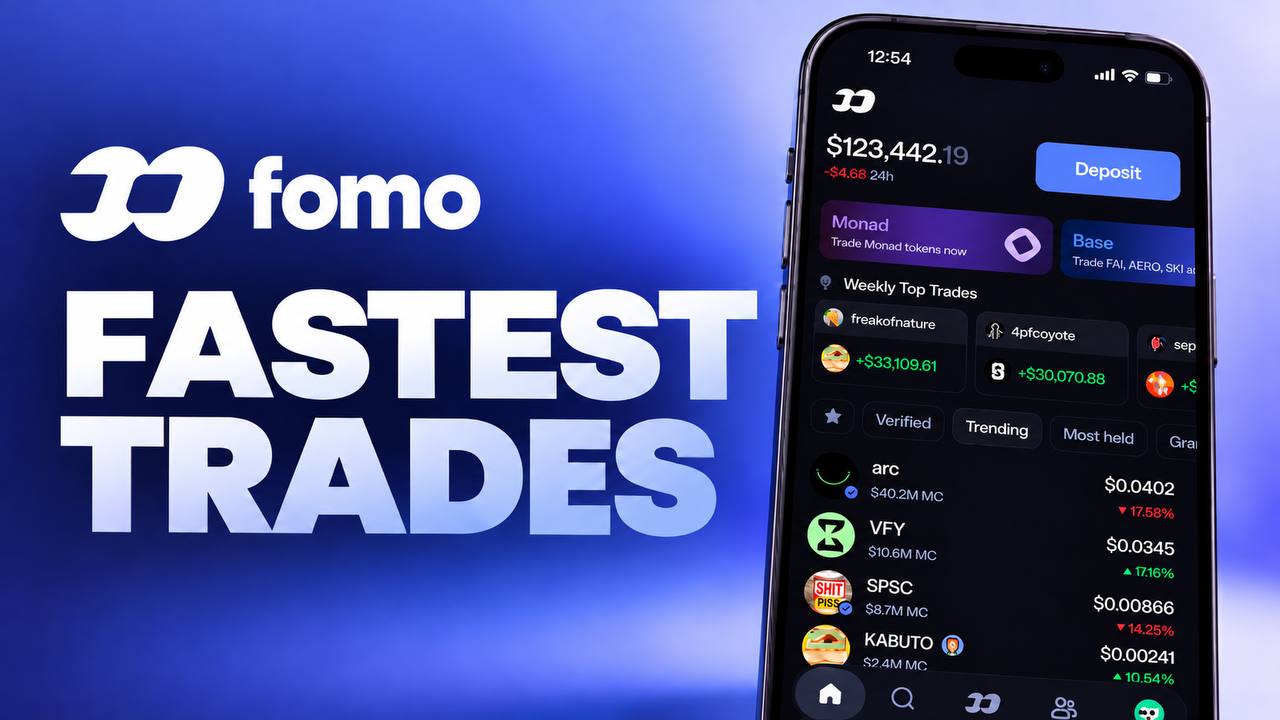
fomo Just Launched the Fastest Cross-Chain Swaps on the Market
fomo has begun the public rollout of fomo bridge, its own in-house bridge, and says cross-chain swaps on the app now land in under one second.
The bridge went live for….
cryptodaily.co.uk/2026/10/fomo-j…
JUST IN: @fomo introduces one of the fastest cross-chain swaps on the market, with transactions now completing in under 1 second.
A week ago, FOMO rolled out its own internal bridge to a small percentage of users.
The public rollout of the FOMO Bridge begins now. https://t.co/0UVRHGVXWs
S&P 500 Futures Today: $110 Oil and Netflix Earnings Put AI Rebound to the Test
S&P 500 futures edged up less than 0.1% to 7,735.25 as Brent crude reached $110.75 a barrel and Netflix prepared to report Q3 results.
cryptodaily.co.uk/2026/10/sp-500…
Turkey Confirms Richard Heart Detention and Seizure of Cash, Cold Wallets and Firearms
Turkey confirmed Richard Heart’s Istanbul detention under an Interpol Red Notice, reporting $7.15 million, six cold wallets and weapons seized.
cryptodaily.co.uk/2026/10/turkey…
Circle Targets Expansion Into 40 Emerging Markets as USDC Demand Broadens
Circle is targeting about 40 emerging markets as its Tazapay deal and renewed Binance agreement broaden $USDC distribution routes.
cryptodaily.co.uk/2026/10/circle…
Bitcoin Back in Bullish Structure, but Overbought Conditions and Firm Resistance Weigh on Price
The bulls have managed to avoid a Bitcoin breakdown out of a rising channel pattern with a 4.2% rally. However, now that the $BTC price is back inside the rising channel can it stay
Nine US Companies Object to Tokenized Share Trading on OKXICE
Nine issuers, including Broadcom and Verizon, objected to OKXICE tokenized-share trading under the SEC’s temporary venue-specific framework.
cryptodaily.co.uk/2026/10/nine-i…
World Launches Bank-Focused World ID Suite and Makes Zoom Deepfake Checks Generally Available
World unveiled a banking and finance identity suite at Money20/20, while World ID for Zoom became globally available to enterprise customers.
cryptodaily.co.uk/2026/10/world-…
Marqeta and Coinbase Partner on Stablecoin-Backed Cards With Base Settlement
Marqeta and Coinbase will combine custody, fiat conversion, Base settlement and card issuing for enterprise stablecoin-backed card programs.
cryptodaily.co.uk/2026/10/marqet…
Crypto.com and Novig Sue Missouri Over Sports Event-Contract Enforcement
Crypto.com-linked North American Derivatives Exchange and Novig filed separate federal cases challenging Missouri sports-contract enforcement.
cryptodaily.co.uk/2026/10/crypto…
Cysic Suspends Bridge After Unauthorized CYS Mint Lets Attacker Move $727K to Ethereum
Cysic suspended its cross-chain bridge after 10 million unauthorized CYS were minted and about $727,000 in $ETH reached Ethereum.
cryptodaily.co.uk/2026/10/cysic-…
Venice Token VVV Rebounds Above $24 After a Volatile Week — What Comes Next?
Venice Token $VVV traded near $24.86 after a 10.83% daily rise. Key support at $23.3712 and resistance at $25.6408 now shape the outlook.
cryptodaily.co.uk/2026/10/venice…
Bitcoin holds on: Breakdown not confirmed - Is the rally back on?
Despite the sell-off in the AI and precious metals sectors due to poor U.S. inflation data, Bitcoin came back from the brink on Thursday, having broken down below its ascending channel. The bulls rallied back
LayerZero Reclaims $2: The ZRO Technical Setup Behind a Possible $2.30 Retest
LayerZero’s $ZRO trades near $2.10 with bullish RSI readings, but resistance at $2.1538 and an October 20 token unlock shape its $2.30 outlook.
cryptodaily.co.uk/2026/10/layerz…
Federated Hermes Partners With Prometheum to Issue Tokenized Securities Funds
Federated Hermes and Prometheum plan tokenized securities funds for brokerage accounts, with the first product expected in Q1 2027.
cryptodaily.co.uk/2026/10/federa…
Coinbase Publishes Its Case for a Phased Bitcoin Post-Quantum Migration
Coinbase says Bitcoin’s post-quantum transition could take seven years, putting governance over exposed and abandoned $BTC at the centre of planning.
cryptodaily.co.uk/2026/10/coinba…