NEAR’s Selective Inflow Signal: AI Infrastructure Tokens Face a Narrower Buyer Base
 Idris Calloway
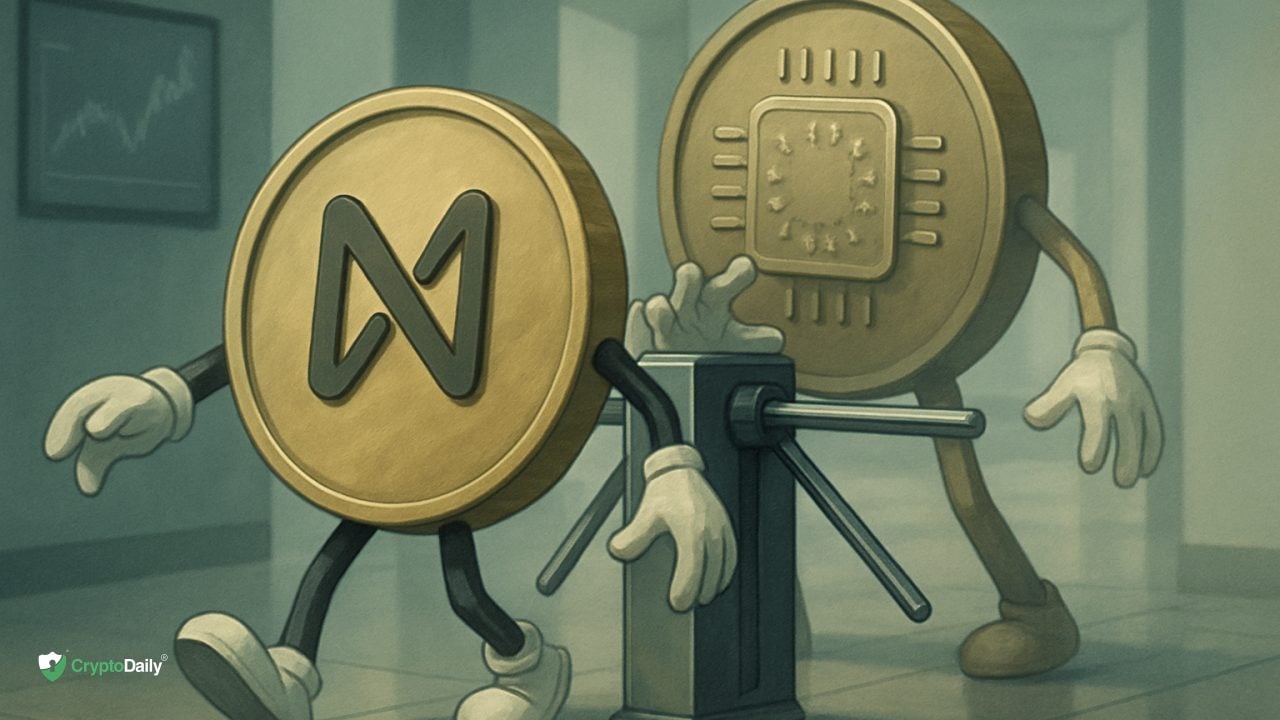
Capital is returning to select altcoins, but not evenly. NEAR’s recent spike stands out while many AI infrastructure tokens trade in bursts, drawing a narrower buyer set. That split matters for entries, exits, and sizing.
This article decodes what NEAR’s selective inflow might be saying about risk appetite and why buyer breadth for AI infrastructure names looks constrained. You’ll get a practical checklist for reading flows, judging ownership risk, and avoiding common traps.
The goal: replace narrative-chasing with a repeatable process grounded in liquidity, derivatives posture, and on-chain tells.
| Aspect | What to Know |
|---|---|
| Liquidity pattern | Market shows “bifurcated liquidity”: NEAR drew strong attention while many AI infra tokens saw episodic, uneven bids (Glassnode (Altcoin Vector #56 via Glassnode)). |
| Buyer base width | NEAR appears to attract a wider mix (spot, perps, ecosystem flows); AI infra names often rely on a narrower, more specialized cohort. |
| Derivatives positioning | On May 22, NEAR saw ~$60M new longs and OI near $300M, a sign of aggressive risk-taking (KuCoin News / KuCoin (exchange report)). |
| Ownership concentration | Some AI infra tokens show heavy holder concentration; e.g., RENDER’s largest address holds ~44.17% and top 5 ~62.2% of supply (LBank (RENDER token page)). |
| Narrative sensitivity | AI tokens can spike on micro-catalysts (e.g., TAO +~7% on May 6) without sustained inflows (CoinMarketCap (Top Stories)). |
| Execution risk | Thin books on niche pairs can magnify slippage; use venue selection, limits, and size discipline. |
| Key takeaway | Follow the flows, not the slogans: analyze venue depth, perps funding/OI, and holder dispersion before committing size. |
Core Concepts
Editor's note: AI infrastructure names rallied in short, newsy bursts with thinner spot follow-through. Market makers I spoke with cited client demand for assets that clear size quickly, even at the cost of paying up on funding. That’s changed how I size trades: I now anchor entries to venue depth and holder dispersion first, and let the narrative be the tiebreaker—not the driver. — Idris Calloway
Selective inflows are a market microstructure phenomenon: instead of money lifting the entire sector, capital concentrates in a few assets with cleaner narratives, better venue depth, and tighter execution. In late May, NEAR exemplified this dynamic, rallying sharply as liquidity bifurcated across altcoins. Independent on-chain and market data highlighted that divergence and noted NEAR’s ~72% weekly move during the period (Glassnode (Altcoin Vector #56 via Glassnode)).
Derivatives behavior often confirms whether inflows are broad or specialized. On May 22, an exchange desk reported ~$60M in new NEAR long positions and open interest around $300M as price rose ~11%—a snapshot of concentrated risk appetite powering the move (KuCoin News / KuCoin (exchange report)). When perps funding and OI surge together, it usually means positioning, not just passive spot demand, is doing the heavy lifting.
By contrast, AI infrastructure tokens have shown narrow buyer funnels and episodic bursts, often around headlines. In early May, Bittensor (TAO) popped ~7% during AI narrative tailwinds without clear evidence of generalized sector inflows—an example of “micro-moves” dominating price action (CoinMarketCap (Top Stories)). Tokenholder concentration also matters: RENDER’s distribution shows a large single address (~44.17%) and a top-5 majority (~62.2%), elevating idiosyncratic sell-pressure risk if big wallets move (LBank (RENDER token page)).
Put simply, NEAR’s strength looks like a liquidity magnet effect amid scattered altcoin demand, while AI infra names still rely on thinner, more specialized bids. For traders and allocators, the question isn’t “AI or not?”—it’s “Where does the real two-sided market exist today?”
Glossary: terms you’ll see in this piece
- Bifurcated liquidity: When cash pools cluster into a few assets, leaving the rest with thin participation.
- Open interest (OI): Total value of outstanding derivatives contracts; rising OI can signal new positioning.
- Funding rate: Perps mechanism that aligns contract price with spot; positive funding implies longs pay shorts.
- Concentration risk: Price impact risk from a small number of large holders or entities.
- Narrative beta: Sensitivity of a token’s price to news or themes versus measurable cash-flow or usage.
- Realized liquidity: How much size you can trade near mid without moving the market, after fees and slippage.
Step-by-Step Playbook
- Map the inflow source: Separate spot from derivatives. Rising OI with price suggests positioning; spot-led rallies hint at broader participation.
- Check venue depth: Compare order book thickness and pair coverage across major CEXs and liquid DEXs. Favor assets with deeper cross-venue liquidity.
- Audit holder dispersion: Review top-holder concentration and vesting calendars. Heavily concentrated supplies warrant smaller size and tighter stops.
- Track funding and basis: Elevated funding or wide basis can precede shakeouts. Consider hedges or smaller entries when leverage is crowded.
- Validate on-chain traction: Look for rising active addresses, fees, or protocol usage that corroborate price.
- Anchor to catalysts: Time entries around verifiable releases, integrations, or incentive changes—not just headlines.
- Plan exits by liquidity: Predefine staggered take-profits on venues with depth; avoid dumping size into thin books.
Reading NEAR’s Signal Without Overfitting
NEAR’s late-May rally plugs into a larger market story: capital is picky. Structural factors—execution speed, developer momentum, cross-chain connectivity, and available pairs across top venues—help an asset become the “liquidity magnet” when alt demand is choosy. The derivatives surge documented around May 22 shows aggressive appetite to express that view quickly via leverage, a tell that traders opted for speed and access as much as for fundamentals (KuCoin News / KuCoin (exchange report)).
Don’t overfit the signal. A concentrated move doesn’t guarantee a sector-wide follow-through. Glassnode’s observation of “bifurcated liquidity” aligns with a market that is not in a uniform risk-on regime (Glassnode (Altcoin Vector #56 via Glassnode)). When breadth is thin, any reversal in funding or a big holder’s actions can unwind gains faster than narrative watchers expect.
Execution-wise, even if you like the thesis, size it like liquidity is rented, not owned. Track venue-level order books and avoid accumulating positions solely on offshore perps that can flip with a single funding reset.
Who’s Buying AI Infrastructure? Mapping the Three Benches
AI infrastructure tokens—compute networks, rendering ecosystems, model marketplaces—should, in theory, capture secular AI demand. But in practice, the current buyer mix skews narrow: crypto-native speculators, specialized funds that understand the tech, and a rotating retail cohort that chases headlines. That structure amplifies narrative beta and weakens resilience when the news cycle cools.
| Asset | Buyer Base Width | Typical Flow Drivers | Liquidity Profile |
|---|---|---|---|
| NEAR | Broader (spot + perps + ecosystem) | Cross-venue depth, derivatives interest, L1 ecosystem catalysts | Relatively deeper among alts during selective inflows |
| Render (RENDER) | Narrow-to-moderate | Narrative bursts; sensitivity to large-holder behavior | Affected by holder concentration; monitor big-wallet activity |
| Bittensor (TAO) | Narrow | Headline-driven micro-moves; AI sentiment pulses | Episodic volume; ensure disciplined execution on entries/exits |
| Fetch.ai (FET) | Moderate | Partnership updates; sector rotations | Variable depth across venues; confirm slippage before sizing |
Two practical implications follow. First, treat AI infra allocations as liquidity-sensitive trades unless and until you see breadth expand—more spot participation, tighter spreads, and consistent volume across multiple days. Second, the path dependency is strong: if a single large address or exchange listing dominates flows, your risk hinges on that node.
Pro tip: Before sizing any AI infra position, run a “triple check”—(1) top-5 holder share, (2) average daily depth within 10 bps of mid on two major venues, (3) funding stability over 72 hours. If any one is flashing red, cut intended size by half.

Scenarios for the Next Quarter: Rotation or Fragmentation?
Scenario A: Rotation broadens. NEAR’s move proves to be the first leg of a measured alt rotation. Funding normalizes, spot volumes improve across a basket of L1s and select AI infra names, and on-chain usage ticks up. If this unfolds, breadth indicators—advancers/decliners, multi-day spot inflows—should confirm.
Scenario B: Fragmentation persists. Capital continues to cluster around 2–3 names with superior depth and catalysts. AI infra tokens see intermittent pops (like TAO’s ~7% day in May) without consistent follow-through (CoinMarketCap (Top Stories)). In this case, focus on execution alpha: buy pullbacks into real liquidity, fade euphoric funding spikes, and avoid illiquid pairs.
Scenario C: Liquidity trap. Elevated OI and positive funding leave longs vulnerable. A minor macro shock or single large holder event (particularly in concentrated AI tokens like RENDER, per the distribution snapshots) forces deleveraging, taking prices below obvious support (LBank (RENDER token page)). Here, preservation beats prediction: lighter size, wider stops, and a preference for assets with cleaner two-sided markets.
Pitfalls & Red Flags
- Reading OI in isolation: Rising OI without confirming spot demand can be a leverage mirage that unwinds fast.
- Ignoring holder concentration: A few large addresses can dominate supply dynamics; monitor wallets and exchange inflows.
- Chasing narrative spikes: AI-related headlines can move price for hours, not weeks; require breadth confirmation.
- Venue mismatch: Building size on a single offshore perp market concentrates counterparty and liquidation risk.
- Underestimating slippage: Thin books on secondary pairs magnify execution costs; pre-trade simulate.
- Overfitting NEAR’s rally: One asset’s strength doesn’t mandate a sector bid—treat each token’s liquidity stack separately.
For deeper market structure coverage and daily crypto analysis, visit Crypto Daily.
Frequently Asked Questions
Does NEAR’s rally mean altseason is here?
Not necessarily. The late-May move coincided with bifurcated liquidity—select names attracted strong bids while others lagged (Glassnode (Altcoin Vector #56 via Glassnode)). Look for breadth—sustained spot inflows and improved depth across multiple assets—before calling a broad altseason.
Is NEAR an AI infrastructure token?
No. NEAR is a layer-1 blockchain. Its rally can overlap with AI narratives if projects building on it tap AI themes, but the asset itself is not an AI infra token. Conflating the two can lead to incorrect assumptions about buyer behavior.
Why do AI infrastructure tokens have narrower buyer bases?
They often rely on specialized investors and narrative-driven retail bursts. Until usage metrics and venue depth broaden, the pool of consistent buyers tends to be smaller and more sensitive to headlines.
What metrics best indicate healthier inflows?
Multi-day spot volume growth across several exchanges, stable or moderating funding amid rising price, improving order book depth near mid, and wider distribution among holders are more durable signals than a single day’s pump.
How should I think about large-holder concentration?
High concentration magnifies tail risk—one wallet moving can pressure price and sentiment. For example, RENDER’s snapshot shows a top address around 44% of supply, with the top five exceeding 60% (LBank (RENDER token page)); that profile warrants conservative sizing.
What does a spike in OI on NEAR imply?
It suggests aggressive positioning. On May 22, new long inflows and elevated OI were reported alongside price gains (KuCoin News / KuCoin (exchange report)). Monitor whether spot demand and funding stabilize to assess durability.
Disclaimer: This article is provided for informational purposes only. It is not offered or intended to be used as legal, tax, investment, financial, or other advice.
Related Stories