GreenTrust Token ("GNT") is a groundbreaking decentralized blockchain application that focuses on sustainability. Prominently, it stands out as the pioneering Utility Token to feature a carbon-neutral network. Its main function is to enable users to minimize their personal carbon emissions by trading GNT for "CO2 Offset Certificates."
GreenTrust Token's mission is to tackle the carbon emissions associated with blockchain technology and to champion the use of sustainable energy in cryptocurrency operations. GNT maintains that achieving carbon neutrality is possible through dedicated efforts to measure, reduce, and ultimately offset carbon footprints. To measure the carbon output of the GNT network, the "GreenTrust Token model" was introduced, which dynamically correlates the count of GNT transactions with their corresponding CO2 emissions.
To cut down and eventually balance out CO2 emissions, the GNT team is committed to speeding up initiatives in two areas: Compensation and Source Reduction. By leveraging blockchain technology, GreenTrust Token aligns the interests of stakeholders, developers, and businesses with the aim of fostering a green economy. Built on the BSC-BEP20 network, it employs a Proof of Staked Authority ("PoSA") consensus mechanism that guarantees efficient and cost-effective transactions. With a simple contract and a zero-fee policy, users can enjoy a seamless GNT transaction process. The GNT smart contract has been rigorously audited and verified by TechRate Audit, passing all checks without any reported security issues.
What is GreenTrust?
GreenTrust is an innovative initiative within the decentralized finance (DeFi) space, emphasizing sustainability and environmental consciousness. Functioning on the Binance Smart Chain, it offers a suite of cutting-edge features through a versatile programming language. This project aims to tackle environmental challenges linked to blockchain tech, particularly the carbon output from cryptocurrency dealings.
Its central goal is to lessen the carbon footprint of its users and the broader blockchain community. It facilitates this by allowing users to swap its native token, GNT, for CO2 Offset Certificates. These certificates symbolize real-world efforts in balancing out carbon emissions by supporting projects that cut greenhouse gases. The initiative stands out in using the utility token model to pursue carbon neutrality within the blockchain network.
The GreenTrust Token model is a forward-thinking framework that connects the number of network transactions to equivalent CO2 emissions, ensuring transparency and accountability in assessing its environmental impact. The project is dedicated to not only assessing but also minimizing and eventually counterbalancing these emissions. This dedication is manifested through initiatives focused on compensating for carbon emissions and reducing them at their source.
Operating on the Binance Smart Chain with a Proof of Staked Authority (PoSA) consensus mechanism ensures efficient and cost-effective transactions for GreenTrust. This efficiency is bolstered by a zero-fee policy and straightforward contract design, enabling a smooth transaction experience for users. The GNT smart contract underwent a comprehensive audit by TechRate Audit, confirming its security and dependability.
Beyond just carbon offsetting, GreenTrust's mission is to promote widespread adoption of sustainable practices within the cryptocurrency space. By aligning incentives for developers, businesses, and users towards green economy goals, GreenTrust is paving the way for a more sustainable and eco-friendly blockchain ecosystem.
As with any cryptocurrency investment, conducting thorough research and considering inherent risks before participating is crucial.
How is GreenTrust secured?
GreenTrust Token (GNT) utilizes a comprehensive security approach to safeguard user assets and maintain network integrity. It is founded on the Binance Smart Chain (BSC), leveraging a versatile programming language that facilitates the development of decentralized finance (DeFi) applications. This solid foundation creates a secure environment for GNT transactions and operations.
The security of GreenTrust is further strengthened by non-custodial wallets, granting users full control over their private keys and, thus, their assets. This method significantly reduces the risk of asset theft from centralized vulnerabilities. Additionally, the use of multiple keys for transaction verification adds another security layer, as it requires more than one key to authorize transactions, thereby mitigating unauthorized access risks.
The geographic dispersion of network nodes enhances resilience against attacks and operational glitches. By distributing its infrastructure across numerous locations, GNT reduces risks tied to centralized systems where a single failure point could jeopardize the entire network.
Moreover, GreenTrust’s dedication to sustainability and carbon neutrality does not undermine its security measures. The GNT model links transactions to CO2 emissions, promoting carbon footprint reduction through CO2 Offset Certificate purchases. This inventive strategy aligns with broader goals of encouraging sustainable energy use in blockchain and cryptocurrency sectors.
The GNT smart contract was thoroughly audited by TechRate Audit company, which confirmed its security without finding any issues. This audit underscores the rigorous security standards upheld by the GreenTrust team.
In summary, GreenTrust Token secures its network and user assets through a blend of advanced blockchain technology, decentralized finance applications, non-custodial wallets, multi-key transactions, geographic distribution, and a dedication to sustainability. These measures guarantee a secure, efficient, and eco-friendly platform for its users.
How will GreenTrust be used?
GreenTrust finds its place in the sustainable decentralized finance (SDeFi) realm, aiming to cut carbon emissions and promote eco-friendly practices in various applications. This approach is vital given the growing concern over the environmental impact of blockchain technology and cryptocurrency mining. GreenTrust's strategy encompasses a wide range of efforts intended to boost sustainability and achieve carbon neutrality.
GreenTrust's utility spans several key areas, including environmental projects and carbon offset mechanisms. It actively participates in meaningful environmental initiatives such as plastic cleanup, drilling wells for clean water, renewable energy projects, and tree-planting activities. These efforts are crucial for tackling crucial environmental challenges like pollution and deforestation, thus enhancing the planet's health.
Beyond these environmental initiatives, GreenTrust leverages its platform to facilitate the exchange of GNT for "CO2 Offset Certificates." This creative approach empowers users to actively cut down their carbon footprint, aligning with the broader objective of achieving carbon neutrality within the blockchain sphere. The GreenTrust Token model is central to this endeavor, connecting GNT transactions to equivalent CO2 emissions and supporting efforts to measure, reduce, and offset these emissions.
Built on the BSC-BEP20 network and using the Proof of Staked Authority (PoSA) consensus mechanism, GreenTrust ensures high performance and cost-efficiency, particularly concerning transaction speed and expense, further supported by a zero-fee policy. The straightforward design of the GNT smart contract, along with its successful audit by TechRate Audit, highlights the platform's reliability and security.
By concentrating on compensation and source reduction, GreenTrust leads the charge in aligning various stakeholders' incentives to accomplish green economy objectives. Through its commitment to sustainable energy and carbon neutrality, GreenTrust exemplifies how blockchain technology can be harnessed for environmental stewardship.
What key events have there been for GreenTrust?
GreenTrust Token has made a significant impact in the sustainability and environmental realm through various influential events and strategic initiatives. The project has taken an active role in community and environmental endeavors, such as building drinking water wells in impoverished regions and installing solar panels in remote communities. These initiatives aim to enhance living conditions and support the adoption of renewable energy sources. Furthermore, GreenTrust has hosted educational sessions in schools and organized plastic collection campaigns, highlighting the importance of environmental awareness and conservation.
On a larger scale, GreenTrust has deepened its environmental commitment by engaging in tree-planting activities, showcasing a proactive approach to addressing deforestation and climate change. Future plans for the project include donations to non-profit organizations, further cementing its dedication to environmental sustainability.
In terms of business development, GreenTrust has actively acquired companies and broadened its range of sustainability services, including conducting environmental impact assessments and exploring alternative energy solutions. Establishing partnerships and advocating for sustainable practices are central to its operations, reflecting a comprehensive strategy of merging environmental stewardship with business expansion.
The GreenTrust Token itself is crafted as a sustainable decentralized blockchain application, aiming to reduce the carbon footprint linked to blockchain technology. By offering CO2 Offset Certificates in return for GNT, the project encourages users to engage in carbon neutrality initiatives. The GreenTrust Token model quantifies the network's carbon emissions, directing strategies to effectively lessen and offset these emissions.
With operations on the BSC-BEP20 network and employing a Proof of Staked Authority consensus mechanism, GreenTrust Token ensures transactional efficiency and low costs, supported by a zero-fee policy. The project's dedication to security and reliability is confirmed by a successful audit from a reputable audit firm, which identified no security issues.
In summary, GreenTrust Token's versatile approach to environmental sustainability, coupled with its strategic business growth and robust blockchain application, positions it as a key player in advancing green economy goals.
US Prosecutors Probe Binance Over Potential Iran Sanctions Violations, Bloomberg Reports
U.S. prosecutors are reportedly examining whether Binance failed to stop Iran-linked trading, days after a $61 million crypto forfeiture action.
cryptodaily.co.uk/2026/09/us-pro…
ECB Launches Pontes for Tokenized-Asset Settlement in Central Bank Money
The Eurosystem launched Pontes on September 21, enabling wholesale tokenized-asset settlements in central bank money through TARGET Services.
cryptodaily.co.uk/2026/09/ecb-po…
Coinbase Opens IPO Allocations to US Retail Users, Starting With Oura
Coinbase has opened conditional IPO allocation requests to eligible U.S. retail customers, starting with Oura's proposed Nasdaq listing and $40-$44 range.
cryptodaily.co.uk/2026/09/coinba…
Bitcoin Hits $87,400 Local Top: How Deep Will the Correction Go?
The Bitcoin price hit a local top of $87,400 on Monday after another short but powerful rally out of a bull flag that added another $6,000. A pause is in force currently as this latest move is digested by the
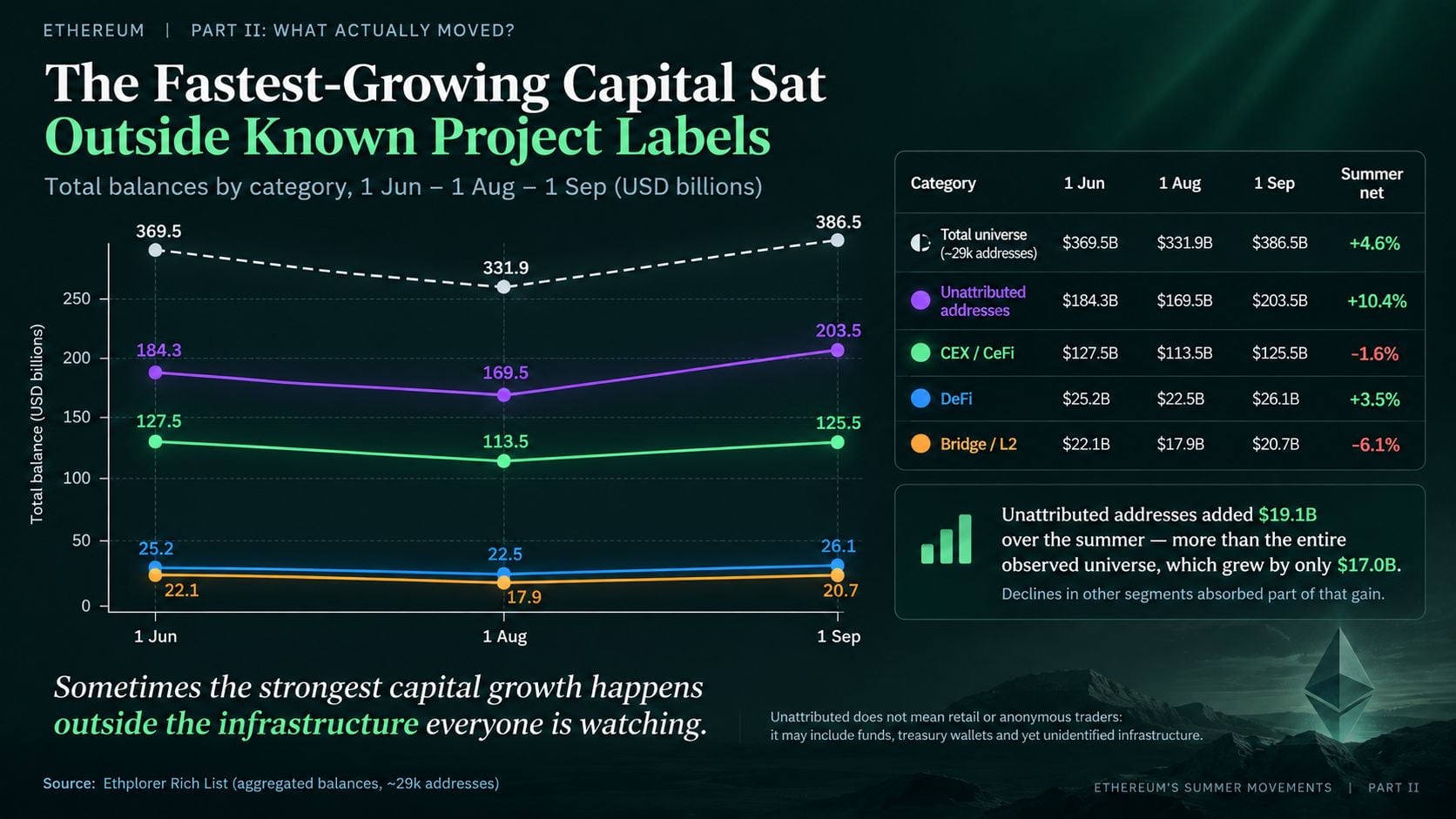
Ethereum’s Summer Movements
While Part 1 mapped where capital sat as of early 2026, this analysis picks up the thread in June - when the summer cycle began - and traces how that capital actually moved through June 1 to September 1.
cryptodaily.co.uk/2026/09/ethere…
BlackRock’s ETF Chief Says Bitcoin’s Diversifier Case Still Holds as Volatility Cools
BlackRock says Bitcoin volatility has cooled, but its 0.53 S&P 500 correlation and history of deep drawdowns limit the case for a small allocation.
cryptodaily.co.uk/2026/09/blackr…
Bastion Wins Conditional OCC Approval for a National Trust Bank Charter
Bastion won conditional OCC approval to convert into an uninsured national trust bank for stablecoin custody, USDC conversion and issuer services.
cryptodaily.co.uk/2026/09/bastio…
Visa Moves to Close Credit-Card Rewards Loophole for Crossmint Memecoin Purchases
Visa is reportedly moving Crossmint memecoin purchases into crypto merchant codes, ending a classification that let some cardholders earn ordinary rewards.
cryptodaily.co.uk/2026/09/visa-c…
Bitcoin Approaches Key Higher High: Can It Break the Bear Market?
The Bitcoin price is only a matter of $1,000 or so from surpassing a key macro high that would be a huge step towards changing the macro trend from bearish to bullish. Could the price explode to the upside once
Binance Says Its AI Risk Systems Blocked $4.6B in Potential User Losses in H1
Binance says AI-driven risk systems prevented approximately $4.6 billion in potential losses and protected more than 8 million users in H1 2026.
cryptodaily.co.uk/2026/09/binanc…
Binance Adds CEA Industries bStocks Token as Margin Collateral for Eligible VIP Users
Binance enabled CEA Industries' BNCB bStocks as collateral across three margin products on September 14 for eligible VIP 3 users.
cryptodaily.co.uk/2026/09/binanc…
$AAVE Proposes Bitcoin-Backed Institutional Loans Using Anchorage Custody
Aave Labs has proposed an isolated V4 market for stablecoin borrowing against Bitcoin held in custody by Anchorage Digital.
cryptodaily.co.uk/2026/09/aave-b…
Circle’s Arc Mainnet Is Due to Go Live Today With BlackRock, Visa and DTCC as Validators
Circle’s Arc public mainnet is scheduled for September 16, backed by BlackRock, Visa, DTCC and other founding validators.
cryptodaily.co.uk/2026/09/circle…
ECB Opens Merchant Applications for Its 2027 Digital Euro Pilot
ECB has opened applications for euro-area online merchants to test beta digital euro checkout payments in a 12-month pilot planned for 2027.
cryptodaily.co.uk/2026/09/ecb-me…
Core Lightning Warns Experimental-Feature Users Over Potential Risk to Funds
Core Lightning urged node operators using experimental features to disable them as developers investigate issues that could affect user funds.
cryptodaily.co.uk/2026/09/core-l…
Stablecoin Supply Reached $303B in August as Payments Topped $401B, Allium Says
Stablecoin supply reached $303 billion in August 2026, while identified payments totalled $401 billion to $527 billion in the first eight months.
cryptodaily.co.uk/2026/09/stable…
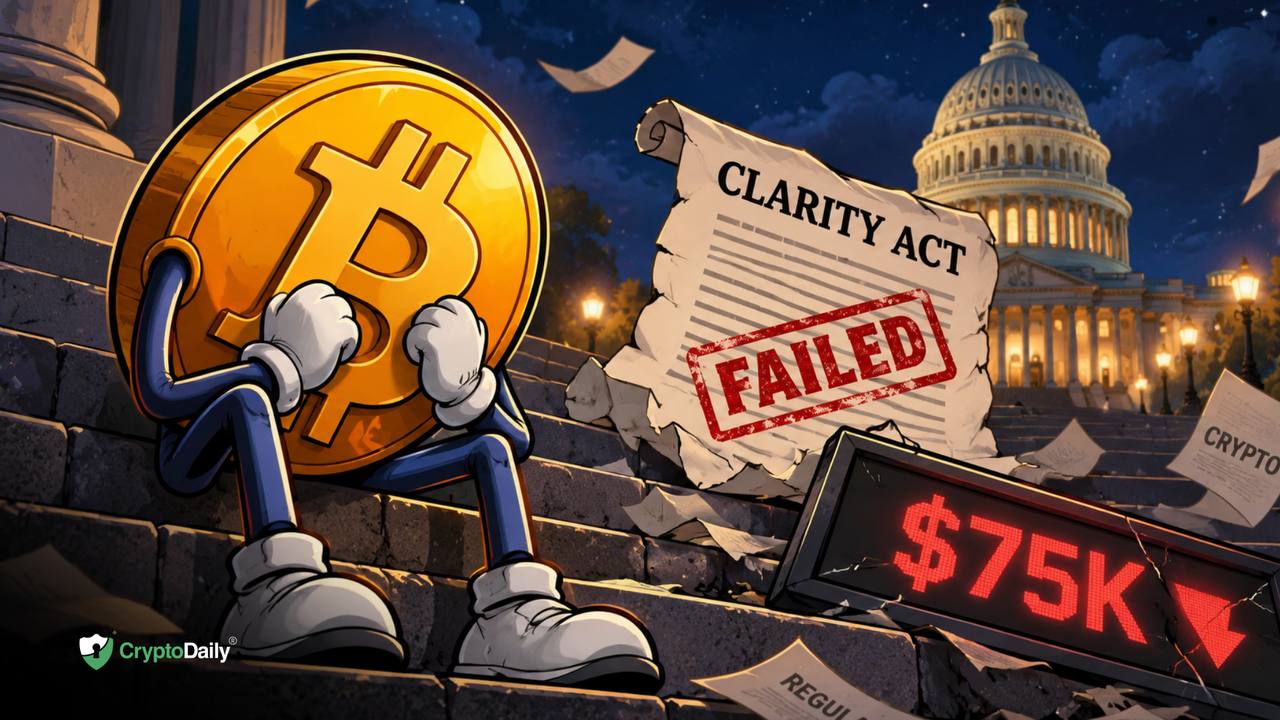
Bitcoin drops to $75K on Clarity Act failure
The Clarity Act was rejected in the U.S. Senate on Tuesday, leading to a sharp drop in the Bitcoin price down to $75K. A 25 bps hike is expected to be announced in the Federal Reserve FOMC meeting later on Wednesday. While the effects
Aave Proposes GHO Fee and Borrow-Rate Changes as the Stablecoin Trades Below Peg
$AAVE proposes a Horizon GHO rate increase and Stability Module fee changes after the stablecoin traded up to 13.6 basis points below $1.
cryptodaily.co.uk/2026/09/aave-g…
Safe Wallet Loses $7.73M in rsETH After Malicious Uniswap v4 Hook Route
A Safe wallet lost about 2,900 rsETH, valued at $7.73 million, after a malicious Uniswap v4 hook route and delegated module execution.
cryptodaily.co.uk/2026/09/safe-w…
Who Made It Into 2026 CryptoDaily™ Awards: The Companies That Gave Web3 Something to Talk About This Year
CryptoDaily™ is back with its annual international awards, and this time, we wanted to do something a little different. In previous editions, a lot of the attention