Cronos (CRO) serves as the native cryptocurrency token of the Cronos Chain — a decentralized and open-source blockchain crafted by the Crypto.com company, which specializes in payment, trading, and financial services.
The Cronos Chain is a part of Crypto.com’s suite of products aimed at speeding up the worldwide acceptance of cryptocurrencies to enhance individual control over finances, protect personal data, and secure user identities. The primary role of the CRO blockchain is to support the Crypto.com Pay mobile payment application.
Looking ahead, Crypto.com intends to broaden the CRO platform's capabilities to fuel its other offerings as well.
CRO was officially launched between November and December of 2018.
Who Established Cronos?
Cronos was introduced by Crypto.com as a component of its mission to "put cryptocurrency in every wallet." Crypto.com was originally founded in June 2016 under the name "Monaco Technologies GmbH" by Kris Marszalek, Rafael Melo, Gary Or, and Bobby Bao.
Kris Marszalek, who graduated from Adam Mickiewicz University in Poland, has a track record of establishing and leading three companies before Crypto.com: Starline Polska, which designs and manufactures consumer electronics, YIYI, a mobile app based on location services, and BEECRAZY, an e-commerce company.
Rafael Melo holds a bachelor’s degree in engineering from PUC-Rio. Throughout his over 15-year tenure in finance, Melo has collaborated with prominent companies in Asia and played a role in securing more than 50 million AUD in funding for the Ensogo social commerce platform.
Gary Or is a proficient software engineer with extensive full-stack engineering experience spanning over nine years. Before co-founding Crypto.com, Or served as a platform architect at Ensogo and co-founded the mobile app development company Foris. He earned his bachelor’s degree in engineering, computer science from the University of Hong Kong.
Prior to his involvement with Crypto.com, Bobby Bao worked in the mergers and acquisitions department at the China Renaissance investment bank. Bao has an academic background that includes studies at the University of Melbourne, NYU Stern School of Business, and the College of William & Mary.
What Sets Cronos Apart?
The CRO blockchain is mainly dedicated to enhancing the utility for users of Crypto.com’s payment, trading, and financial service offerings.
Those who hold CRO tokens can stake them on the Crypto.com Chain to operate as validators, earning fees for processing network transactions. Furthermore, CRO can be used to pay transaction fees on the Cronos Chain.
Using the Crypto.com Pay app, users can enjoy up to 20% cashback by paying merchants in CRO and up to 10% when purchasing gift cards or transferring funds to others.
For trading purposes, the Crypto.com App enables users to gain token rewards for certain listings by staking CRO.
Additionally, by staking CRO on either the Crypto.com Exchange app or the Crypto.com metal Visa Card, users can earn up to 10-12% annual interest.
In essence, CRO functions as a key element in Crypto.com’s strategy to boost the global adoption of cryptocurrencies. The company is actively exploring and developing new ways for users to utilize this cryptocurrency to gain greater control over their finances, data, and personal information.
How Has Cronos Chain Strengthened CRO's Position?
Cronos Chain hosts a variety of decentralized applications (dApps) and has locked in a total value of over $781.86 million at present, making it one of the most significant EVM-compatible chains. It's the pioneering blockchain allowing interoperability between Ethereum and Cosmos ecosystems.
Several dApps on the Cronos Chain, such as VVS Finance, Tectonic Finance, Ferro Protocol, MM Finance, and Single Finance, are contributing to the wider adoption of CRO by using it as the primary means of payment for transactions.
What Is the Circulating Supply of Cronos [CRO] Coins?
The total supply of CRO is capped at 30 billion coins after a burn of 70 billion CRO in 2021, all of which were generated when the blockchain was first launched, making it a non-mineable cryptocurrency.
The distribution of the total CRO supply is allocated for five distinct purposes:
* 30% — Secondary distribution and launch incentives, released in daily batches over five years starting from November 14, 2018;
* 20% — Capital reserve, frozen until November 7, 2022;
* 20% — Network Long-Term Incentives, frozen until November 7, 2022;
* 20% — Ecosystem grants, frozen until the launch of the Crypto.com Chain Mainnet;
* 10% — Community development.
How Is the Security of the Crypto.com Coin Network Ensured?
CRO is established on Ethereum’s blockchain, adhering to the ERC-20 compatibility standard, which ensures its network security through the Ethash function.
Where Can Cronos [CRO] Be Purchased?
CRO tokens are available on several cryptocurrency exchanges, including:
Coin Metrics Revises 19 Months of Bitcoin ETF Wallet Data
Coin Metrics corrected 60 Bitcoin ETF network-data series over 19 months, but public disclosures did not quantify or explain the revisions.
cryptodaily.co.uk/2026/09/coin-m…
CFTC Warns Prediction Markets That ‘Mention’ Contracts Face Manipulation Risk
CFTC staff says prediction contracts tied to an individual’s words, attendance or interactions may be presumptively vulnerable to manipulation.
cryptodaily.co.uk/2026/09/cftc-m…
10-Year Treasury Yield Falls Below 5%: What It Means for the S&P 500
A 10-year Treasury yield below 5% can support S&P 500 valuations, but the market impact depends on earnings forecasts, inflation and risk appetite.
cryptodaily.co.uk/2026/09/10-yea…
Kakao Pay and KakaoBank Partner With Fireblocks to Explore Korean Stablecoin Infrastructure
Kakao Pay and KakaoBank signed a Fireblocks MOU to assess South Korean stablecoin infrastructure and run proof-of-concept tests.
cryptodaily.co.uk/2026/09/kakao-…
S&P 500 Market Breadth Is Weakening as the Index Nears a Record High
The S&P 500 sits 0.4% below its August record, but only 49% of eligible members remain above their 200-day moving averages.
cryptodaily.co.uk/2026/09/sp-500…
Bitcoin Bulls Consolidate Before Targeting $90K
The Bitcoin price is trading in a bullish continuation pattern. If the breakout is to the upside, $90K is probably going to be the next target. Can this huge rally continue, or are the odds of a big pullback starting to increase?
Trueo Moves Its Prediction Market From Base to Ethereum Mainnet
Trueo is shifting its primary prediction-market deployment from Base to Ethereum mainnet while keeping Base trading and settlement live.
cryptodaily.co.uk/2026/09/trueo-…
S&P 500 Equal Weight vs S&P 500: Why the Performance Gap Is Widening
The S&P 500’s top 10 represented 37.8% in September 2026. See why equal weighting produces sharply different returns.
cryptodaily.co.uk/2026/09/sp-500…
Strategy Buys 950 Bitcoin and Repurchases $174M of STRC
Strategy bought 950 $BTC for $75.7 million and repurchased $174 million of STRC preferred shares in the week ended September 20, 2026.
cryptodaily.co.uk/2026/09/strate…
Hana Bank Issues $100M Digital Bond on Euroclear Blockchain With Same-Day Settlement
Hana Bank issued a $100 million five-year digital bond through Euroclear’s D-FMI, completing South Korea’s first T+0 foreign-currency settlement.
cryptodaily.co.uk/2026/09/hana-b…
Cardano Joins Coinbase’s x402 Kit for AI-Agent Payments
Cardano joined the x402 software kit on September 21, enabling $ADA and native-token pay-per-use payments for apps and AI agents.
cryptodaily.co.uk/2026/09/cardan…
US Prosecutors Probe Binance Over Potential Iran Sanctions Violations, Bloomberg Reports
U.S. prosecutors are reportedly examining whether Binance failed to stop Iran-linked trading, days after a $61 million crypto forfeiture action.
cryptodaily.co.uk/2026/09/us-pro…
ECB Launches Pontes for Tokenized-Asset Settlement in Central Bank Money
The Eurosystem launched Pontes on September 21, enabling wholesale tokenized-asset settlements in central bank money through TARGET Services.
cryptodaily.co.uk/2026/09/ecb-po…
Coinbase Opens IPO Allocations to US Retail Users, Starting With Oura
Coinbase has opened conditional IPO allocation requests to eligible U.S. retail customers, starting with Oura's proposed Nasdaq listing and $40-$44 range.
cryptodaily.co.uk/2026/09/coinba…
Bitcoin Hits $87,400 Local Top: How Deep Will the Correction Go?
The Bitcoin price hit a local top of $87,400 on Monday after another short but powerful rally out of a bull flag that added another $6,000. A pause is in force currently as this latest move is digested by the
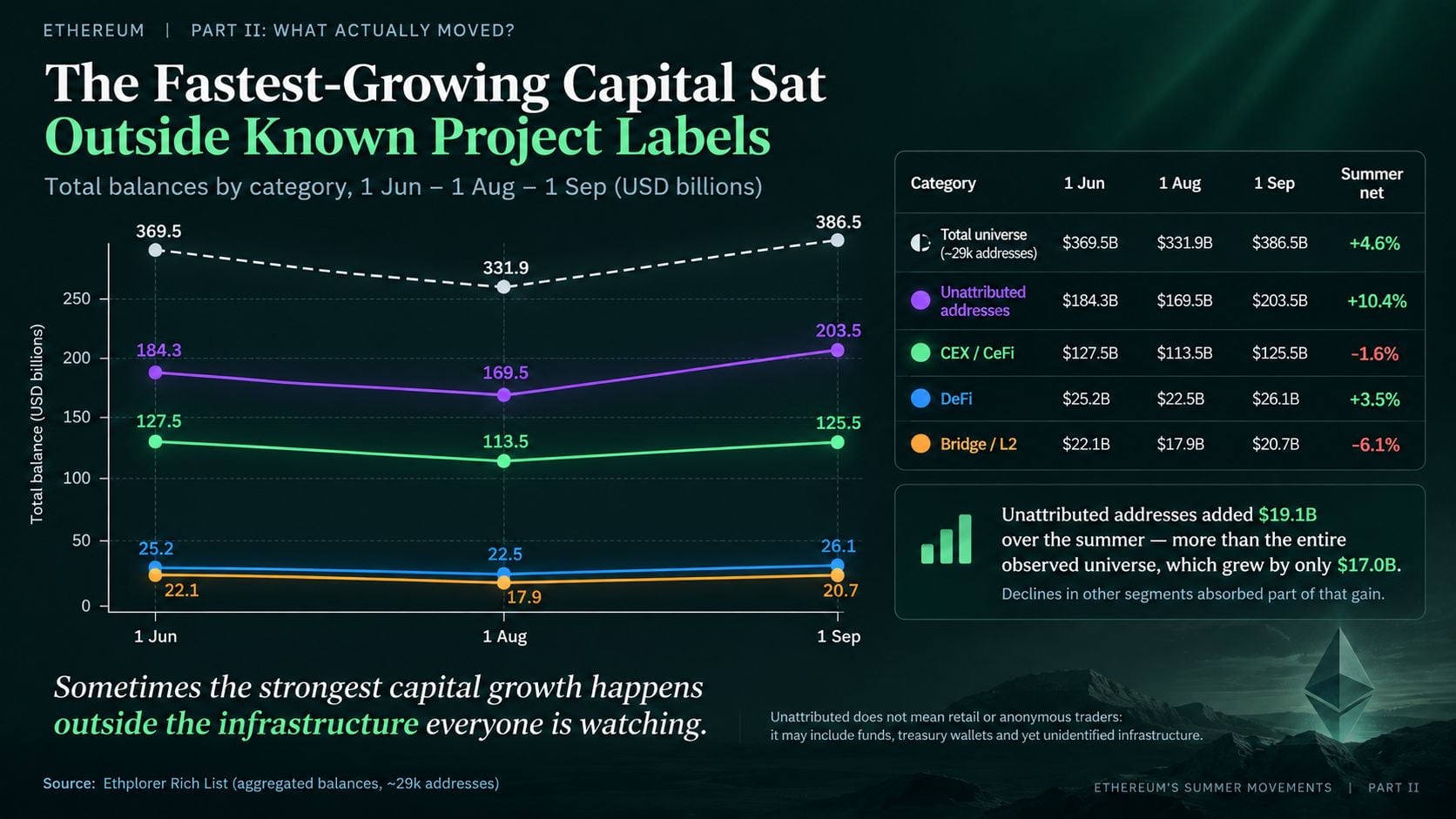
Ethereum’s Summer Movements
While Part 1 mapped where capital sat as of early 2026, this analysis picks up the thread in June - when the summer cycle began - and traces how that capital actually moved through June 1 to September 1.
cryptodaily.co.uk/2026/09/ethere…
BlackRock’s ETF Chief Says Bitcoin’s Diversifier Case Still Holds as Volatility Cools
BlackRock says Bitcoin volatility has cooled, but its 0.53 S&P 500 correlation and history of deep drawdowns limit the case for a small allocation.
cryptodaily.co.uk/2026/09/blackr…
Bastion Wins Conditional OCC Approval for a National Trust Bank Charter
Bastion won conditional OCC approval to convert into an uninsured national trust bank for stablecoin custody, USDC conversion and issuer services.
cryptodaily.co.uk/2026/09/bastio…