Abandoned DeFi Protocols Leave Zombie Smart Contracts Behind
 Elliot Veynor
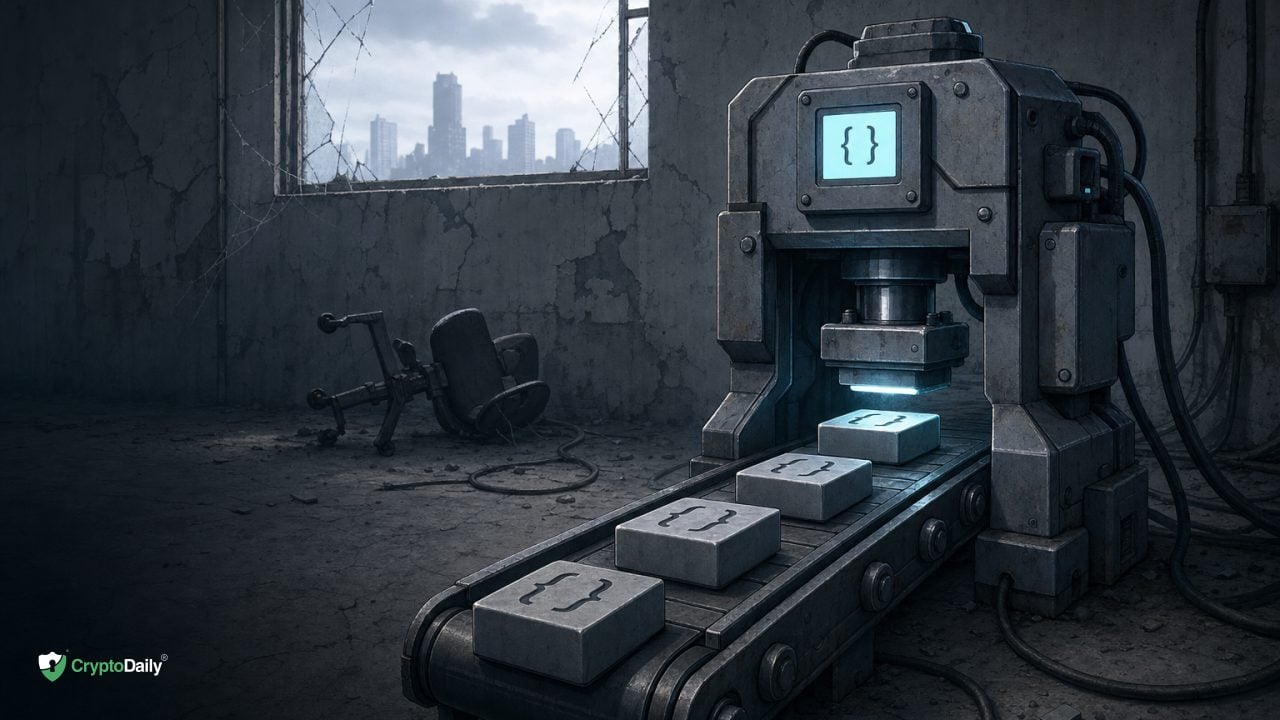
A zombie smart contract is on-chain code that a team has deprecated or stopped maintaining but that still runs and can hold funds, accept calls, or execute logic. Public deprecation notices or shutting down a front end do not disable the contract itself. The bytecode remains live at its address, so interactions continue as long as callers provide valid inputs. This dynamic is documented in the Rekt post‑mortem on Aztec Connect.
In DeFi, this leaves a long tail of abandoned contracts that keep economic value and callable entry points on-chain. Attackers probe these endpoints, and bots or unaware users may interact with legacy addresses. The risk persists because Ethereum contracts are immutable by default; only explicit upgrade designs allow behavior changes.
If an upgrade path or admin authority is removed or renounced, teams may be unable to pause, patch, or retire the legacy contract. That limitation follows from Ethereum’s immutability model and the way proxy/UUPS/diamond patterns rely on admin roles, as described in the Ethereum Foundation smart contract security docs.
How zombie smart contracts persist on-chain
Ethereum smart contracts cannot be changed once deployed. Any ability to alter behavior must be explicitly designed through patterns such as proxies, UUPS, or diamonds, which delegate calls to upgradeable logic. These patterns depend on admin keys or governance roles. If those roles are misconfigured, compromised, or renounced, the team can lose the ability to fix or retire the contract entirely, even if they have deprecated it publicly. See the Ethereum Foundation documentation for the security implications of immutability and upgrade patterns.
Deprecating a product or shutting down a website does not affect bytecode on-chain. The address remains callable, and any residual state or value persists. Attackers can interact directly via transactions, and integrators that still point to a legacy address can unknowingly route users to deprecated logic. The phenomenon of abandoned or zombie contracts has been observed for years in academic and empirical work, including early measurements of dormant and unmaintained contracts on Ethereum noted by CSIRO Data61 (2016 analysis).
What turns deprecation into an attack surface
Post‑deprecation risk is not theoretical. It emerges from several practical mechanics identified in incident reconstructions:
- Live entry points: functions remain callable even after a project announces deprecation, leaving useful operations open to adversaries. This was highlighted in the technical reconstruction of Aztec Connect.
- Residual value: immutable contracts may still hold funds or liquidity‑provider positions, turning them into honeypots for specialized exploits or state manipulations.
- Broken assumptions about admins/off‑chain actors: if a contract expects an operator, relayer, or sequencer to behave in a certain way, those assumptions can fail once teams wind down or keys are removed.
- Architectural boundaries: mismatches at the off‑chain proof vs on‑chain settlement boundary can be abused without breaking cryptography, as explained in the Aztec Connect post‑mortem.
Industry summaries have noted multiple drains of deprecated or legacy contracts across chains in 2025–2026, framing this as an operational and lifecycle risk rather than a single bug class. A PANews summary citing ZeroDrift records these observations.
Case example: Aztec Connect’s deprecated RollupProcessorV3
In June 2026, the deprecated RollupProcessorV3 contract used by Aztec Connect was drained for roughly $2.1–$2.3 million. Analyses describe a settlement‑boundary bypass on the deprecated pathway rather than a new cryptographic break. The critical point is that the contract was still live and callable at its address even after deprecation. See the PANews summary citing ZeroDrift and the Rekt post‑mortem for details.
The takeaway is operational: deprecating a product does not decommission its on‑chain contracts. Unless entry points are disabled or funds are migrated, residual value and callable logic invite targeted exploitation.
Who is exposed when a protocol goes dark
- End users with residual balances: funds left in vaults, pools, or escrow‑style contracts can be stranded or exposed to novel attack paths.
- Integrators and aggregators: routers or front ends that still reference legacy addresses may continue sending transactions to deprecated logic.
- Protocol teams and DAOs: if admin roles were renounced to signal decentralization, the team may be unable to pause or patch legacy code should a new risk emerge. This limitation follows from the model described in the Ethereum Foundation security docs.
- Auditors and monitors: tooling often focuses on active deployments, leaving blind spots for deprecated addresses that nevertheless hold value.
A decommissioning runbook teams can follow
Zombie contracts are best prevented with lifecycle planning. Industry guidance, including the OpenZeppelin Contracts & Upgrades guidance, emphasizes planning migrations, using multisigs for admin, and implementing safe modes. A practical runbook looks like this:
- Inventory everything. List all deployed addresses, upgrade proxies, admin roles, keepers, authorized actors, and dependent services.
- Publish a wind‑down plan. Communicate a clear timeline and the exact addresses in scope. Give users a withdrawal window and repeated reminders.
- Enable withdraw‑only or pause modes where the code supports it. Prefer controlled states that allow exits but block new deposits, borrows, or complex flows.
- Drain residual value controlled by the protocol. Migrate treasury funds and unwind LP positions held by admin‑owned contracts.
- Revoke approvals and roles. Remove operator keys, disable relayers, and tighten access control lists in a staged, documented order.
- Finalize upgrade paths. If using proxies and upgrades are still possible, point implementations to minimal logic that blocks state‑changing entry points except withdrawals.
- Harden administration. Move any remaining authority to a well‑governed multisig (e.g., a Safe) with explicit signers and a published policy, as recommended in practitioner guidance like OpenZeppelin.
- Retire off‑chain dependencies. Shut down keepers and automation, archive front ends, and document that legacy addresses are deprecated and unsupported.
- Monitor and insure the tail. Keep alerts, bounties, or coverage for a period after wind‑down to catch unexpected calls or value flows into the old addresses.
- Close the loop. Publish a post‑decommissioning report with final states and links to explorers so users and integrators can verify outcomes on-chain.
Limits and misconceptions to watch
- Immutability cuts both ways. If admin keys are renounced or an upgrade path never existed, the team cannot later add a pause or withdrawal mode. That follows from the immutability and upgradeability model.
- Deprecation is not a kill switch. Announcements or shutting down a UI do not make a contract safe or inactive. This was underscored in the Aztec Connect reconstruction.
- Audits age. Code that once passed review can become risky when off‑chain actors disappear, economic conditions change, or assumptions no longer hold.
- Not all proxies are equal. Poorly designed upgrade paths can leave unexpected callable routes or storage collisions that complicate decommissioning.
- Residual funds attract attention. Even small balances in deprecated addresses can incentivize tailored attacks, as reflected in incident trackers cited by PANews/ZeroDrift.
Where you’ll encounter zombie contracts in practice
Readers are most likely to meet zombie contracts when they:
- Follow a tutorial or aggregator that references an older address of a protocol that has since migrated.
- See multiple versions of a pool, vault, or router on a block explorer, with unclear guidance on which is current.
- Interact directly by contract address after a front end goes offline, unaware that functionality has been deprecated but not disabled.
- Hold assets in a protocol that announces a wind‑down, leaving a window to withdraw but no on‑chain enforcement that blocks later risky interactions.
Before touching a legacy address, check for proxy patterns and current implementation, confirm admin roles or pause states, read recent advisories, and verify that your actions match the protocol’s latest migration path.
Frequently Asked Questions
How can I tell if a contract is abandoned or still active?
Look for recent on‑chain activity, governance or developer announcements, and whether the project lists the address as current. Check if the contract is behind a proxy and whether the implementation was recently updated. If admin roles are renounced and there is no upgrade path, maintenance options are limited per the Ethereum Foundation docs.
Does renouncing admin keys make a protocol safer?
It can reduce certain governance risks, but it also removes the ability to pause, patch, or retire a faulty or deprecated contract. That trade‑off is inherent to Ethereum’s immutability and upgradeability model described by the Ethereum Foundation.
If a contract is deprecated, is it safe to keep using it?
No. Deprecation notices and shutting down UIs do not disable on‑chain code. The contract remains callable and can still hold funds, as seen in analyses like the Rekt Aztec Connect post‑mortem.
Are zombie contracts only an Ethereum issue?
No. The pattern can appear on any chain with immutable or semi‑immutable smart contracts. Trackers cited by PANews/ZeroDrift observed drains of deprecated or legacy contracts across multiple chains in 2025–2026.
What should integrators do when a dependency is deprecated?
Repoint to the new addresses, remove or block routes to deprecated logic, and perform a focused integration review. Consider adding circuit breakers, stricter allowlists, and deprecation warnings so users do not accidentally interact with zombie endpoints.
Disclaimer: This article is provided for informational purposes only. It is not offered or intended to be used as legal, tax, investment, financial, or other advice.
Related Stories