Local Stablecoins May Accelerate Dollarization Instead of Preventing It
 Maya Collins

Local currency stablecoins promise a digital alternative to holding dollars. The evidence now points the other way. Where users face depreciation or capital frictions, local stablecoins tend to plug into USD liquidity, not displace it. That architecture, combined with user behavior, risks accelerating dollarization rather than preventing it.
Verified: roughly 98% of outstanding stablecoins are denominated in U.S. dollars, with a global market capitalization near $315 billion as of early April 2026 and annual on-chain transaction volumes of about $35 trillion, according to the Bank for International Settlements (BIS). In parallel, country evidence shows households and firms are already using USD stablecoins as digital dollars. The IMF’s 2026 staff report on Nigeria calls this dynamic “digital dollarization,” noting a market dominated by USDT and USDC and inflows approaching recorded remittances (IMF).
Chainalysis finds that Argentina’s share of stablecoin transaction volume reached 61.8% through June 2024, ahead of Brazil at 59.8% and well above a global average near 44.7% (Chainalysis). In Turkey, fiat to stablecoin trading equaled about 4.3% of GDP from April 2023 to March 2024, another sign that stablecoins serve as a material channel for dollar access in stressed FX environments (Axios reporting Chainalysis data). These are not marginal use cases.
By contrast, local stablecoins remain small and often sit beside USD liquidity rather than replace it. In Brazil, native BRL-pegged tokens grew quickly during 2024 to 2025, but estimates put circulating value at roughly $23 million at one snapshot, and their liquidity frequently paired directly with USDC or USDT on decentralized exchanges (Dune). The IMF reports that Nigeria’s naira-pegged regulated stablecoin, cNGN, launched in early 2025, had a tiny on-chain footprint as of early 2025 at about 66 million cNGN, near $44,000, across 74 on-chain transactions (IMF).
How USD rails tightened since 2024
What materially changed is not just user preference but the underlying plumbing. Verified: regulated and unregulated markets alike route most liquidity through USD-pegged stablecoins. The BIS notes the dominance of dollar pegs, with yen-pegged regulated coins representing less than 0.01% of USD-pegged coins, and highlights research that stablecoin flows spill over into FX pricing (BIS).
At the same time, major stablecoin issuers have become sizable buyers of short-term U.S. safe assets. A BIS working paper estimates issuers held more than $120 billion in U.S. Treasury bills around March 2025 and purchased roughly $35 billion of T-bills in 2025. The paper also finds that concentrated inflows can move short-term yields, with a $3.5 billion inflow materially lowering the 3-month T-bill yield on impact (BIS Working Paper No. 1270). That linkage reinforces the gravitational pull of USD liquidity across crypto rails.
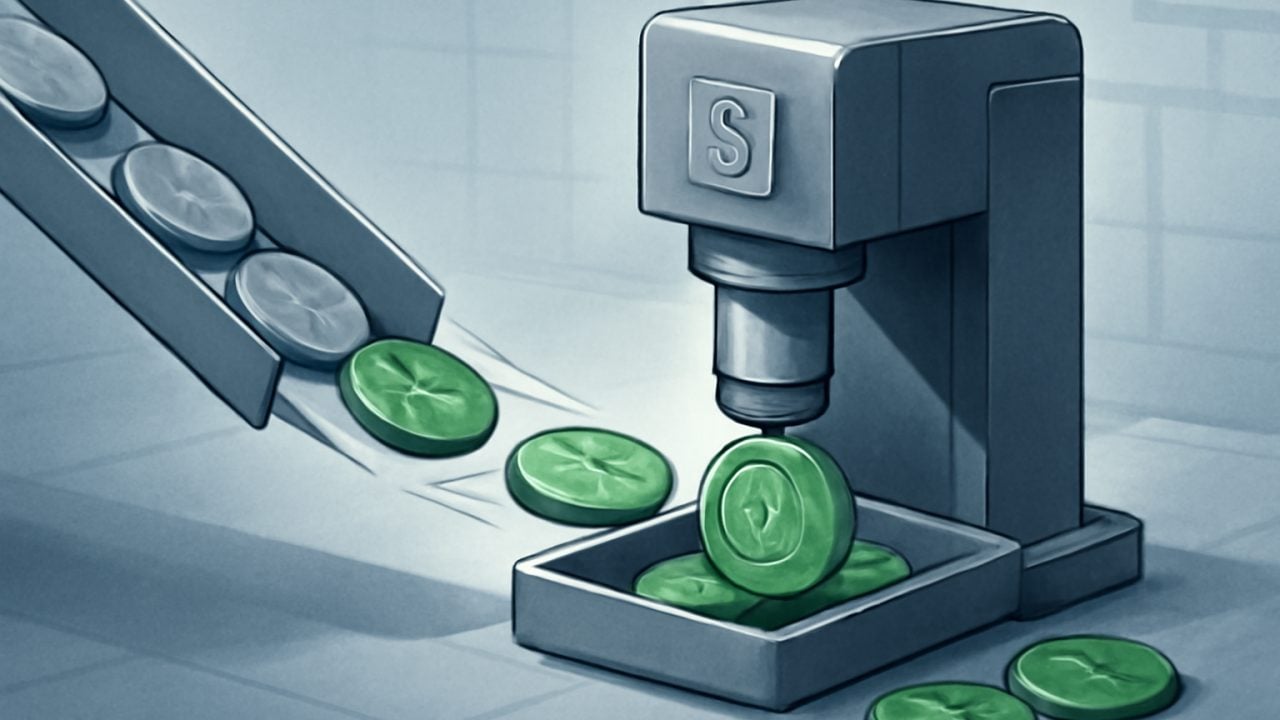
Inference: when local stablecoins integrate through pools paired with USDT or USDC, they inherit the USD as unit of account and settlement baseline. Even as local tokens improve on- and off-ramping or compliance, their most efficient liquidity path often crosses a USD bridge. The more users rely on those bridges in times of stress, the more domestic currency substitution can accelerate.
Evidence of digital dollarization
| Metric | Figure | Source |
|---|---|---|
| Share of stablecoins in USD | ~98% | BIS |
| Global stablecoin market cap | ~$315B (early Apr 2026) | BIS |
| Annual on-chain stablecoin volume | ~$35T | BIS |
| Argentina stablecoin share of crypto volume | 61.8% | Chainalysis |
| Turkey fiat↔stablecoin volume as % of GDP | ~4.3% (Apr 2023–Mar 2024) | Axios |
| Nigeria cNGN early on-chain size | ~66M cNGN ≈ $44k, 74 txns | IMF |
Beyond these snapshots, Chainalysis reports that retail-sized stablecoin receipts in Argentina have grown faster than any other asset type, signaling a household-level hedge against peso depreciation (Chainalysis). Axios’ summary of Chainalysis data shows that in Turkey, stablecoin trading volumes have become large in macro terms, which is unusual for a retail-dominant crypto category (Axios).
In Nigeria, the IMF’s assessment is explicit. Verified: USD-denominated stablecoins “effectively enable households and firms to store and transact in foreign currency outside the domestic banking system,” and inflows have grown to a scale approaching recorded remittances. Meanwhile, the country’s naira-pegged coin remained small in early data (IMF). This is the pattern policymakers worry about.
Consequences for monetary policy and banks
Verified: when users can hold and transfer USD stablecoins outside domestic banks, currency substitution can happen off balance sheet. The IMF’s Nigeria report characterizes this as already occurring in practice (IMF).
Inference: local stablecoins that are tightly interoperable with USDT or USDC may unintentionally normalize a USD store of value, even if day-to-day pricing stays in local units. In stress, the path of least resistance is often into the deepest pool, which is almost always dollar liquidity. Over time that can weaken monetary transmission, complicate FX management, and erode the deposit base as users shift working capital into digital dollars.
Market narrative: some regulators see local stablecoins as a way to modernize payments while keeping value onshore. The challenge is scale and incentives. If onshore tokens remain thinly traded or costly to exit, while USD pools are deep and instantly accessible, users will arbitrage toward the latter. The result is a one-way valve into dollar rails during drawdowns, even if local tokens function for payroll or merchant settlement in normal times.
Consequences for market plumbing and safe assets
Verified: stablecoin issuers hold very large piles of Treasury bills and can influence short-term yields in the data (BIS Working Paper No. 1270). That tie binds the crypto money layer to U.S. public debt markets. As USD stablecoins scale, demand for T-bills can rise in step, reinforcing the depth and convenience of dollar liquidity compared with local-paper collateral.
BIS analysis also references parity gaps and FX spillovers when stablecoin inflows surge (BIS). Inference: during local-currency stress, flows that begin in domestic tokens but route through USDT or USDC can amplify currency substitution and transmit pressure into onshore FX markets. The more liquidity is intermediated via dollar-denominated pools, the more sensitive local conditions become to dollar-cycle dynamics.
Practical implication for builders and exchanges: if local-stablecoin liquidity depends on USD pairs, venue design should assume USD price discovery leads. Hedging, treasury, and compliance processes need to treat USD rails as systemic infrastructure, not an optional bridge.
The best case for local stablecoins
Verified: local stablecoins are growing in some markets. In Brazil, Dune estimates native BRL stablecoin volume grew about 7.6 times year over year from July 2024 to July 2025, and average ticket size rose roughly 330% to about BRL 12,600 (Dune). These are encouraging signals for product-market fit in domestic payments and settlement.
Market narrative: a well-designed local stablecoin can support merchant acceptance, payroll, tax payments, and regulated on-ramps. It can also reduce FX risk for domestic-only flows and improve auditability versus cash. If central banks and supervisors can align licensing, reserves, and disclosure, onshore tokens could anchor digital commerce without immediate recourse to dollars.
But the headwinds are clear. Verified: BIS highlights how local-pegged regulated coins have struggled to scale against USD coins, citing yen-pegged coins at less than 0.01% of USD-pegged supply (BIS). In Nigeria, cNGN’s early footprint was tiny compared with USD stablecoin flows (IMF). In Brazil, many BRL pools pair directly with USDC or USDT, which functionally anchors price discovery to dollars even when the unit of account is BRL (Dune).
Opinion: the most realistic pathway for local stablecoins to counter dollarization is to become so useful for domestic commerce that users hold balances by default and only occasionally bridge to USD. That requires deep local liquidity, reliable reserves, and dense real-economy integrations. Without those, local tokens can become convenient ramps into digital dollars rather than substitutes for them.
Signals that confirm or weaken this thesis
These concrete indicators can validate or challenge the view that local stablecoins accelerate dollarization:
- Share of local-pegged versus USD-pegged stablecoins in both centralized exchange and on-chain volumes, especially during periods of local FX stress. Verified benchmarks today favor USD coins per BIS.
- Liquidity composition on major DEXs. If local-stablecoin pools shift from USDC or USDT pairing to deep same-currency routing, that would weaken the dollarization thesis. Dune’s evidence to date shows frequent USD pairings in Brazil (Dune).
- Official disclosures on domestic stablecoin use from central banks and the IMF. Nigeria’s reporting of USD stablecoin inflows approaching recorded remittances is a strong confirming signal (IMF).
- Changes in parity gaps and FX market spillovers correlated with stablecoin inflows, as flagged by BIS analysis (BIS).
- Issuer reserve disclosures and Treasury bill holdings that reflect continued scaling of USD stablecoins, per BIS research on safe asset demand (BIS Working Paper No. 1270).
- Growth in real-economy use cases for local tokens, such as payroll, merchant settlements, or tax payments, that leads to sustained balances in local units rather than instant bridging into USDT or USDC.
Editorial conclusion: the center of gravity in stablecoins is the dollar and the infrastructure that supports it. Verified data shows users already rely on USD-pegged coins at scale in countries facing currency volatility, while local tokens remain small and often route through USD pairs. Unless local stablecoins achieve deep, independent liquidity and compelling utility for domestic commerce, they are more likely to entrench digital dollarization than reverse it.
Disclaimer: This article is provided for informational purposes only. It is not offered or intended to be used as legal, tax, investment, financial, or other advice.
Related Stories