Paradigm's $1.2B AI Fund: Why Crypto VCs Are Chasing Robotics and Agent Infrastructure
 Karim Daniels
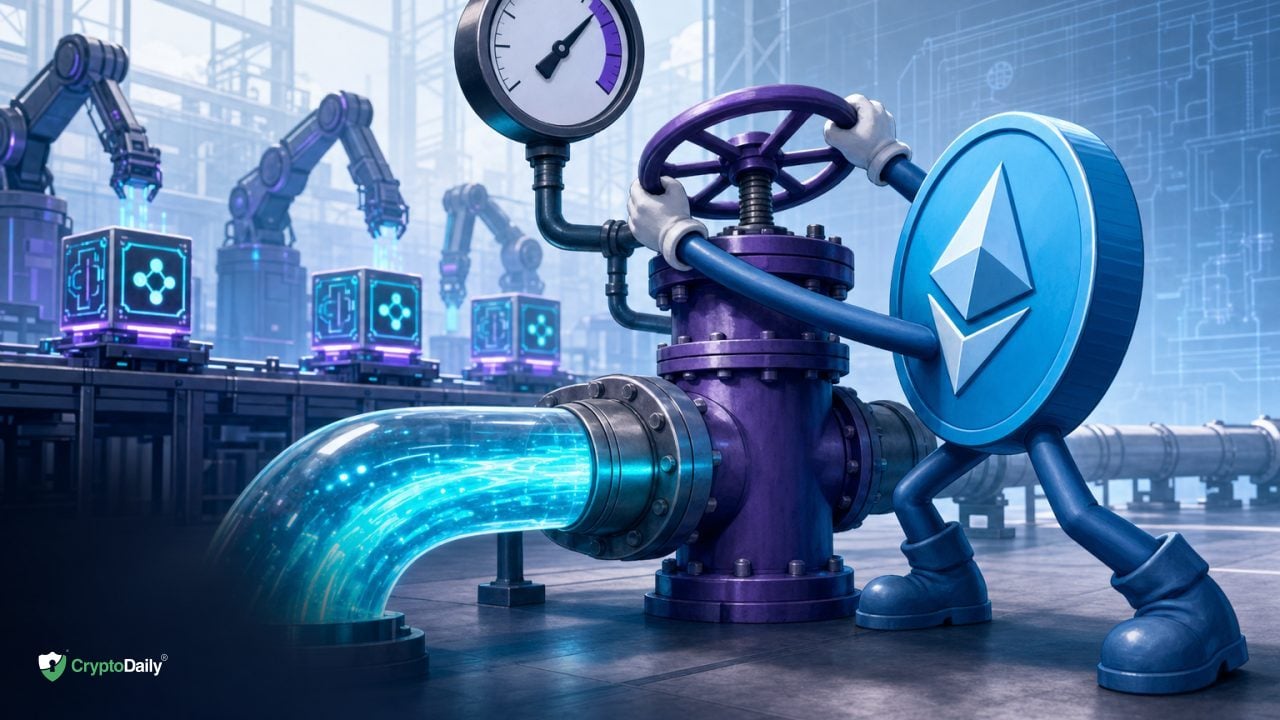
Paradigm just put a big, loud number on a thesis a lot of crypto folks have quietly believed for a while: AI, robots, and onchain rails are going to meet in the middle. And when they do, new markets appear.
We’re not talking a side fund or a cute experiment. It’s a fourth flagship vehicle sized at $1.2 billion, with checks already going into real hardware companies. That’s a signal, not a whim.
If you’re building in crypto, or trying to figure out where the next cycle’s oxygen sits, it’s time to look at agent infrastructure and robotics with fresh eyes. The dots connect more cleanly than they used to.
| Point | Details |
|---|---|
| Paradigm’s new vehicle | $1.2B fourth fund targeting crypto, AI, robotics and other frontier tech, announced July 8, 2026 (Paradigm). |
| Early real-world bets | Investments include Zipline (autonomous delivery; reported $7.6B valuation Jan 2026) and True Anomaly (space-defense; reported $2.2B valuation Apr 2026) (CoinDesk). |
| Open-source posture | Paradigm says it will keep contributing tools like Foundry, Reth, Centaur, and EVMbench alongside the fund (The Block). |
| Agent infra traction | Fundstrat reports >2,000 agents onboarded on ACP v2.0 since April, ~$4.5M gross fees (≈$452k protocol revenue), and >500k tasks via SeeSaw; 30+ Unitree robots active at Eastworlds Labs (Fundstrat). |
| Why crypto VCs care | Onchain rails settle payments, escrow, and coordination for AI systems and fleets of robots; tokens can price work, risk, and access in machine-to-machine markets. |
| Main caveats | Hardware burn, regulatory overlap (aviation/defense), smart-contract exploits, and hype-prone token models that outpace real demand. |
Paradigm’s $1.2B bet, in plain words
Paradigm publicly rolled out a $1.2 billion fourth fund to back crypto, AI, robotics, and other frontier plays in July 2026. That’s straight from the source, and the tone wasn’t shy about the scope (Paradigm).
The surprise came not from the number, but from where the early dollars landed: autonomous delivery via Zipline and space-defense via True Anomaly, both with substantial reported valuations already in 2026 (CoinDesk). That’s not a dabble into “AI tooling” around the edges; it’s a tilt toward physical systems and security.
At the same time, the firm says it’s keeping the open-source engine running: Foundry for testing, Reth for clients, Centaur for research, EVMbench for security benchmarking, and more (The Block). If you’ve shipped smart contracts in the last few years, you’ve probably touched at least one of those.
So what’s the through line? Agents and autonomy need trust, coordination, and programmable money. Crypto already does those three things pretty well, even if we still argue about gas fees and UX.
Why robots and agents are suddenly at the top of crypto VC shortlists
The logic chain isn’t complicated:
- AI systems can reason and act, but they need wallets, permissions, and settlement.
- Robotic fleets need identity, task assignment, and payments that clear fast across borders.
- Humans won’t be in every loop. That means onchain rules, escrow, and dispute systems matter more, not less.
Viewed that way, crypto rails look less like speculation and more like plumbing. Not glamorous, but essential. And it unlocks new business models:
- Pay-per-task for machine labor, priced by tokens with clear supply mechanics.
- Insurance and risk pools: staking or reinsurance-like structures that underwrite delivery, uptime, or collision risk.
- Data marketplaces where sensors and agents sell verified streams with royalties baked in.
If robots can earn, coordinate, and spend, you get machine-to-machine economies. That’s the pitch.
What’s actually running today in agent infrastructure
It’s not all theory. Fundstrat’s Q2 view on Virtuals Protocol’s agent stack is one of the better reality checks out there. Their numbers show agent workloads and fees accumulating in public, not just in slide decks. Highlights:
- ACP v2.0 launched in April 2026 and onboarded more than 2,000 agents by June.
- Cumulative gross ACP fees around $4.5 million, translating to roughly $452,000 in protocol revenue so far.
- Completed jobs peaked near 414,000 in January; daily users around 1,321 in March.
- SeeSaw has powered over 500,000 tasks.
- Eastworlds Labs reportedly operates a fleet of 30+ Unitree robots, tying the agent layer to real machines.
All of that is from one ecosystem snapshot, but it shows a pattern: agents are doing real, measurable work. The throughput isn’t Web2-scale yet. Still, the curves are bending the right way (Fundstrat).
Under the hood: what the stack looks like
- Identity: agents with keys, attestations, and reputations.
- Coordination: marketplaces and schedulers that match tasks to agents.
- Settlement: escrow contracts, milestones, dispute modules, and payouts.
- Tooling: SDKs and model adapters so LLMs and planners can trigger onchain actions safely.
Pro tip: If you’re evaluating an agent network, start with the escrow logic and dispute design. That’s where incentives break first.
How crypto rails plug into physical robots without breaking stuff
Robots touching the real world face practical constraints: safety, battery life, network dropouts, and jurisdictional rules. You can’t ask a drone to wait 12 confirmations to decide whether to drop a package.
So the workable architectures tend to look like this:
- Tasks and payments negotiated off-chain with verifiable commitments.
- Escrow posted onchain ahead of time with clear release conditions.
- Proofs or attestations (cryptographic, sensor-based, or third-party oracles) trigger staged payouts.
- Fallbacks for disputes, partial completion, or safety overrides.
What changes in 2026 versus a few years ago? Two things:
- Cheaper, more reliable hardware. Look at the Unitree fleets getting fielded in labs and pilots.
- Better open-source crypto tooling. Paradigm keeping the lights on for dev tools like Foundry, Reth, Centaur, and EVMbench is not charity; it lowers friction for every team trying to wire robots to smart contracts (The Block).
If it feels like DeFi meets DePIN with a safety officer watching, you’re getting warm.

Where venture dollars could land inside crypto itself
Paradigm’s checks into Zipline and True Anomaly say “we take the physical world seriously.” But there’s a long tail of crypto-native categories that benefit as those bets scale.
Likely hotspots
- Agent coordination layers: order books for tasks, reputation graphs, and modular escrow.
- Data supply chains: marketplaces for maps, geospatial feeds, visual datasets, and synthetic data, with embedded royalties.
- Verification tooling: cryptographic proofs, sensor attestation bridges, and audit trails that regulators can live with.
- Insurance and risk pools: staking or reinsurance-like structures that underwrite delivery, uptime, or collision risk.
- Real-world asset rails: compliant entities to hold fiat flows, with onchain interfaces that agents can call.
Token design that doesn’t implode
- Pay for usage, not vibes. Tie token demand to tasks, data retrieval, or compute minutes.
- Make supply legible. If emissions fund growth, show how they decay and when they end.
- Isolate risk. Split utility, governance, and insurance functions rather than one token doing everything badly.
Pro tip: If a token’s best use case is “number go up,” it won’t survive a bad quarter of robot downtime.
Agents vs. robotics: two flavors of the same economy
There’s a temptation to separate “AI agents” from “robotics.” In practice, they share rails. Here’s a quick way to think about it.
| Dimension | AI Agents (digital) | Robotics (physical) |
|---|---|---|
| Latency tolerance | Seconds to minutes; retries are fine | Milliseconds to seconds; safety-critical |
| Settlement pattern | Batch-friendly; escrow per job | Staged milestones; heavy on attestations |
| Regulatory surface | Data, privacy, platform rules | Aviation, labor, safety, export controls |
| Key crypto primitives | Wallets, allowlists, task markets | Escrow, oracles, dispute resolution |
| Main failure mode | Spam and low-quality work | Damage, liability, regulatory shutdown |
The tooling you build for one side often benefits the other. That’s partly why you’re seeing crypto VCs widen the aperture instead of staying pure-play on DeFi.
Practical diligence: what to ask before you invest or integrate
For founders pitching agent or robotics-crypto hybrids
- Show unit economics at the task level. How much does one delivery, inspection, or labeling job cost and earn?
- Map the oracle risk. Who attests to job completion, and what happens when they’re wrong?
- Demonstrate off-chain fallbacks. If the chain is congested or down, does safety hold?
- Explain your regulatory map by region. Drones in the US are not drones in LATAM or Africa.
- Open-source posture. Which modules are you building on top of, and what’s your contribution back to the commons?
For investors screening deals
- Look for a clear customer. Who is paying now? Pilots are fine, but who signs the annual?
- Verify hardware readiness. If the robot breaks weekly, token mechanics won’t save you.
- Stress test token demand. What happens to revenue and token sinks if task volume halves?
- Check security assumptions. Are keys in secure enclaves? Are human override paths auditable?
- Read the governance. Can the protocol pause payouts in a safety incident, and who has that key?
Real risks that could ambush this thesis
No one should pretend this is risk-free. A few that deserve extra attention:
Technical fragility
- Smart-contract exploits that drain escrows or fake attestations.
- Agent model drift leading to odd behavior, then costly real-world mistakes.
- Network partitions or latency spikes that collide with safety constraints.
Regulatory drag
- Airspace and delivery rules that slow or halt pilots.
- Export controls on dual-use tech, especially around space or defense.
- Financial compliance if agents hold or move value across borders.
Market hype cycles
- Tokens priced for perfection long before real throughput shows up.
- Crowded cap tables chasing the same “agent marketplace” story with little differentiation.
- Underappreciated OpEx in robotics that eats runway faster than planned.
Pro tip: If a deck hand-waves through insurance, liability, and dispute paths, you’re underwriting those risks yourself.
None of this is a reason to sit out. It’s a reason to demand better system design and clearer, slower-governed rollouts.
Header image from Paradigm’s July 8, 2026 announcement ‘Announcing Our Fourth Fund’ — visual evidence of the firm’s $1.2B fund and public shift to include AI and robotics investments. — Source: Paradigm (official blog post)
Twelve-month signals worth tracking
- Agent job quality and take-rates: are fees growing because value is growing, or because emissions hide churn?
- Physical-world wins: repeat delivery corridors, inspection contracts, or municipal partnerships that renew.
- Tooling adoption: broader use of developer stacks like Foundry and client diversity like Reth in production apps.
- Insurance footprints: the first credible risk pools backing robot SLAs without blowing up.
- Regulatory clarity: sandbox programs for drone corridors or autonomous vehicles with crypto-native settlement.
Onchain metrics are helpful, but the best tells may be offline: fewer pilots, more purchase orders.
Why Paradigm’s move matters beyond the headlines
Plenty of funds can write big checks. Paradigm pairing those checks with open-source infrastructure and a crypto-native worldview is the more interesting piece. The firm explicitly said it will keep shipping tools like Foundry, Reth, Centaur, and EVMbench even as it backs frontier tech rounds (The Block). That’s a recipe for compounding: developers get better tooling, which reduces integration risk for robots and agents, which supports more ambitious deployments.
Also, the early allocations into Zipline and True Anomaly signal comfort operating near regulators and safety-critical domains (CoinDesk). If you want crypto primitives to mediate real-world work, that’s the arena you need to be in anyway. Better to build there now than bolt it on later.
A practical closing thought
Crypto’s role here is simple to state and hard to execute: give autonomous systems ways to prove work, get paid, and resolve disputes without a human referee in every loop. The pieces exist. The uncomfortable parts are the trade-offs around speed, safety, and governance. Teams that treat those as first-class product problems will have the best shot at durable traction.
If you want balanced reporting on this convergence as it unfolds, Crypto Daily has eyes on both the dev trenches and the policy halls. You can find our latest coverage at cryptodaily.co.uk.
Frequently Asked Questions
What exactly did Paradigm announce?
A $1.2 billion fourth venture fund focused on crypto, artificial intelligence, robotics, and other frontier tech. The firm also emphasized ongoing support for open-source tools in the crypto stack, per its own announcement and trade press coverage.
Why are crypto VCs investing in hardware like drones and space-defense?
They see autonomous systems needing programmable settlement, identity, and coordination. If robots and agents transact with each other, onchain rails are a natural fit for payments, escrow, and dispute resolution. Backing the hardware side helps drive real demand for those rails.
Is there real traction in agent infrastructure yet?
Yes, in pockets. Fundstrat’s June 2026 report cites thousands of agents onboarded, millions in gross fees, and hundreds of thousands of tasks completed within one agent ecosystem, plus early robotics deployments. It’s not mass-market yet, but it’s measurably active.
How does this affect existing crypto categories like DeFi?
DeFi becomes more like backend plumbing for machine economies: escrows, risk pools, and programmable payouts. Expect more protocols that look boring from a trader’s lens but are indispensable for robotic workflows.
What are the biggest risks to the thesis?
Smart-contract exploits, safety incidents in the physical world, regulatory friction in aviation or defense, and token models that front-run real usage. Teams need robust dispute systems, insurance backstops, and conservative governance.
What should founders building in this space prioritize?
Clear unit economics per task, safety-first architecture with off-chain fallbacks, credible attestation and oracle design, and regulatory planning by region. Make the token a tool, not the product.
Is this financial advice?
No. This is analysis and context. Crypto and frontier tech are volatile and risky. Do your own research and consider professional advice where appropriate.
Disclaimer: This article is provided for informational purposes only. It is not offered or intended to be used as legal, tax, investment, financial, or other advice.
Related Stories