Crypto Audit Gap: Why Private-Key and Phishing Losses Break the Smart-Contract Audit Model
 Karim Daniels
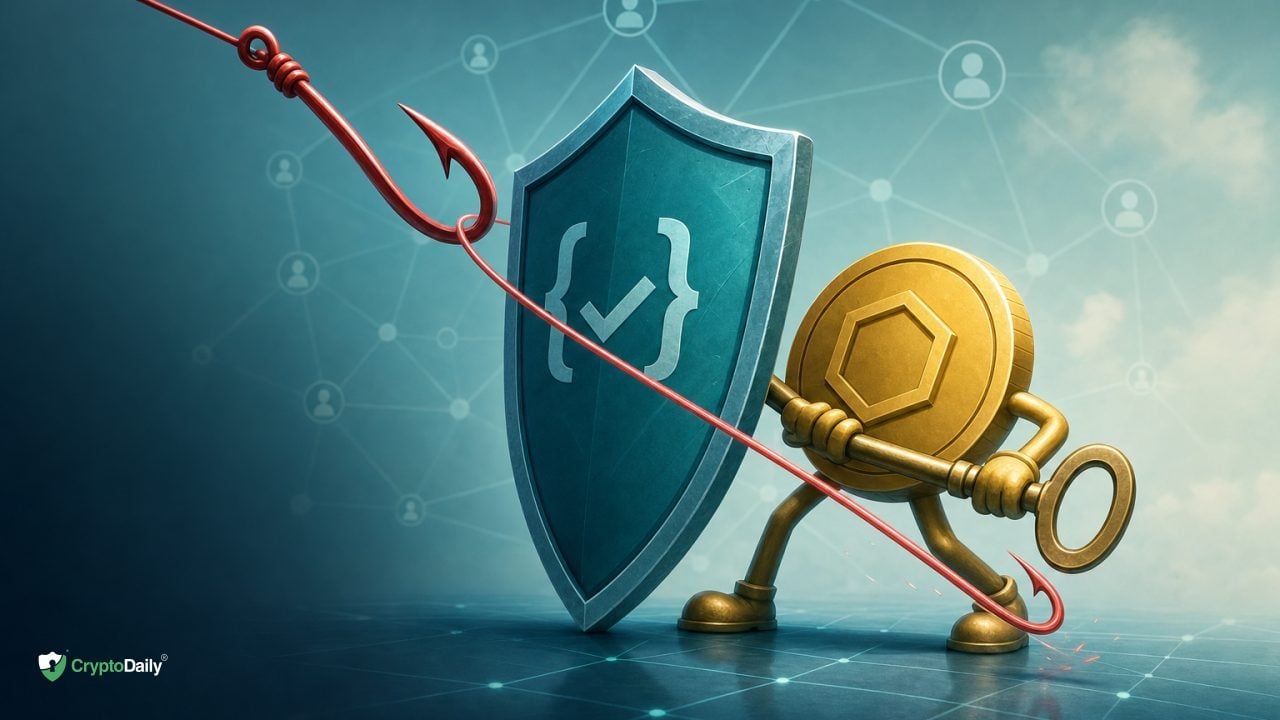
Smart-contract audits are treated like a silver bullet. Teams post the badge, investors feel safer, and users breathe easier. Then a single key leak or a sneaky approval drains the treasury overnight. The code passed. The money didn’t.
This piece looks squarely at that gap: the losses that have nothing to do with exploitable code paths and everything to do with humans, keys, approvals, and operational shortcuts.
If you build, run a DAO, or simply manage a decent-sized bag, it’s time to tune your security model to reality, not the marketing of an audit PDF.
| Point | Details |
|---|---|
| Half of losses aren’t code bugs | An empirical study found ~49.6% of realized losses come from private-key compromise, phishing, and social engineering, not smart-contract flaws (arXiv). |
| Phishing is industrialized | Approval-phishing and reused cash-out infrastructure pulled in at least $14B in 2025, likely trending higher with more attribution (Chainalysis). |
| Admin-key risk is systemic | A June 2026 admin/private-key compromise at Humanity Protocol led to ~$32–$36M stolen and an ~80–90% token crash (CoinDesk). |
| Incidents are frequent | Q2 2026 became the most-hacked quarter on record by incident count, with ~83 events and ~$755.3M stolen by June 22 (Cointelegraph). |
| Audits aren’t enough | Audits test code; attackers target people, keys, and approvals. Security has to include ops, wallet hygiene, and revocation habits. |
The audit blind spot most teams still ignore
Audits examine code. Attackers examine you. They target the deployer’s laptop, the community manager’s DMs, the multisig signer who’s traveling with a hot wallet, and the retail user who signs a malicious approval buried in a slick UI.
This isn’t guesswork. An empirical study submitted in mid-June 2026 estimated that about 49.6% of realized crypto losses since 2022 come from private-key compromise, phishing, and broader social engineering, not contract logic failures (arXiv).
Stack that with incident frequency. Market-intel from late June 2026 flagged Q2 as the most-hacked quarter on record by count: roughly 83 incidents and about $755.3 million stolen by June 22 (Cointelegraph reporting Unfolded/DeFiLlama). Many of those weren’t clever reentrancy chains. They were operational openings, approval traps, and compromised signers.
So when a project boasts “audited,” ask a simple follow-up: who holds the keys and how are approvals managed? If the answers are vague, the risk is real.
Private keys, admin keys, and the one-failure cascade
One compromised admin or deployer key can collapse months of engineering in an afternoon. We don’t have to look far for an example. On June 8–9, 2026, Humanity Protocol suffered a private-key or admin-key compromise that let attackers mint and move H tokens, stripping an estimated $32–$36 million and triggering an immediate ~80–90% price collapse (CoinDesk).
That’s the nature of admin authority. It’s a fat red button. And if it’s a single EOA key sitting on a laptop, you don’t have a product risk, you have an organizational risk.
How admin risk sneaks in
- Emergency pausers without delays end up as universal remotes.
- Upgradeability behind a lone key or a lightly secured 2-of-2 wallet creates brittle dependencies.
- Deployer keys recycled for governance or treasury functions drag risk across domains.
- Signer devices double as daily drivers with browser extensions, email, and social apps.
Pro tip: If your admin function can move user funds, the right default is a time-locked, threshold-controlled path with a published runbook for emergencies.
Approval‑phishing isn’t a bug. It’s a business model now
Approval-phishing turns wallets into permission dispensers. You think you’re signing to stake or claim. You actually grant an allowance that lets an attacker pull assets later. It’s quiet, scalable, and the cash-out infrastructure can be reused across victims.
Chainalysis highlighted how big this has become, reporting that on-chain scams took in at least $14 billion in 2025 and likely trend toward $17 billion as more addresses are linked, and specifically calling out approval-phishing as a major, growing vector (Chainalysis).
What makes people click
- FOMO wrappers: “Exclusive pre-mint” or “bonus airdrop window closing.”
- Familiar branding: cloned domains and verified-looking socials.
- Motion blur: mobile signing prompts while on the move.
What makes approvals dangerous
- Unlimited allowances on stablecoins and blue chips stick around long after you forget them.
- Malicious contracts can pull assets in a different session, at 3 a.m., from a different dapp.
- Revocation is manual, so inertia works for the attacker.
Operational reality: no audit of a lending protocol will protect a user who just granted an unlimited USDC allowance to a fake front-end. You need wallet habits and revocation hygiene.
What audits really cover vs what they don’t
A good audit is still worth doing. It tests logic, assumptions, and edge cases. But it’s not a substitute for key management and phishing-resistant workflows. Here’s the split in plain terms.
| Area | Audits Typically Cover | Often Out of Scope |
|---|---|---|
| Contract Logic | Reentrancy, overflow/underflow, access control in code, economic checks | Post-deploy parameter changes via admins; governance misuse |
| Integrations | Known protocol interfaces, simple oracle assumptions | Front-end supply-chain security, DNS hijack, wallet-extension spoofing |
| Key Management | Role definitions in code only | How keys are generated, stored, rotated, and who holds the hardware |
| User Safety | N/A | Approval hygiene, phishing education, revocation UX |
| Monitoring | N/A | On-chain alerting, anomaly detection, emergency runbooks |
Read your audit’s “assumptions” page. That’s where the liabilities live. If it says “assumes trusted admin keys” and you’re running a single EOA, your risk is mispriced.
A practical layered defense for teams
You don’t have to boil the ocean. You do need to reduce single points of failure and make it expensive to phish you.
Keys and control
- Threshold signatures over single EOAs. Start with 2-of-3 or 3-of-5 for admin and treasury. Keep one key in an offline vault location.
- Hardware-backed signers only. No hot wallets for governance or treasury moves. Disable browser auto-approval quirks.
- Role separation. Deployer, pauser, upgrader, and treasury should be distinct control paths.
- Time locks and circuit breakers. Force a delay on sensitive upgrades and large transfers; publish alert channels users can watch.
- Rotation cadence. Quarterly key rotation for operational signers; immediate rotation after any team departure.
Front-end and supply chain
- Domain integrity. Registry locks, 2FA with hardware keys for DNS, and monitored certificate changes.
- Build reproducible front-ends. Track content hashes and alert on mismatches.
- Vendor risk lists. Extensions, analytics, and SDKs get reviewed like code. Remove what you don’t need.
User-facing safety net
- Clear signing prompts. Explain what a transaction or approval does, in human language, before users click.
- Allowance minimization. Default to precise, small approvals in your UI; remind users to grant per-use amounts.
- Revocation links in-product. Surface a one-click path to revoke stale allowances. If you can, display the biggest exposures by token.
Monitoring and drills
- On-chain alerts. Watch admin calls, large outflows, and role changes. Tie alerts to pager duty, not just Slack.
- Incident runbooks. Name the decision-makers, thresholds, and comms templates. Practice twice a year.
- Bug bounty with scope. Include front-end, DNS, and phishing-report bounty tiers, not just solidity.
Pro tip: The cheapest upgrade is cultural. Make it normal to ask “who else needs to approve this?” and “what’s our rollback if this key disappears?”

Wallet-side habits that prevent approval and key disasters
Most of us learn wallet safety by losing something small. Better to learn it on purpose. Here’s a compact regimen you can put on calendar rotation.
Daily and weekly
- Approve with intent only. If a website requires a huge allowance for convenience, walk away or set a minimal, one-time amount.
- Disable blind signing in your wallet settings if possible. You want readable prompts.
- Use a separate browser profile or device for signing. No email, no random extensions, no socials.
- Verify domains manually. Bookmark official URLs. Don’t trust ad slots.
Monthly
- Revoke stale allowances. Check token approvals for your main networks and prune aggressively. Tools like revoke.cash or explorer approval dashboards work.
- Rotate small hot wallets. Keep your main holdings on hardware; use burner wallets for experiments.
Quarterly
- Backups. Confirm recovery phrases are intact and stored separately. Consider a steel backup for primary hardware wallets.
- Test restores. Spin up a spare device and restore a non-critical wallet to prove the backup works.
Pro tip: Treat stablecoin approvals as cash exposure. If a random dapp holds a USDC allowance from six months ago, that’s a line of credit you didn’t mean to open.
How to measure security beyond the audit badge
Security improves when you can see it. These are practical metrics you can track on a dashboard and bring to every board or DAO call.
- Approval exposure: Top five tokens by allowance sum across your treasury and ops wallets. Target a downward trend.
- Signer distribution: How many signers live in the same city, work in the same office, or share custody? Reduce correlation.
- Rotation velocity: Average days between key rotations for operational signers. Set an upper bound and stick to it.
- Response time: Minutes from suspicious admin call alert to freeze or mitigation action.
- Bounty coverage: Percentage of total code and front-end assets covered by an active, paid bounty scope.
- User comms readiness: Time to publish an incident notice, with revoke instructions and a known-safe domain.
The goal isn’t perfection. It’s to tighten the loop between detection, decision, and action, and to remove single, fragile dependencies along the way.
The uncomfortable culture shift security needs
Audits are public. Key-management discipline is largely invisible. That’s why teams over-invest in what’s easy to announce and under-invest in what actually stops theft.
Make the boring stuff visible. Publish your admin architecture in your docs. Set public time locks where you can. Share your revocation how-to. Reward community members who flag suspicious links, not just meme contests. It signals priorities.
And when an incident hits the wider market, extract the lesson. The June 2026 data points aren’t outliers; they’re reminders. Nearly half of realized losses are off-chain vectors (arXiv). Approval-phishing is well funded, industrialized, and evolving (Chainalysis). Incident counts are up, irrespective of headline totals (Cointelegraph). And a single admin key can vaporize market cap in hours, as we saw with Humanity Protocol (CoinDesk).
You can’t audit your way out of that. You can design and practice your way through it.
If you want more coverage like this without the hype, Crypto Daily tracks security trends, data, and real post-mortems. Drop by cryptodaily.co.uk and stay ahead of the human side of risk.
Frequently Asked Questions
Are smart-contract audits still worth it if half of losses are off-chain?
Yes, audits catch logic flaws and design errors that can be catastrophic. The point is they’re necessary but incomplete. Pair them with strong key management, time locks, revocation UX, and monitoring.
What’s the simplest step to reduce approval-phishing risk today?
Revoke stale allowances on your primary chains, then switch to minimal, one-time approvals. Bookmark official sites and disable blind signing so prompts are readable.
How many multisig signers should a small team use?
For most early projects, 2-of-3 or 3-of-5 is a practical start. Distribute hardware across people, locations, and ISPs. Add a time lock for major actions.
Can account abstraction or smart wallets solve phishing?
They can help with policies, spending limits, and session controls, but they won’t fix social engineering by themselves. You still need education, revocation habits, and front-end integrity.
What makes admin keys especially dangerous?
They compress a lot of power into a single credential. If compromised, an attacker can mint, pause, upgrade, or drain routes that the code otherwise protects against.
How do I measure if my team’s security posture is improving?
Track allowance exposure, signer dispersion, rotation cadence, alert-to-action time, and bounty scope. Review these monthly and publish summaries to your community or board.
Why are incident counts rising even when total dollars sometimes fall?
Attackers are probing more surfaces and automating social vectors like approvals. Dollar totals concentrate in a few big events, but the long tail of smaller incidents keeps growing.
Disclaimer: This article is provided for informational purposes only. It is not offered or intended to be used as legal, tax, investment, financial, or other advice.
Related Stories