Zcash Ironwood Fork: Can ZEC Turn a Security Scare Into a Privacy-Coin Comeback?
 Lena Carter
Zcash just pulled itself through an uncomfortable security scare and is now aiming for a cleaner, more verifiable future with Ironwood. If you hold ZEC, use shielded transactions, or watch privacy coins as a trade, this moment matters. The choices made in the next few weeks could decide whether ZEC fades or fights back.
We will unpack what went wrong in Orchard, what NU6.2 actually fixed, how Ironwood changes the trust model, and what it means for price, liquidity, and user safety. No hype, just the moving parts, the timelines, and the gotchas to avoid.
Quick Answer
Yes, ZEC can turn the security scare into a comeback, but only if Ironwood ships smoothly, exchanges and wallets line up, and the market buys the new supply-verification story. NU6.2 stabilized the chain and re-enabled shielded activity with a corrected circuit. Ironwood goes further by introducing a fixed shielded pool and a turnstile to independently verify circulating supply. Execution and communication now matter more than anything.
- Emergency NU6.2 hard fork activated at block 3,364,600 on June 3, 2026, re-enabling Orchard with a corrected circuit (Zcash Community Forum).
- Ironwood proposal (June 6) creates a new fixed Orchard-based shielded pool plus a turnstile migration to verify supply, targeting late July activation pending testing (ZODL).
- Market whipsaw: ZEC fell roughly 40% on the disclosure, then rebounded about 45% by June 8 as fixes landed and Ironwood was floated (CoinDesk, Cointelegraph).
- Several exchanges paused ZEC deposits and withdrawals around NU6.2, with services expected to resume after the upgrade window (ZcashTracker).
What exactly broke in Orchard, and what did NU6.2 fix?
Orchard is Zcash’s shielded pool that uses zero-knowledge proofs to keep transaction details private. The issue disclosed in late May was a soundness vulnerability in the Orchard circuit. In simple terms, soundness is the property that prevents invalid transactions from being proven as valid. When soundness slips, the scary scenario is undetected inflation or other state inconsistencies.
To stabilize the network, developers shipped an emergency network upgrade. NU6.2 activated at block height 3,364,600 on June 3, 2026, re-enabling Orchard with a corrected circuit and coordinating node and wallet updates (Zcash Community Forum). Around the window, some exchanges and infrastructure paused ZEC deposits and withdrawals, with services expected to resume as the upgrade settled (ZcashTracker).
It was a fast, surgical response. The purpose was not to overhaul Zcash overnight but to close the immediate risk so the community could move on to a cleaner long-term design. That longer-term design is Ironwood.
How will Ironwood change Zcash’s privacy and auditability?
The Ironwood proposal, published June 6, 2026, pivots Zcash to a new, fixed Orchard-based shielded pool. The big idea is a turnstile migration with a checkpoint. Users move funds from the legacy pools into the new pool, and that movement lets anyone independently verify the total circulating supply without breaking privacy guarantees (ZODL).
Why does this matter? Privacy coins fight a constant perception battle. If you cannot verify supply, the market assumes the worst whenever a bug pops up. Ironwood’s turnstile is a way to reset trust. It offers a public-accounting moment that does not expose who owns what, yet still lets observers check that the amount entering the new pool lines up with the expected circulating supply.
The timeline is tight. Ironwood targets activation in late July 2026, pending testing and coordination with wallets, nodes, and exchanges (ZODL). If the testing finds issues, expect dates to slip. Better a small delay than a rushed migration.
Could this be the narrative pivot ZEC needs in 2026?
Markets are cynical until they are not. ZEC sold off hard after the bug disclosure, dropping roughly 40 percent, trading below 350 dollars and briefly near 303 dollars. Then, as the emergency fix landed and Ironwood was proposed, it squeezed higher. CoinDesk reported about a 45 percent rebound off the lows into the mid 400s by June 8, 2026 (Cointelegraph; CoinDesk).
Price action like that is more about positioning and liquidity than deep conviction. Still, it tells you there is optionality here. Traders love a clean reset story. If Ironwood delivers verifiable supply and the ecosystem coordinates cleanly, ZEC’s bear case softens. On the other hand, if activation is bumpy or exchange support lags, the relief rally can fade just as quickly.
One encouraging sign was infrastructure coordination. Several exchanges paused deposits and withdrawals around NU6.2, then worked to bring services back online as the patch stabilized the network (ZcashTracker). For a privacy coin under scrutiny, that operational alignment matters as much as headlines.
How does Zcash post-Ironwood stack up against Monero and older Zcash?
Different privacy models solve different problems, and they come with tradeoffs. Here is a high-level comparison to organize the thinking. This is context, not a verdict.
| Feature | Zcash pre-Ironwood | Zcash with Ironwood (proposed) | Monero (context) |
|---|---|---|---|
| Privacy model | zk-SNARKs in shielded pools | zk-SNARKs in a new fixed Orchard-based pool | Ring signatures, stealth addresses, RingCT |
| Default privacy | Optional (transparent and shielded addresses) | Optional, with migration encouraging shielded usage | Default private |
| Supply auditability | Harder to independently verify across legacy pools | Turnstile migration enables independent verification | Auditable total supply by protocol design |
| Address types | t-address, sapling, orchard | Unified under a fixed new shielded pool | Single address type for users |
| Migration complexity | Multiple pools over time | One-time turnstile checkpoint then a stable pool | No pool migrations |
| Exchange friendliness | Mixed, some prefer transparent flows | Clarity may help compliance and monitoring | Mixed due to default privacy |
| Upgrade status (June 2026) | NU6.2 live, Orchard re-enabled | Ironwood proposed, testing, target late July | Ongoing network upgrades separate from ZEC |
If Ironwood lands as described, Zcash gets a cleaner story. A stable shielded pool that supports independent supply verification is easier to explain to risk teams. It does not guarantee new listings or deeper liquidity, but it removes one of the biggest question marks.
What should users and holders do during the migration window?
This is the practical part. If you plan to transact or hold during the Ironwood rollout, reduce friction by preparing now. A little housekeeping goes a long way.
- Update everything. Node operators and power users should upgrade to client versions flagged by the Zcash Foundation and Electric Coin Company. Wallet users should install the latest releases from official channels.
- Confirm exchange status before moving funds. Check your exchange’s maintenance page or social channels for ZEC deposit and withdrawal status during each activation window.
- Send a test transaction first. Move a tiny amount through the new pool before pushing size. Validate that the receiving wallet sees funds and can spend them.
- Watch the activation height and timing. Put the target height on your calendar and verify again a day before in case the date shifts.
- Use fresh addresses as recommended. Expect wallets to surface updated unified or Orchard-focused addresses once Ironwood is live.
- Back up viewing keys and seed phrases. Migration is when mistakes happen. Verify backups on a second device.
Pro tip: Phishing spikes around upgrades. Avoid any wallet or site asking you to “re-enter seed to claim Ironwood funds.” There is no claiming. Only use links from official repositories and signed releases.
Also, keep your expectations realistic on fees and confirmation times around activation day. Mempools can yo-yo as services come back online and users migrate in bursts.
What are the main risks that could still derail a comeback?
Technical execution risk is the obvious one. Ironwood changes core plumbing. Even with audits and testing, new code can surface edge cases under mainnet load. A minor bug is manageable. A serious one would reset confidence.
Liquidity and venue risk comes next. Some exchanges paused ZEC flows during NU6.2. If key venues stay conservative or restrict shielded withdrawals after Ironwood, market depth could lag. That would keep spreads wide and make price action choppier than usual (ZcashTracker).
Regulatory risk is always in the room with privacy coins. Ironwood’s supply verification may help with institutional comfort, but default privacy remains a policy debate in many regions. Rules can change quickly. Finally, there is reputational overhang. One scare is survivable. Two in a row becomes a narrative.
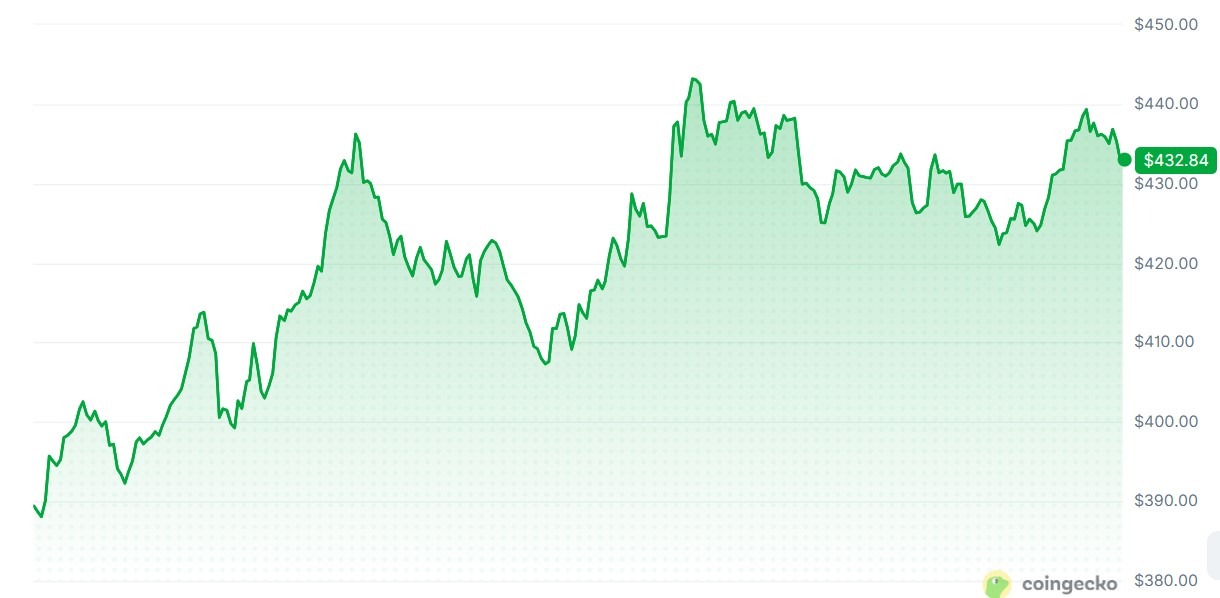
CoinGecko 24‑hour ZEC price chart (embedded in Cointelegraph) showing the June plunge to ~ $303 and the quick rebound into the $400s — a visual of market reaction to the Orchard bug and the Ironwood proposal. — Source: Cointelegraph (CoinGecko price chart embed)
Is ZEC investable after the scare, or just a bounce?
It depends on your tolerance for volatility and your view on privacy as a use case. The bounce off the lows shows there are fast-money bids when uncertainty clears. The question is whether steady demand shows up after the turnstile migration, when supply verification becomes a talking point rather than a promise.
Practical approach for many market participants is to build a watchlist rather than a position right away. Triggers to watch: final Ironwood test results and release candidates, exchange communications on deposit and withdrawal policies, wallet support for the new pool, and whether on-chain shielded activity normalizes. None of this guarantees performance. It just lowers unknowns.
As always, this is not financial advice. Privacy assets are volatile, venue dependent, and sensitive to headlines. Size positions accordingly and assume wider slippage than usual around activation dates.
Common Mistakes
- Rushing large transfers on activation day. Networks and services are in flux. Send a small test first, then scale.
- Using outdated wallet builds. Old software may not recognize the new pool. Update from official repositories before transacting.
- Ignoring exchange maintenance notices. Deposits can be credited late or rejected during upgrade windows. Always check status pages.
- Mixing address types blindly. Make sure your sender and receiver both support the new pool format. When in doubt, generate a fresh address.
- Falling for “migration airdrops.” There is no bonus token for moving to Ironwood. Treat unsolicited claims as scams.
If you want ongoing coverage as Ironwood approaches, Crypto Daily tracks these rollouts and the market reaction in real time. Visit Crypto Daily for updates and context as the dates firm up.
Frequently Asked Questions
Will my funds be lost if I do not migrate immediately when Ironwood activates?
Your funds should remain in their original pool, but spending options can get limited over time as wallet and exchange support shifts to the new pool. Plan to migrate with guidance from your wallet provider once Ironwood is live and stable.
How will independent supply verification work after Ironwood?
The turnstile migration creates a checkpoint where funds move from legacy pools into the new fixed pool. Observers can compare the total value crossing into the new pool with the expected circulating supply. Exact tooling will come from client maintainers and community auditors.
Do hardware wallets need firmware updates for Ironwood?
Likely yes, or at least app-level updates. Vendors usually publish release notes near activation dates. Check your device’s official channels before initiating migrations or large sends.
What happens to viewing keys and address formats?
Viewing keys and unified addresses should continue to exist, but wallets may encourage or require addresses aligned with the new fixed pool for full functionality. Follow your wallet’s post-activation instructions and generate fresh addresses as recommended.
Can I continue to use transparent addresses during and after Ironwood?
Transparent addresses are part of Zcash, but the focus is on shielded usage. Some platforms may prefer or require transactions that interact with the new pool. Check policies where you custody or trade ZEC.
What if the late July activation target slips?
Then it slips. That is normal for security-focused upgrades. Teams will communicate revised targets if testing surfaces issues. Better to wait for green lights than to rush a migration that handles significant value.
Are there tax implications for moving through the turnstile?
In many jurisdictions, moving coins between your own addresses is not a taxable event, but reporting rules vary. Keep records of transactions, timestamps, and values. Consult a tax professional for your location and situation.
Disclaimer: This article is provided for informational purposes only. It is not offered or intended to be used as legal, tax, investment, financial, or other advice.
Related Stories