How Crypto Casino Licensing Differs Across Europe
 Crypto Daily
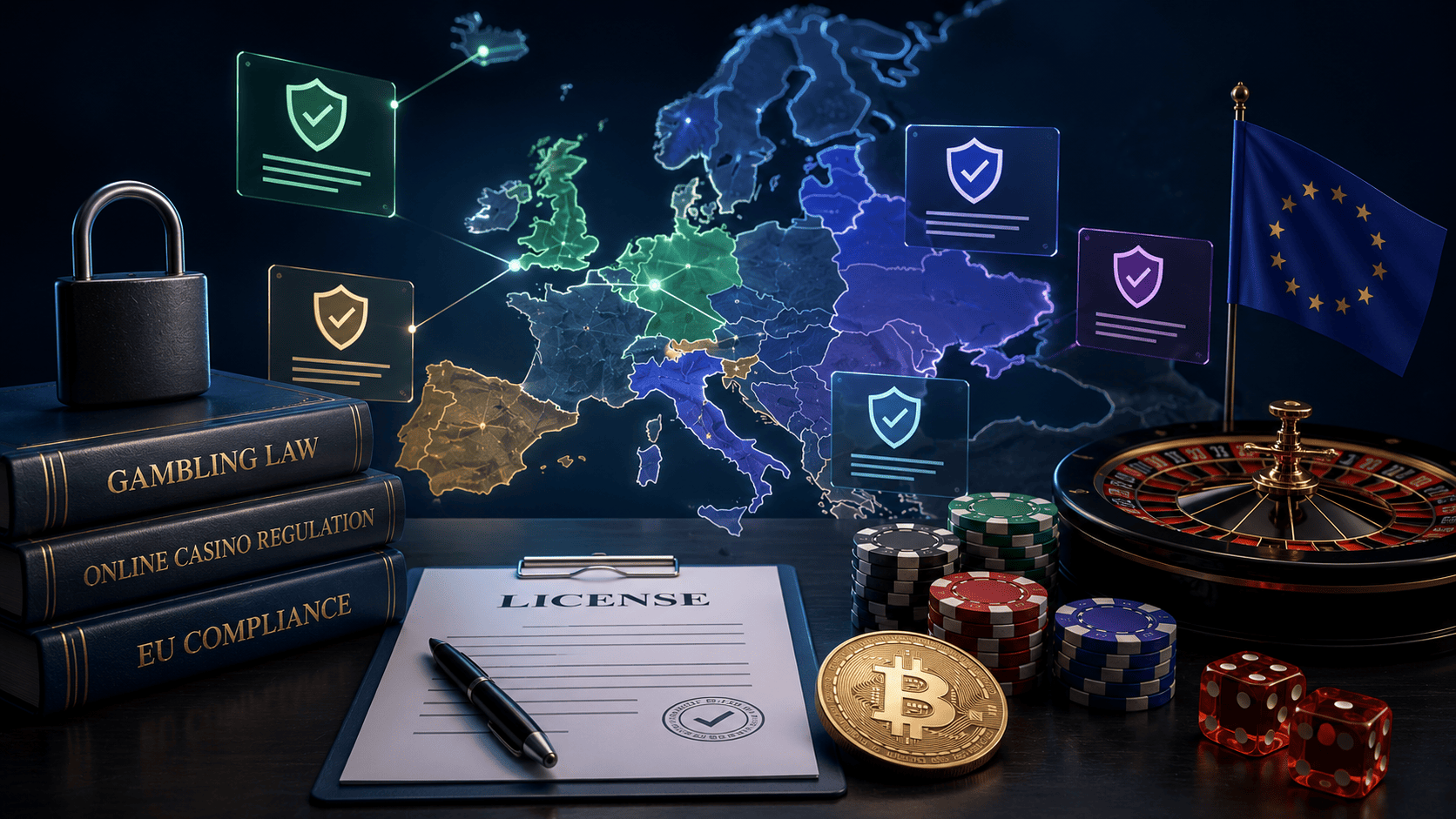
"Licensed in Europe" sounds like a single standard, and it is not. Europe contains some of the strictest gambling regulators in the world and some of the lightest, and the distance between them decides how much protection a player actually has.
A licence from one European jurisdiction can mean segregated funds and a binding disputes body; from another, far less.
This walks through the main European licensing regimes a crypto casino might hold, what each brings a player, and why most crypto-first casinos sit outside the strictest of them. The continent is not one market but many, and the licence tells you which one you are in.
Europe Is Not a Single Regulator
The first thing to unlearn is that a European licence is a uniform guarantee. Gambling regulation in Europe is national, not continental, so each country sets its own regime, and they vary enormously.
Shared standards come through the European Union's anti-money-laundering directives, but licensing itself stays with member states and a few well-known non-EU jurisdictions.
So a casino "licensed in Europe" could be under a rigorous EU regulator or a lighter one, and the country named is what matters, not the continent.
Malta: The EU Tier-1 Standard
The Malta Gaming Authority is the reference point for serious online gambling regulation in the EU, and the strictest a crypto casino commonly holds.
An MGA licence brings segregated player funds held separately from operating capital, a binding player-protection disputes process, and access to the EU market under a recognised regulator.
It is demanding and expensive to obtain, which is precisely why relatively few crypto-first casinos carry it, and why the ones that do can point to it as a genuine mark of standing. For a player, a Malta licence is the strongest routine assurance available in Europe.
Estonia, Isle of Man and Gibraltar: Established Regimes
Below Malta sit several well-regarded European regimes, each with its own character.
Estonia licenses online gambling under an EU framework, with a modern regulator that has become a credible base for operators wanting EU standing without Malta's scale. The Isle of Man and Gibraltar, both outside the EU but long-established in gambling, run respected regimes with strong reputations, particularly among larger operators. Each brings meaningful oversight and player protection, and while their specifics differ, all three sit well above the lightest offshore options, and what a given regime actually covers is worth checking against the country named.
Curacao: European-Facing but Not European
Curacao deserves a place here because it licenses so many crypto casinos serving European players, even though it is not a European regulator.
In recent years Curacao overhauled its framework, moving to direct licensing by its Gaming Authority with a public register and stronger oversight than its old sublicence system offered.
It is more credible than it was, but it remains a Caribbean jurisdiction, not an EU one, so a Curacao-licensed casino serving European players does not carry EU-level protections like segregated funds or a binding EU disputes body.
Dexsport's Licensing and European Players
Dexsport holds an Anjouan licence, which is an offshore regime outside Europe entirely, and lighter than Malta, Estonia or the Isle of Man. Stating that plainly is the honest starting point for any European player weighing the platform.
What that means in practice is thinner formal recourse than an EU licence provides: there is no EU segregated-funds requirement or binding European disputes body behind an Anjouan licence.
Where Dexsport answers part of that structurally is its non-custodial model, which keeps a settled balance in a wallet the player holds instead of an operator account, and its public on-chain desk, which records settlement independently.
Those are real features, and they are a different kind of assurance from an EU licence, not a substitute for one. A European player should weigh the lighter licence against the self-custody model directly. Anjouan also excludes several territories, so players should confirm their own jurisdiction is served.
Reading a European Licence for What It Is
The practical takeaway is to read the specific jurisdiction, never the word "Europe." A Malta or Estonia licence carries EU-level protections; an Isle of Man or Gibraltar licence carries a strong established regime; a Curacao or Anjouan licence is offshore, lighter, and outside EU protections however it is marketed.
Verifying the licence on the regulator's own register is the step that confirms which of these you are actually dealing with.
Confirm what is legal where you live, keep stakes within a set budget, and play only if you are of legal age, since KYC or AML checks may apply. Responsible gambling matters under every regime, because the strongest European licence does not change the house edge on a single game.
Disclaimer: The information here is provided for general purposes only and is not legal, tax, investment, or financial advice. Licensing regimes and their requirements vary by jurisdiction and change over time, so confirm current details with the relevant authority. Betting carries risk, and rules vary by country, so check the law where you live. Please gamble responsibly, within your means, and only if you are of legal age.
Related Stories