Spark’s SPK Unlock: Can Yield Infrastructure Survive Heavy New Supply?
 Lena Carter
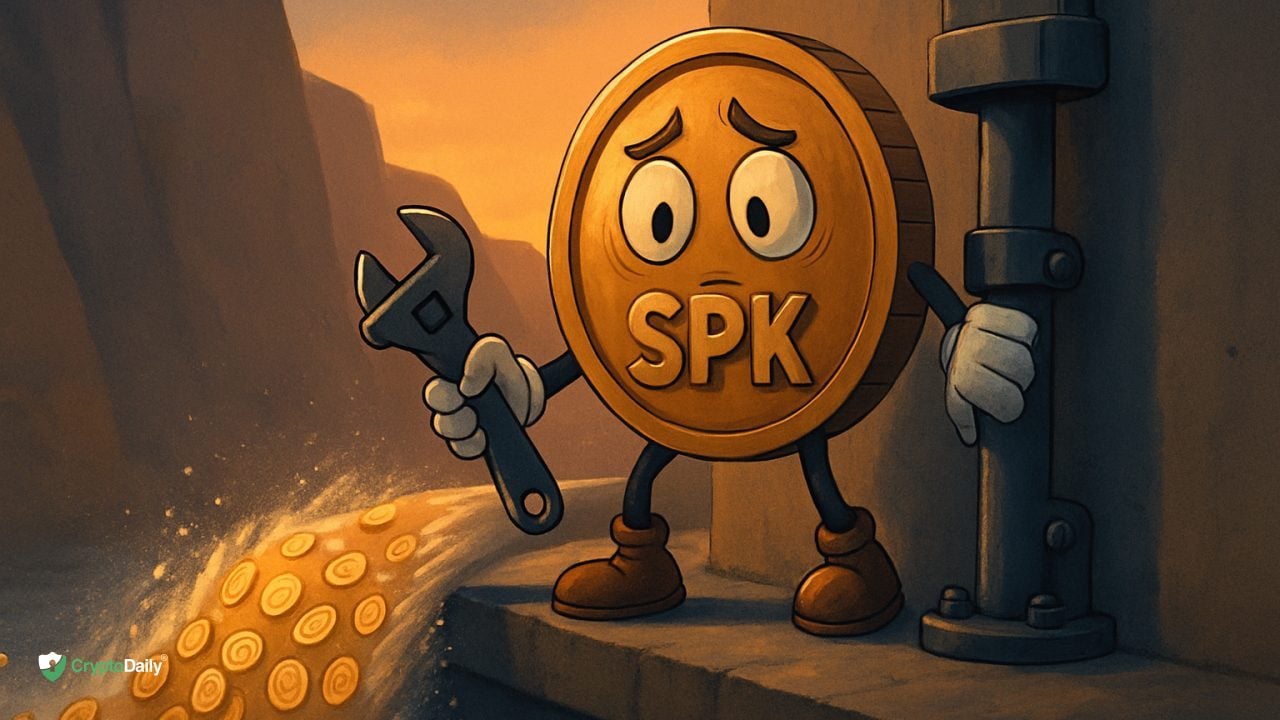
Traders have circled June 17 on their calendars. That is when a large batch of SPK is scheduled to hit the market, pitting fresh supply against a protocol whose pitch is that yield can be infrastructure, not just a bull-market side quest.
Depending on which tracker you trust, the unlock is either 769.05 million SPK or 900 million SPK. Either way, it is big relative to circulating value and sentiment. And it lands while Spark’s Liquidity Layer is already allocating billions to keep returns humming.
The question is simple, the answer is not: can a yield engine absorb a supply shock without breaking its narrative?
The Big Picture
Editor's note: For SPK specifically, May’s post-unlock drift underscored how quickly sentiment can overpower allocator math, even when the yield engine looks busy. The setups that held up best combined transparent OTC handling with clear signals on staking or fee capture. Going into June, I’m watching whether Spark’s treasury choreography and onchain sinks keep pace with the calendar rather than reacting to it. — Lena Carter
Token unlocks are routine in crypto, but the market’s reaction rarely is. Team cliffs, ecosystem disbursements, and investor vesting can all create near-term imbalances that drown out fundamentals. SPK’s June 17 event matters because the numbers are heavy and the protocol’s value proposition depends on steady, credibly funded yield.
When unlocks collide with a strong cash-flow story, price action becomes a referendum on whether fundamentals are real-time or just a spreadsheet.
Two reputable dashboards disagree on the exact size. Tokenomics shows 769,050,000 SPK unlocking on June 17 (about 7.7% of total supply), a sum they estimate equals ~24.1% of current market capitalization (Tokenomics (tokenomics.com)). CoinGecko, citing tokenomist.ai, lists 900,000,000 SPK (9.0% of supply), split 600M to Ecosystem and 300M to Team (CoinGecko (tokenomist.ai data)).
Meanwhile, Spark’s own data hub reports its Liquidity Layer sat on roughly $1.89 billion in allocated assets with an estimated ~4.98% APY in early June, a sign that real capital currently supports the protocol’s yield narrative (Spark Data Hub (data.spark.fi)).
What Spark Is Building: Yield as Infrastructure
At the core of Spark’s pitch is that sustainable onchain yield can be treated like middleware: a system that moves liquidity to the highest risk-adjusted opportunities and returns a programmatic rate to users and integrators.
How the Spark Liquidity Layer works
According to Spark’s dashboard, the Spark Liquidity Layer (SLL) directs capital across a curated set of counterparties and venues with guardrails. As of early June, the SLL showed about $1.89B allocated with an estimated APY around 4.98% (Spark Data Hub (data.spark.fi)). That footprint matters because yield isn’t only optics; it can create organic demand for the token if SPK accrues fees, enables preferential access, or mediates governance over allocator risk.
Why SPK matters to the machine
SPK’s role spans three practical lanes:
- Governance: deciding risk budgets, counterparty limits, and allocator strategy.
- Economic alignment: fees, rebates, or incentives that may accrue to stakers or lockers (implementation specifics vary by release).
- Access and stickiness: integrations that require or reward SPK commitments can slow sell pressure during unlock windows.
When a token is tied to a functioning yield engine, its price can reflect more than speculative cycles. But heavy supply events still test how durable that linkage is.
June 17 Unlock: Size, Sources, and Conflicting Trackers
Even solid projects run into data discrepancies around unlock schedules. For SPK, the disagreement is material enough to influence hedging and liquidity preparation.
| Source | Amount (SPK) | % of Total Supply | Allocation Note | % of Current MCAP |
|---|---|---|---|---|
| Tokenomics | 769,050,000 | ~7.7% | Aggregate unlock (category not detailed in summary) | ~24.1% (their estimate) |
| CoinGecko | 900,000,000 | 9.0% | 600M Ecosystem, 300M Team (tokenomist.ai) | Not stated |
Why the numbers diverge
Unlock dashboards may differ on cliff dates, revocation/deferral updates, or whether a tranche is considered claimable versus distributable. It is also common for ecosystem grants to vest to a foundation treasury without immediately circulating, muddying “unlocked” versus “liquid.”
Relative scale matters more than precision
Whether 7.7% or 9.0% of total supply, the relative size is large for a single day and, per Tokenomics, could approximate nearly a quarter of market cap if their estimate holds (Tokenomics (tokenomics.com)). That is the kind of overhang that market makers and integrators model well in advance.
Reading the Tape: How Prior Unlocks Moved SPK
Past isn’t prologue, but it is a compass. Tokenomics notes that the May 17, 2026 unlock, sized at 4.40% of market cap on that date, coincided with a -25.6% price change within 12 days after the event (Tokenomics (tokenomics.com)). That drawdown likely reflected positioning plus liquidity depth at the time rather than a snap judgment on protocol health.
A typical unlock playbook
- Calendar awareness: sophisticated desks identify size, recipients, and cliff behavior weeks ahead.
- Pre-event hedging: perps, options, or proxy shorts compress basis and absorb uncertainty.
- Event-day liquidity: recipients decide what to sell, stake, or escrow; market makers warehouse inventory.
- Absorption phase: incentives, buybacks, or lockups try to re-route supply toward long-term holders.
- Re-pricing: the market updates the medium-term narrative once flow pressure normalizes.
SPK’s May experience shows the “absorption” leg can be bumpy. With a larger June unlock, investors will scrutinize how fast supply is redirected into protocol-aligned sinks.

Who Bears the Flow? Market Microstructure Around Unlocks
Supply shocks rarely clear in a single venue. They propagate through spot books, perps funding, onchain liquidity, and staking programs. Understanding who ends up holding the new tokens is key.
Immediate receivers and their incentives
- Team and advisors: may have internal guidelines, trading windows, or cooldowns. Signaling often matters as much as sales.
- Ecosystem funds/grants: tokens can remain treasury-held for future programs, vest to partners, or be used for liquidity mining.
- Market makers: warehouse risk in exchange for spreads and rebates; often act as the first buffer.
Where supply can be absorbed
| Sink/Counterparty | Mechanism | Potential Impact |
|---|---|---|
| Staking/locking programs | Yield, governance weight, or boost for longer commitments | Reduces float; signals confidence if uptake is organic |
| Protocol fee flows | Fee-sharing, buybacks, or discounts tied to SPK usage | Creates recurring demand; offsets emissions if sizable |
| Onchain liquidity pools | LPs pair SPK with majors; incentives top up APR | Deepens books but can raise IL and emissions |
| Treasury market operations | Discretionary auctions, RFQs, or OTC placements | Smoother distribution if well-telegraphed |
| External integrators | Partners require SPK stake/lock to access routing or limits | Structural demand; depends on integration breadth |
For Spark, the credibility of these sinks ties back to the SLL’s deployed capital and risk controls. A live allocator managing roughly $1.89B at ~4.98% APY helps the story (Spark Data Hub (data.spark.fi)). The open question is scale: are fee flows and utility sticky enough, now, to meet a one-day 7.7%–9.0% supply surge?
Scenario Analysis: Can Yield Offsets Neutralize New Supply?
There is no single path through an unlock. Below are three plausible market paths framed by flows, not forecasts.
1) Stress scenario: absorption lags, liquidity thins
- Setup: Ecosystem tranches distribute broadly and a portion of team tokens sells into strength; perps basis flips negative; LPs widen spreads.
- Drivers: Discrepancy over size (769.05M vs 900M) fuels over-hedging; fee flows are insufficient to counter net emissions in June.
- Market result: Drawdown extends beyond two weeks, mirroring or exceeding the -25.6% twelve-day drift seen after May 17 (Tokenomics (tokenomics.com)), though magnitudes can differ.
2) Base case: staged distribution, neutral basis
- Setup: Treasury and market makers coordinate OTC placements; a meaningful slice of ecosystem tokens goes into programmatic grants with vesting.
- Drivers: Onchain incentives nudge recipients to stake or LP; fee flows from the SLL and integrations soften net emissions.
- Market result: Volatility around the date, then stabilization as circulating float rises but active sell pressure is paced.
3) Constructive path: utility-led demand surprises
- Setup: New integrations or governance votes elevate the value of staking/locking just before or after the unlock.
- Drivers: With ~$1.89B allocated at ~4.98% APY in the SLL (Spark Data Hub (data.spark.fi)), fee-linked demand steps up; team signals long-term alignment.
- Market result: Price wobble is contained; liquidity deepens as LPs are compensated, and the narrative shifts to “yield can carry issuance.”
What to watch in real time
- Unlock execution: confirmations from official channels on actual distributed amounts and any post-claim constraints.
- Treasury operations: evidence of OTC deals, buyback cadence, or programmatic auctions.
- Onchain sinks: staking/locking uptake, LP incentives, and changes in active addresses linked to SPK utility.
- Derivatives signals: basis, funding, and open interest skew into and out of the event.
- Fee throughput: updates to allocator yields and protocol revenue that affect sustainable demand.
Risks & What Could Go Wrong
- Unlock-size uncertainty: conflicting tracker data (769.05M vs 900M) raises basis risk if sizing is misestimated (Tokenomics; CoinGecko).
- Liquidity crunch: if market makers step back or LP incentives lag, order books can gap and amplify moves.
- Smart-contract and counterparty risk: the SLL’s allocations carry venue and integration risk; incidents could undermine fee-supported demand.
- Treasury execution: poor communication or uneven OTC handling could spook recipients into selling faster.
- Regulatory overhang: changes affecting token distributions, staking, or yield programs may alter utility assumptions.
- Feedback loops: falling price can reduce collateral value for LPs and treasuries, forcing deleveraging.
Large unlocks rarely break protocols on fundamentals; they break narratives when execution and communication fail under stress.
For ongoing analysis of token unlocks, liquidity routing, and protocol incentives, Crypto Daily’s coverage tracks both onchain metrics and market structure developments. You can follow our latest features and data-driven explainers at Crypto Daily.
Frequently Asked Questions
How large is the June 17 SPK unlock?
Two sources disagree: Tokenomics lists 769,050,000 SPK (~7.7% of total supply), while CoinGecko cites 900,000,000 SPK (9.0% of supply) split 600M to Ecosystem and 300M to Team. The difference likely reflects categorization and data refresh timing (Tokenomics; CoinGecko).
How does this compare to market cap?
Tokenomics estimates the June 17 tranche equals roughly 24.1% of current market capitalization. That ratio can shift with price, but it highlights the potential flow impact (Tokenomics).
Did previous SPK unlocks move price?
Yes. Tokenomics reports the May 17, 2026 unlock (4.40% of market cap then) coincided with a -25.6% price change within 12 days after the event. Outcomes vary by positioning and liquidity depth (Tokenomics).
What supports SPK’s yield narrative today?
Spark’s own data hub shows the Spark Liquidity Layer with about $1.89B allocated and an estimated ~4.98% APY as of early June, indicating real capital deployment behind the yield infrastructure pitch (Spark Data Hub (data.spark.fi)).
Who receives the unlocked tokens?
Per CoinGecko’s listing, 600M is slated for the Ecosystem and 300M for the Team on June 17. Actual circulation depends on treasury handling, grant schedules, and any staking or lockup programs (CoinGecko).
What are the key signals to monitor around the date?
Watch official confirmations of distributed amounts, treasury OTC activity, staking/locking uptake, derivatives basis and funding, and any changes in the SLL’s fee throughput or APY.
Is this financial advice?
No. This article provides research and market-structure context. Crypto assets are volatile and carry smart-contract, liquidity, and regulatory risks. Do your own research.
Disclaimer: This article is provided for informational purposes only. It is not offered or intended to be used as legal, tax, investment, financial, or other advice.
Related Stories