MiCA 2.0 DeFi Consultation: Could Admin Keys Decide Which Protocols Face EU Rules?
 Maya Collins

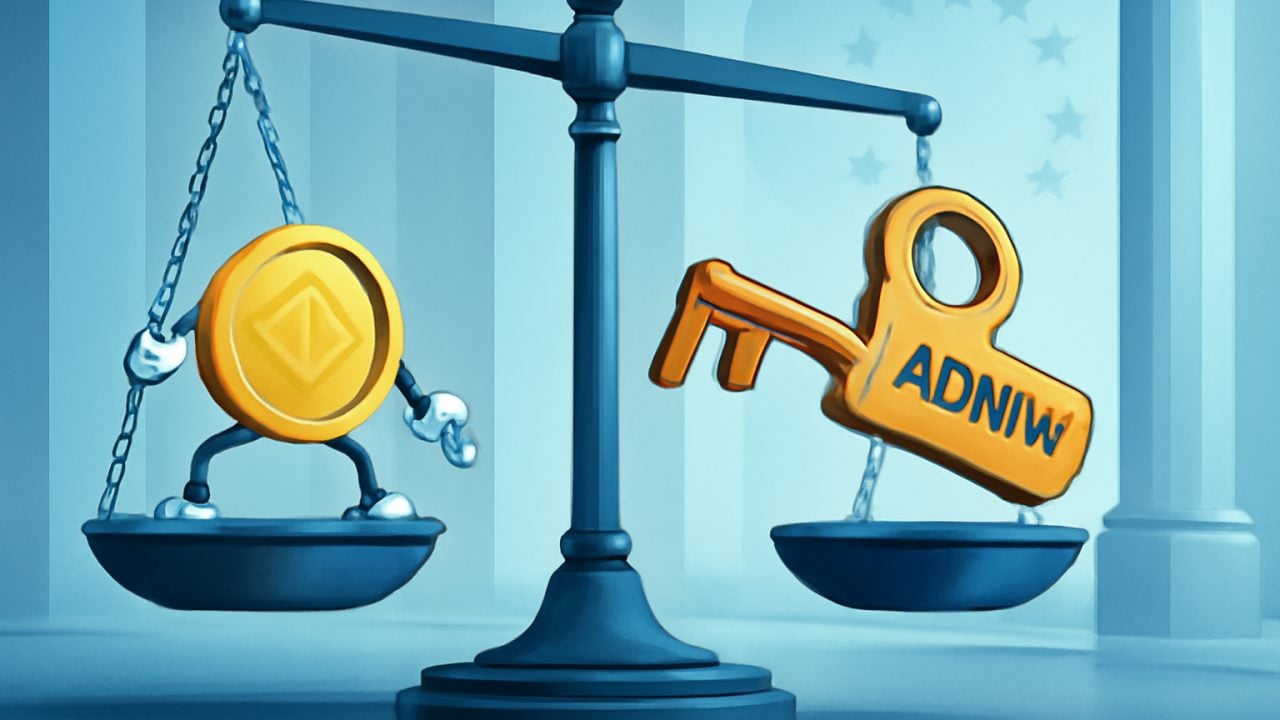
DeFi builders, DAO delegates, and exchanges face a new European reality: the MiCA 2.0 review is openly asking whether “admin keys” and other levers of control should determine which protocols fall under EU rules. The answer could redefine what counts as “decentralised” in practice.
This article unpacks the consultation’s questions, shows how admin keys may become a bright-line test, and offers a pragmatic playbook for projects to evidence decentralisation without compromising user safety. Whether you run a protocol, operate a front end, or list DeFi access for clients, the decisions you make now will shape your regulatory surface in 2027–2028 and beyond.
It’s not about panic. It’s about governance hygiene, documentation, and aligning with what EU policymakers are actually reading.
| Aspect | What to Know |
|---|---|
| Consultation window | The European Commission opened a targeted public review on 20 May 2026; responses close 31 August 2026 (23:59 CEST) (European Commission (DG FISMA) consultation page). |
| Admin keys as a criterion | The questionnaire explicitly lists “presence of control by an identifiable person e.g. via admin keys over key functionalities (e.g., upgradeability)” to assess decentralisation (Consultation document — European Commission (DG FISMA) PDF). |
| Indirect approach for fully decentralised DeFi | One option under review is to account for risks indirectly by requiring CASPs to conduct due diligence on DeFi protocols they connect clients with (Question 62) (DG FISMA PDF (Q62)). |
| Official timeline anchors | The consultation feeds into reports the Commission must present under MiCA Articles 140/142 by 30 June 2027, after consulting EBA and ESMA (DG FISMA PDF). |
| Market read-through | Industry coverage flags admin keys, governance concentration, front-end control and revenue capture as central to the “sufficiently decentralised” call; major legislative changes may not land before 2028 (Cointelegraph). |
| What to prepare | Map every control surface (keys, timelocks, upgrade paths, off-chain levers), decentralise front-ends where feasible, and publish a clear governance and risk memo for users and counterparties. |
Core Concepts: How MiCA 2.0 Is Looking at DeFi Control
MiCA’s first iteration largely sidestepped protocol-level DeFi. The 2026 review brings DeFi into scope not by naming every protocol, but by interrogating who can change, pause, or steer core functions — and how users reach those functions. In that frame, “admin keys” become a shorthand for any mechanism an identifiable party can wield to meaningfully alter risk.
The consultation document doesn’t equate any key with centralisation per se; it asks about presence of control over key functionalities, citing upgradeability as an example. The same lens applies to governance token concentration, front-end control, and whether revenue capture looks like a traditional intermediary. Combined, these create a mosaic regulators can read to judge “sufficient decentralisation.”
There is also a live discussion about whether risks from fully decentralised protocols should be addressed indirectly — for example, by putting due-diligence duties on crypto-asset service providers (CASPs) that route clients to DeFi. That approach would shift immediate obligations toward gateways (exchanges, brokers, on-ramps) rather than on immutable code, while still nudging the market toward safer defaults.
Glossary: Terms Regulators Are Watching
- Admin keys — Privileged credentials (EOA or multisig) that can upgrade, pause, or otherwise change core protocol behavior.
- Upgradeability — Design pattern (e.g., proxy contracts) allowing code changes post-deployment; essential for fixes but a focal point for control risk.
- Identifiable person — Any natural or legal person (or coordinated group) who can be pointed to as holding or directing effective control.
- Governance concentration — Degree to which voting power clusters among a few addresses or entities, potentially undermining DAO checks and balances.
- Front-end control — Ability to change or geo-block the user interface that most users rely on; even with immutable contracts, UI control can centralise access.
- CASP due diligence — Potential indirect obligation for regulated intermediaries to vet DeFi protocols they integrate or recommend to clients.
Step-by-Step Playbook: Preparing Your Protocol or DAO
- Inventory all control surfaces — List every admin or emergency key, upgrade proxy, parameter oracle, and pausable module. Map who can trigger each, under what quorum, and with which timelocks.
- Implement time delays and public notice — Where upgrades or pauses are necessary, add on-chain timelocks and publish pre-commit notes so users and integrators can exit or contest changes.
- Strengthen DAO governance — Disperse voting power, require multiple stages (temperature check, audit sign-off, binding vote), and consider non-transferable roles for risk councils with transparent mandates.
- Minimise front-end choke points — Open-source UIs, consider multi-host deployments, and publish contract addresses and call data so advanced users can interact without a single web domain.
- Document revenue and responsibilities — Explain who (if anyone) captures fees, how they are routed, and what obligations they assume (e.g., grants, bug bounties). Ambiguity looks like hidden intermediation.
- Publish a “DeFi Controls & Risks” memo — In plain language, describe keys, upgradeability, audits, incident response, and user risks. This becomes essential evidence for partners and CASPs.
- Engage with the consultation — Submit responses before 31 August 2026 and speak to the practical safeguards you use. The consultation is open and targeted (European Commission (DG FISMA)).
How Admin Keys Could Become the Bright Line
In the current framing, regulators are not asking whether a protocol has any keys. They are asking whether an identifiable party can, with those keys, materially change risk for users. That includes upgrading logic, moving reserves, altering liquidation thresholds, or toggling pause functions. The more unilateral and opaque the control, the more a protocol looks like a service with an operator — the very thing MiCA was written to regulate.
The consultation explicitly cites admin key control over upgradeability as a decentralisation test, drawing a line between immutable or broadly controlled systems and those dependent on a few insiders (DG FISMA PDF). Teams that need upgrade paths for security can still design with safety valves: multisigs with diverse signers, timelocks, public audit trails, and community vetoes. Those features do not eliminate risk, but they spread it — and make it legible to regulators and users.
Front-end control compounds the picture. A protocol with robust on-chain checks can still look centralised if one company controls the only widely used UI and can region-block, insert warnings, or toggle default routes. Expect this to weigh heavily in any “sufficient decentralisation” assessment highlighted by market coverage (Cointelegraph).
Pro tip: Treat your decentralisation like a product: ship a public “controls changelog,” show who can do what (and when), and make emergency powers rare, time-delayed, and collectively owned.
Three Architecture Paths: Your Compliance Surface Compared
There is no universal answer for every protocol. But certain architectures present a clearer path to passing a decentralisation sniff test, especially when combined with transparent documentation and resilient front ends.
| Design Pattern | Admin Control | Governance Dispersion | Front-End Control | Revenue Capture | Indicative Regulatory Surface |
|---|---|---|---|---|---|
| Immutable contracts + no upgradability | None after deploy | N/A or social layer only | Decentralised or multiple UIs | Minimal or protocol-fee burn | Lower (but CASP due diligence could still apply) |
| Upgradable via timelocked, distributed multisig | Shared, time-delayed | Moderate to high | Open-source, multi-hosted | DAO treasury with disclosures | Moderate; documentation becomes critical |
| DAO-governed proxy with on-chain proposals and audits | Bound by governance | High if voting power dispersed | Multiple UIs; direct contract access documented | Transparent, policy-driven | Moderate to lower if checks and balances are strong |
| Company-controlled multisig + single web UI | Centralised, fast | Low; key-person risk | Single point of control | Corporate fee capture | Higher; looks like a service provider |
| Hybrid: core immutable; peripheral modules upgradable | Limited to modules | Varies by module | Diversified access recommended | Transparent split | Case-by-case; clarity on boundaries matters |
Timeline, Process, and Why This Review Matters
The Commission’s targeted consultation is live until 31 August 2026 and will inform mandatory reports under Articles 140 and 142, due by 30 June 2027 after input from EBA and ESMA (DG FISMA PDF). This sets expectations: 2026 is for evidence; 2027 is for synthesis and recommendations.
Industry watchers caution that, even if the Commission proposes changes, full legislative updates could take until 2028 or later given EU timelines and complexity (Cointelegraph). That does not mean stand still. The consultation also asks whether to address fully decentralised risks indirectly — for example, via CASP due diligence duties — which could nudge market practices earlier (DG FISMA PDF (Q62)).
If you operate in or serve EU users, 2026–2027 is your window to shape the narrative and to build defensible governance. Regulators are asking concrete questions; concrete answers — in your code, process, and docs — will travel further than slogans about decentralisation.
Pitfalls & Red Flags to Avoid
- Unilateral upgrade keys without timelocks — Faster iteration today may be read as centralised control tomorrow. Add delays, quorum, and public notice.
- Opaque emergency pause powers — “For safety” is not a free pass. Publish when and how pauses trigger, who can lift them, and what exit path users have.
- Concentrated governance tokens — A DAO with two whales looks like a company in disguise. Consider caps, delegation programs, and non-transferable roles for risk oversight.
- Single, company-run front end — If one domain is the de facto gatekeeper, it undermines claims of open access. Encourage multiple UIs and document direct contract interaction.
- Ambiguous revenue collection — Fee captures routed to a corporate entity can look like intermediation. If fees exist, explain policy, recipients, audits, and conflicts management.
- No paper trail — Without a clear, public memo on keys, upgrades, audits, and incident history, partners and CASPs will assume the worst.
For continuing coverage and practical explainers as MiCA 2.0 evolves, visit Crypto Daily.
Frequently Asked Questions
Does MiCA 2.0 “ban” admin keys?
No. The consultation frames admin keys as a decentralisation indicator, especially where they allow an identifiable party to control upgrades or core functions. Keys with time delays, diverse signers, and transparent use cases may be viewed differently than unilateral, opaque control.
If a protocol renounces keys, is it automatically out of scope?
Not automatically. Decentralisation is assessed holistically: governance concentration, front-end control, revenue capture, and practical user dependence all matter. Renouncing keys is one datapoint, not a complete answer.
What evidence should teams prepare for counterparties and CASPs?
Maintain a public “controls and risks” memo, diagrams of upgrade flows, timelock parameters, signer dispersion, audit reports, incident logs, and UI decentralisation steps. This helps CASPs meet potential due-diligence duties and shows good-faith risk management.
Will fully decentralised protocols face indirect obligations?
They may be addressed indirectly if regulators require CASPs to vet the DeFi they integrate. This is explicitly asked in Question 62 of the consultation, so counterparties could carry more of the compliance burden if that path advances.
When might new DeFi-specific rules actually apply?
The consultation runs to 31 August 2026 and feeds into Commission reports due by 30 June 2027 after consulting EBA and ESMA. Significant legislative changes, if proposed, may not take effect before 2028 due to EU lawmaking timelines.
How should DAOs balance security upgrades with decentralisation?
Prefer timelocked, multi-stage governance, publish pre-commit notices, ensure signer diversity, and adopt open audits. The goal is not zero control, but auditable, shared control with user exits.
Does front-end decentralisation really matter if contracts are immutable?
Yes. If most users rely on a single company-controlled UI, regulators may see practical centralisation. Support multiple interfaces, document direct contract calls, and avoid design choices that create de facto gatekeepers.
Disclaimer: This article is provided for informational purposes only. It is not offered or intended to be used as legal, tax, investment, financial, or other advice.
Related Stories