Axie Infinity is a game on the blockchain that combines elements of trading and battling. It is partially owned and managed by its players.
For a more in-depth exploration of this project, take a look at our comprehensive analysis of Axie Infinity.
Drawing inspiration from well-known games like Pokémon and Tamagotchi, Axie Infinity gives players the opportunity to collect, breed, nurture, fight, and trade digital creatures called Axies.
Axies come in diverse forms, with more than 500 different body parts available, including aquatic, beast, bird, bug, plant, and reptile features. Each class type offers parts in four rarity levels: common, rare, ultra rare, and legendary. Axies can possess any combination of these parts, making each one potentially rare and unique.
Every Axie is a non-fungible token (NFT) with unique attributes and abilities and can compete in 3v3 battles. Victorious teams earn experience (exp) points, which are used to enhance an Axie's stats or evolve its body parts. Additionally, Axies can be bred to create new offspring, which can then be utilized or sold in the Axie marketplace.
The ecosystem of Axie Infinity includes a distinct governance token, Axie Infinity Shards (AXS). These tokens allow holders to take part in crucial governance votes and influence decisions regarding the expenditure of the Axie Community Treasury.
Who Are the Founders of Axie Infinity?
Axie Infinity was brought to life in 2018 by Sky Mavis, a tech-centered game developer mainly based in Vietnam. It was co-founded by Trung Nguyen and Aleksander Larsen.
Trung Nguyen serves as the current CEO. He holds a degree in computer software engineering and was previously employed as a software engineer at Anduin Transactions before establishing Axie Infinity.
Aleksander Larsen, a former competitive gamer, is also a co-founder and the COO. He has been involved in blockchain gaming since 2017 and previously held the position of executive security officer for the Norwegian Government Security Organization. He continues to contribute as the Secretary of the Board of Directors at the Blockchain Game Alliance.
The Axie Infinity team comprises 25 full-time staff members, many of whom have extensive experience in game development.
What Makes Axie Infinity Unique?
Each Axie features six out of hundreds of possible body parts, each offering a unique combat move. This creates almost limitless diversity among Axies, with most possessing average stats, while those with the optimal combination of parts can achieve exceptional abilities.
Unlike many other blockchain-based games focused on battling and breeding, an Axie can be bred only up to seven times, helping to manage the population of Axies.
Axie Infinity provides a mating hub where players can find the perfect partner to breed their Axie with the highest chance of yielding a rare or powerful descendant. Breeding Axies incurs a fee of 0.005 ETH plus Small Love Potion (SLP) tokens.
Soon, AXS token holders will have the option to stake their tokens to earn regular rewards, but they will also need to engage in voting and playing to claim these rewards, unlike other stakable assets.
How Does Axie Infinity Work?
The core gameplay of Axie Infinity revolves around fighting and breeding Axies. It involves buying Axies, engaging in battles with other players, breeding new Axies, and trading them on the marketplace.
To participate in battles, players need at least one Axie and can choose between Adventure Mode (PvE) or Arena Mode (PvP). While players can breed Axies, no Axie can be bred more than seven times. Lunacia is the digital homeland of these creatures, divided into tokenized sections where players can gather resources and enhance their plots. The marketplace also facilitates trading Axies and land plots.
Community involvement is a crucial aspect of Axie Infinity, where members contribute, engage in governance, and create content. The developers have also introduced unique mechanics that set Axie Infinity apart from similar games, such as built-in population control. Additionally, the wide array of Axies, due to various attribute combinations, increases demand among gamers and NFT collectors.
To address scalability, Axie Infinity created the Ronin Network, a sidechain on Ethereum, providing fast transactions without involving the Ethereum blockchain. Users can store AXS and collectible NFTs securely in Ethereum and Ronin wallets, and transfer tokens from an Ethereum wallet to a Ronin wallet using the Ronin Bridge.
How Many Axie Infinity (AXS) Coins Are There in Circulation?
The native token for the Axie Infinity ecosystem, known as Axie Infinity Shard (AXS), was launched in November 2020. AXS is central to the operation of the Axie Infinity game. Players can acquire, trade, and earn tokens simply by engaging in gameplay. The top players each season receive AXS as a reward. Furthermore, AXS acts as a governance token, granting holders the power to vote on gameplay alterations and influence the platform's development.
There is a total supply of 270 million Axie Infinity (AXS) tokens. As of mid-November 2020, about 53.5 million of these tokens were circulating.
In the overall distribution, 11% of the total supply was set aside for participants in the Binance Launchpad IEO sale (with each Axie Infinity token priced at $0.10), and 4% was sold in a private sale. Additionally, 29% is allocated for staking rewards, 20% for the play-to-earn pool, 21% for the team, 7% for advisors, and 8% for the ecosystem fund.
According to the release timeline provided by Binance Research, all AXS tokens will be in circulation by early 2026.
How Is the Axie Infinity Network Secured?
The Axie Infinity (AXS) token is an ERC-20 token developed on the Ethereum blockchain. This means it is safeguarded by Ethereum's proof-of-work (POW) consensus protocol.
In early 2021, Axie Infinity planned to transfer its NFT tokens, which include Axies, Land, and other in-game items, from the Loom Network to a specially crafted sidechain on Ethereum called Ronin.
Ronin is a sidechain specifically built for Axie Infinity, developed by Sky Mavis—the team behind the Axie Infinity game. It aims to enable nearly instant transaction confirmations, lower gas fees, and support the scaling needs of Axie Infinity.
Where Can You Buy Axie Infinity (AXS)?
As of October 2021, Axie Infinity (AXS) is traded on a wide array of exchange platforms, including popular ones such as Binance, Huobi Global, Coinbase, Bithumb, KuCoin, Gate.io, and Kraken.
The link between Axie Infinity and Smooth Love Potion has resulted in numerous trading pairs, including SLP to ETH and SLP to BNB. However, there is notable interest in trading pairs like SLP to PHP in the Philippines, SLP to AUD in Australia, and SLP to EUR in Europe.
Axie Infinity offers various price pairs, with popular ones being AXS/USDT, AXS/BTC, AXS/BUSD, and AXS/BNB. As the game's popularity has soared, there's been growing interest in trading pairs such as AXS to PHP, AXS to AUD, and AXS to EUR.
S&P 500 Futures Today: $110 Oil and Netflix Earnings Put AI Rebound to the Test
S&P 500 futures edged up less than 0.1% to 7,735.25 as Brent crude reached $110.75 a barrel and Netflix prepared to report Q3 results.
cryptodaily.co.uk/2026/10/sp-500…
Turkey Confirms Richard Heart Detention and Seizure of Cash, Cold Wallets and Firearms
Turkey confirmed Richard Heart’s Istanbul detention under an Interpol Red Notice, reporting $7.15 million, six cold wallets and weapons seized.
cryptodaily.co.uk/2026/10/turkey…
Circle Targets Expansion Into 40 Emerging Markets as USDC Demand Broadens
Circle is targeting about 40 emerging markets as its Tazapay deal and renewed Binance agreement broaden $USDC distribution routes.
cryptodaily.co.uk/2026/10/circle…
Bitcoin Back in Bullish Structure, but Overbought Conditions and Firm Resistance Weigh on Price
The bulls have managed to avoid a Bitcoin breakdown out of a rising channel pattern with a 4.2% rally. However, now that the $BTC price is back inside the rising channel can it stay
Nine US Companies Object to Tokenized Share Trading on OKXICE
Nine issuers, including Broadcom and Verizon, objected to OKXICE tokenized-share trading under the SEC’s temporary venue-specific framework.
cryptodaily.co.uk/2026/10/nine-i…
World Launches Bank-Focused World ID Suite and Makes Zoom Deepfake Checks Generally Available
World unveiled a banking and finance identity suite at Money20/20, while World ID for Zoom became globally available to enterprise customers.
cryptodaily.co.uk/2026/10/world-…
Marqeta and Coinbase Partner on Stablecoin-Backed Cards With Base Settlement
Marqeta and Coinbase will combine custody, fiat conversion, Base settlement and card issuing for enterprise stablecoin-backed card programs.
cryptodaily.co.uk/2026/10/marqet…
Crypto.com and Novig Sue Missouri Over Sports Event-Contract Enforcement
Crypto.com-linked North American Derivatives Exchange and Novig filed separate federal cases challenging Missouri sports-contract enforcement.
cryptodaily.co.uk/2026/10/crypto…
Cysic Suspends Bridge After Unauthorized CYS Mint Lets Attacker Move $727K to Ethereum
Cysic suspended its cross-chain bridge after 10 million unauthorized CYS were minted and about $727,000 in $ETH reached Ethereum.
cryptodaily.co.uk/2026/10/cysic-…
Venice Token VVV Rebounds Above $24 After a Volatile Week — What Comes Next?
Venice Token $VVV traded near $24.86 after a 10.83% daily rise. Key support at $23.3712 and resistance at $25.6408 now shape the outlook.
cryptodaily.co.uk/2026/10/venice…
Bitcoin holds on: Breakdown not confirmed - Is the rally back on?
Despite the sell-off in the AI and precious metals sectors due to poor U.S. inflation data, Bitcoin came back from the brink on Thursday, having broken down below its ascending channel. The bulls rallied back
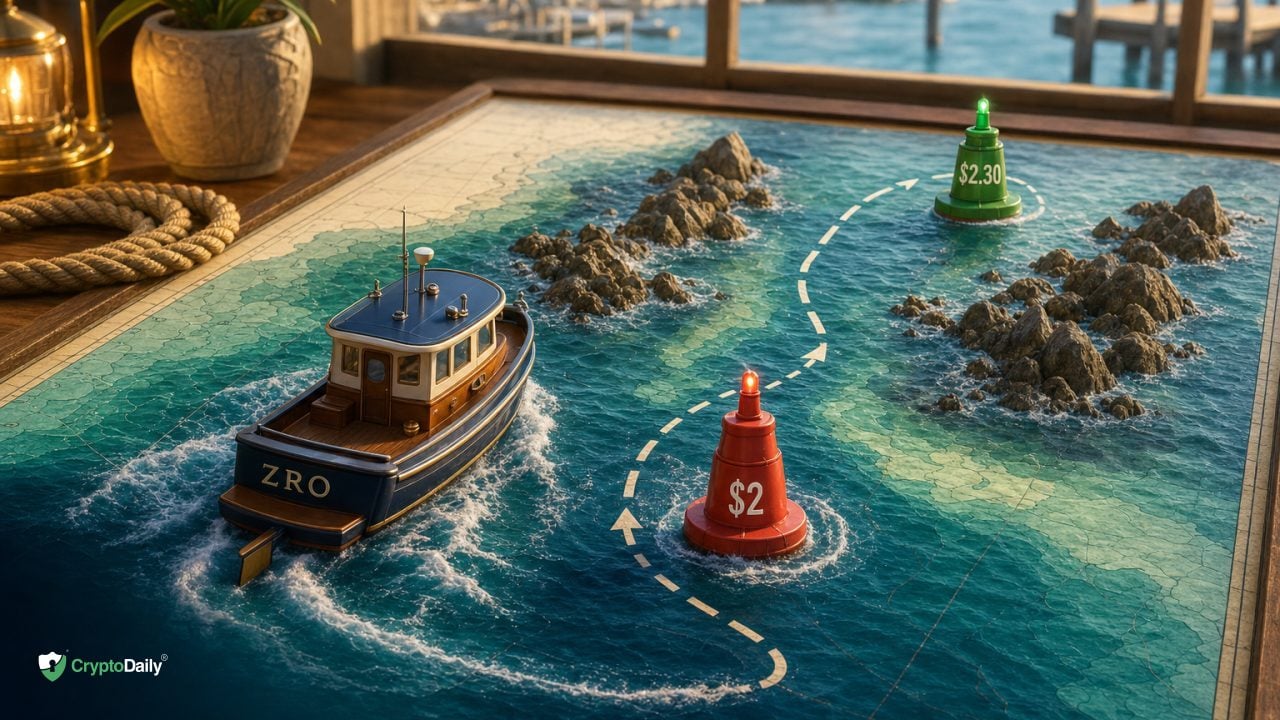
LayerZero Reclaims $2: The ZRO Technical Setup Behind a Possible $2.30 Retest
LayerZero’s $ZRO trades near $2.10 with bullish RSI readings, but resistance at $2.1538 and an October 20 token unlock shape its $2.30 outlook.
cryptodaily.co.uk/2026/10/layerz…
Federated Hermes Partners With Prometheum to Issue Tokenized Securities Funds
Federated Hermes and Prometheum plan tokenized securities funds for brokerage accounts, with the first product expected in Q1 2027.
cryptodaily.co.uk/2026/10/federa…
Coinbase Publishes Its Case for a Phased Bitcoin Post-Quantum Migration
Coinbase says Bitcoin’s post-quantum transition could take seven years, putting governance over exposed and abandoned $BTC at the centre of planning.
cryptodaily.co.uk/2026/10/coinba…
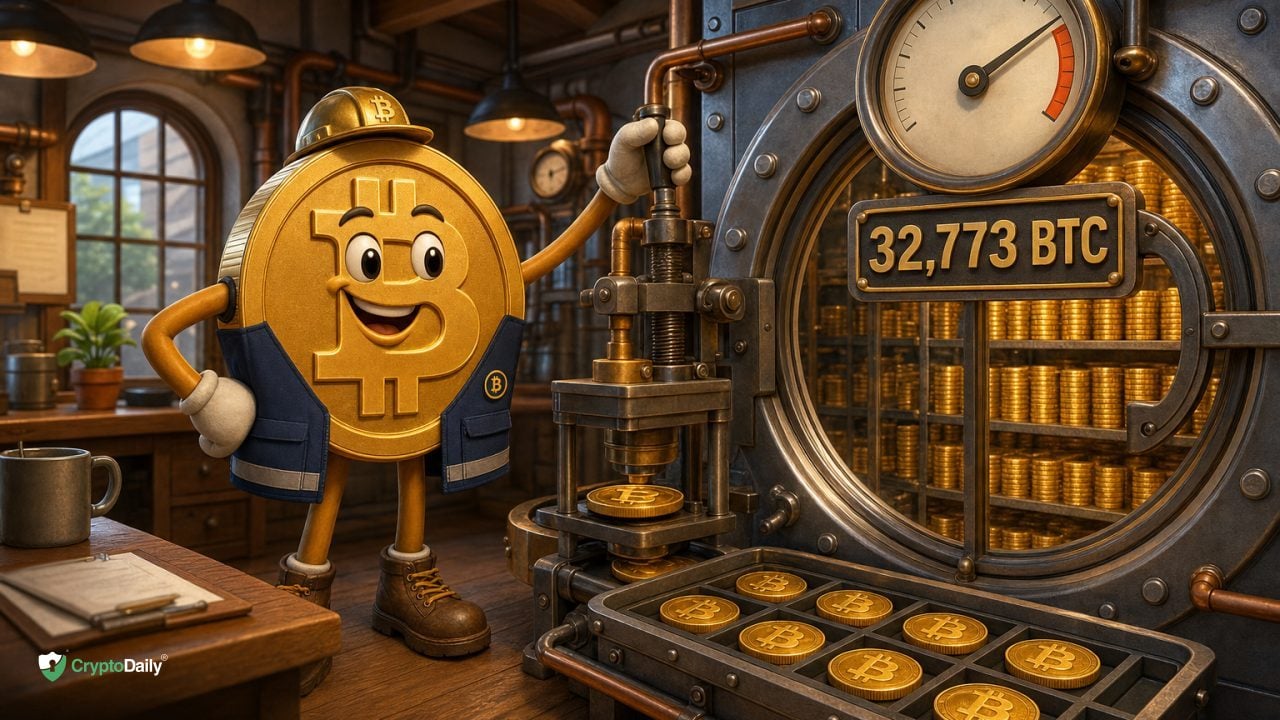
Strive Adds 3,311 Bitcoin as Its Treasury Reaches 32,773 BTC
Strive bought 3,311 $BTC for about $280 million between October 5 and 9, raising its treasury to 32,773 BTC as cash reached $310.3 million.
cryptodaily.co.uk/2026/10/strive…
UK High Court Says Chinese Law Governs Claims to 61,000 Seized Bitcoin
UK High Court ruled Chinese law governs property claims over more than 61,000 seized bitcoin, leaving ownership and distribution unresolved.
cryptodaily.co.uk/2026/10/uk-hig…
Bitcoin breaks down as stocks slide on inflation data
US price increases went from an annual rate of 3.4% in August, to 3.7% in September, dealing a blow to the U.S. stock market and pushing Bitcoin into a potential breakdown. With the S&P 500 facing a further fall at the open
Blur Will Close Its Frontend and Stop New Blend Loans in November
Blur will deprecate its blur.io frontend on November 12 and halt new Blend loan matching, while its marketplace protocol remains on-chain.
cryptodaily.co.uk/2026/10/blur-f…
Metaplanet Issues Zero-Coupon Convertible Bonds as It Refinances Bitcoin-Backed Debt
Metaplanet is issuing ¥52 billion in zero-coupon convertibles to repay Bitcoin-backed debt and fund buybacks, shifting risk to dilution and refinancing.
cryptodaily.co.uk/2026/10/metapl…