Stablecoin Yield Now Funds Daily SUI Buybacks
 Ethan Caldwell
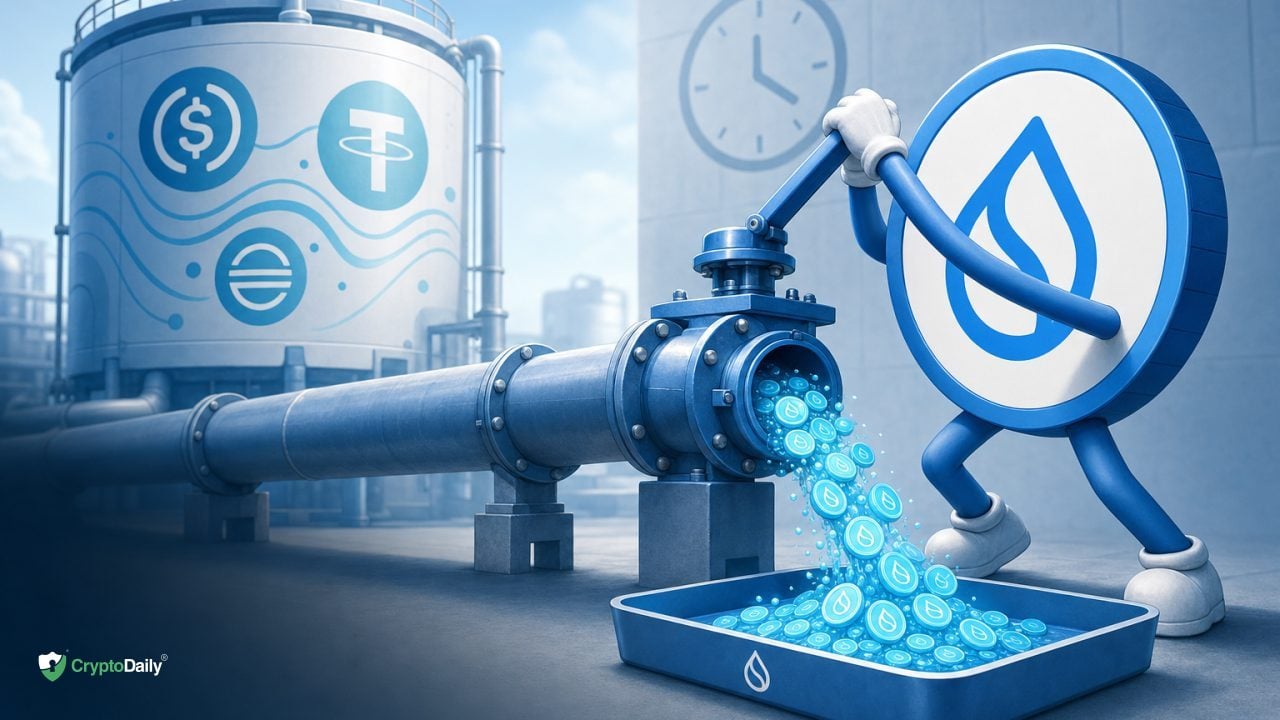
There’s a new lever in Sui’s tokenomics toolkit. Stablecoin yield, once a sleepy back-office line item, is now being routed into regular SUI purchases on the open market. The pitch is simple: turn passive dollar yield into steady token demand.
This piece breaks down how that actually works, why it matters for SUI’s day-to-day trading dynamics, what could go wrong, and the signs that tell you if the program is doing real work or just headline duty.
We’ll keep it practical and grounded in current Sui data, including stablecoin float, throughput experiments, and the supply calendar that makes buybacks matter.
In short, yield from stablecoin treasuries and on-chain dollar positions is being allocated to scheduled SUI buy programs that run daily. The idea is to convert interest income into a predictable bid that can offset emissions, smooth unlock weeks, and recycle ecosystem dollars back into the native asset. This isn’t a price guarantee. Size depends on stablecoin balances, interest rates, and transparent execution.
- What funds it: interest from stablecoin reserves or yield-bearing dollar products held by ecosystem treasuries.
- Why daily: smaller, frequent TWAP-style buys reduce slippage and front-running risk compared to chunky weekly orders.
- What it can offset: emissions and unlock-driven supply pressure, at least at the margin.
- What sets the ceiling: stablecoin float on Sui and prevailing rates. If either falls, buy power shrinks.
- Core risk: opacity, peg or counterparty risk on the yield source, and assuming a hard price floor that does not exist.
Where does the yield actually come from?
Two broad buckets. First, fiat-backed stablecoins often park reserves in cash, T-bills, and repos that yield interest. That yield typically accrues to the issuer, not holders, but if a Sui-aligned treasury holds its own stables or uses yield-bearing wrappers, it can capture that interest and redirect it to buybacks.
Second, on-chain cash can be deployed into conservative yield products like tokenized T-bills, money-market wrappers, or reputable on-chain credit. The posture here is risk-managed, not degen. If the dollar base is large and rates are decent, the stream is non-trivial.
The base on Sui is there. DefiLlama shows Sui’s on-chain stablecoin market cap in the hundreds of millions, roughly 428 million at an Aug 3, 2026 snapshot, which frames the potential pool that could generate reserve yield on Sui itself DefiLlama (Sui chain page). A single issuer example, USDsui, had a circulating market cap around 71 to 72 million in late July 2026, which is already enough to throw off meaningful interest if put in short-term instruments CoinMarketCap.
And the pipes are tested. In a public programmable-tunnels experiment on July 4, 2026, Sui pushed a headline 6,086,766 transactions per second, showing the throughput runway is more than marketing The Cryptonomist. Since August 2025, the network has processed more than one trillion dollars in stablecoin volume, a reminder that dollar rails on Sui are not a rounding error The Cryptonomist.
How do daily buybacks run on-chain?
Think of it as a slow drip, not a cannon. A treasury wallet accrues dollar yield. A scheduler checks the accrued amount, then routes a pre-set fraction into SUI buys at fixed intervals. Execution should be venue-agnostic and liquidity-aware, so it leans into pools with depth and spreads the flow.
Good implementations do three things. One, they disclose the source of funds and the policy that sets size and timing. Two, they publish addresses and a simple dashboard so anyone can verify the buys. Three, they use execution strategies that reduce slippage and minimize MEV exposure. No hero trades, just boring consistency.
- Checklist for credible buyback ops:
- Clear policy: target daily notional, caps, and pause conditions.
- Named wallets with on-chain tagging and regular reports.
- Execution via TWAP or RFQ across top venues, not a single pool.
- Audited custody of the yield source, with counterparty lists and limits.
- Kill switch and incident playbook tested in staging.
What changes for SUI’s market structure?
Daily buybacks are a microstructure nudge. You introduce a consistent buyer that shows up independent of headlines. That has three knock-on effects. It can tighten spreads during quiet hours, slightly lift baseline depth near mid, and make net flows less lumpy across the week.
The timing matters most around supply events. On or around July 3, 2026, a scheduled unlock of 25,666,876 SUI hit the tape, the kind of cliff that reminds you why any counter-flow can matter CryptoDaily. A daily buy program does not erase the unlock, but it can put steady pressure the other way and, more importantly, reduce the incentive for shorts to lean in when they sniff one-way order flow.
The backbone for this is a robust dollar rail. With more than a trillion dollars of stablecoin transaction volume since Aug 2025, and a test showing multi-million TPS headroom, Sui has the payment capacity to move stablecoin yield around without clogging user activity The Cryptonomist.
Pro tip: focus on size relative to average daily SUI spot volume during calm periods. A program that is 1 to 3 percent of typical daily notional will be felt. Ten basis points, less so.
How big could this really be, realistically?
It comes down to the math of dollars, rates, and policy. For every 100 million dollars of principal earning 5 percent annually, you generate roughly 13,700 dollars per day per 100 million. If the stablecoin base is higher, or rates are higher, scale up linearly. If rates fall or treasuries sit idle, scale down.
Even modest daily notional can be punchy when it is patient and consistent. Markets get used to flow. If the program posts buys across the whole day and steps away during volatility spikes, it can absorb a surprising amount of passive sell pressure without telegraphing itself.
| Funding model | Source of cash | Flow profile | Pros | Trade-offs |
|---|---|---|---|---|
| Emissions | New token supply | Continuous or scheduled | Bootstraps growth quickly | Dilution, sell pressure, mercenary capital |
| Fee buybacks | Protocol revenues | Highly cyclical with usage | Aligns with economic activity | Weak in bear markets, noisy |
| Stablecoin-yield buybacks | Interest on dollar reserves | Smooth, rate-driven | Predictable bid, low headline risk | Dependent on rates, counterparty/peg risk |
Note the middle column. Fee buybacks spike when everyone is trading. Stablecoin-yield buybacks are steadier, tied to rates and principal, not your weekend DEX volume.

How does this compare to fee buybacks or burns?
Burn mechanics retire supply and can be powerful when usage is soaring, but they concentrate impact in hot markets and often go quiet in the cold ones. Fee buybacks are usage-levered too. Stablecoin-yield buybacks decouple a share of the bid from daily protocol activity by leaning on the interest rate cycle and the size of the dollar base.
You do not need to pick one. A blended approach tends to be healthier. Use emissions to seed the network. Let fees fund opportunistic buybacks and runway. Let stablecoin yield provide the steady drip. Write policies that can dial each leg up or down as the market changes.
What matters more than the verb on the tin, buy or burn, is the audit trail. If the market cannot trace dollars to buys to custody, trust erodes fast.
What are the main risks and failure modes?
Start with the yield source. If the program leans on fiat-backed stables, you are taking issuer and banking partner risk. If it leans on tokenized T-bills or money market wrappers, you are adding wrapper and custodian risk on top. If it uses on-chain credit, underwrite that like a lender, not a trader.
Policy drift is another. Today’s gentle daily TWAP can drift into hero mode during a drawdown, at exactly the wrong time. Keep hard caps and pause rules, and publish them.
Then there is execution risk. Poorly designed schedules can telegraph flow and invite front-running. Fragmented liquidity can create slippage that chews through the very yield you are trying to recycle.
Warning: buybacks are not a price floor. They are a flow. If the market wants lower, it will go lower. Treat buybacks as a tailwind, not a shield.
What should holders and builders watch next?
Three buckets. Dollars, rates, and proof. Dollars, meaning the stablecoin float that can earn yield in the first place. DefiLlama’s Sui chain dashboard showed about 428 million in stablecoins at an Aug 3, 2026 snapshot, a rough proxy for how big the well could be if it is actually tapped DefiLlama (Sui chain page).
Rates, because they set the drip rate. If the front end of the curve slides lower, the daily SUI ticket size shrinks, even if the dollar base is steady. If rates rise, you get more breathing room.
Proof is the non-negotiable. We should see named buyback wallets, schedules, and weekly recaps that reconcile source yield, executed notional, fees, and custody balances. Bonus points for showing venue breakdown, spread cost, and any rebates captured.
Keep one more thing in mind. Sui’s rails are built for this kind of automation. The network’s July 4 test pushed a multi-million TPS headline, and since Aug 2025 it has cleared over a trillion dollars in stablecoin transfers. That foundation makes a daily buyback program logistically boring, which is exactly what you want The Cryptonomist.
Common Mistakes
- Assuming a hard price floor. A steady bid helps, but it does not negate macro drawdowns or supply shocks. Size programs to complement, not replace, risk management.
- Ignoring the source of yield. If you cannot name the issuer, custodian, and wrapper risks, you are not earning yield, you are borrowing trouble.
- Under-disclosing mechanics. Without addresses, schedules, and reconciliation, the market will price your buybacks like vapor.
- Over-sizing in thin markets. Large single-venue orders invite MEV and slippage. Spread and randomize the flow inside clear risk bands.
- Forgetting the supply calendar. Unlocks, validator rewards, and ecosystem grants all matter. Map the daily buy capacity against known issuance and cliffs.
If you want a steady diet of grounded coverage and data-led explainers around these mechanics, you can always find more at Crypto Daily.
Frequently Asked Questions
Can daily buybacks continue if interest rates fall?
Yes, but the ticket size shrinks. Since these programs are funded by interest income, a lower front end of the curve means less daily notional. Good policy frameworks adjust frequency or size rather than force the same spend in a lower-yield regime.
Are tokens bought then burned, or held?
It depends on the policy. Some programs retire tokens to reduce float. Others hold in treasury to use for grants or liquidity. What matters is disclosure. If it is a burn, publish the burn address. If it is custody, publish the wallets and periodic balances.
What if the stablecoin issuer changes terms or suffers a peg wobble?
Then the yield source is at risk. Diversify across issuers and wrappers, keep conservative counterparty limits, and maintain a fast switch to cash if thresholds trip. The buyback policy should include explicit triggers to pause when peg or counterparty risk breaches set bands.
Could buybacks be gamed or front-run?
They can be if you are predictable. Reduce that by splitting orders, randomizing execution windows, using RFQ or private liquidity when appropriate, and monitoring for toxic flow. A public schedule is fine, but do not publish minute-by-minute plans.
Is this the same as what other chains did with burns and reserves?
Not exactly. Stablecoin-yield buybacks are rate-driven and tend to be smaller and steadier than fee or reserve burns. The cautionary tale is thinking any mechanism can defy gravity. Use this as one leg in a multi-pronged tokenomics framework.
How can I verify the daily activity on-chain?
Look for tagged treasury and buyback wallets, then follow the transfers into execution venues. Cross-check with a simple community dashboard that lists daily notional, fees, and remaining dry powder. If you cannot verify it, discount it.
Do these buybacks help during big unlock weeks?
They help at the margin by being a steady counter-flow, but they do not erase unlocks. Around the early July 2026 SUI unlock, for example, what mattered was preparation and liquidity, not heroics on the day CryptoDaily. Treat buybacks as one of several tools alongside grants, market making, and messaging.
Disclaimer: This article is provided for informational purposes only. It is not offered or intended to be used as legal, tax, investment, financial, or other advice.
Related Stories