Stablecoin Conversion Services: How Banks Swap One Dollar Token for Another
 Sophia Bennett
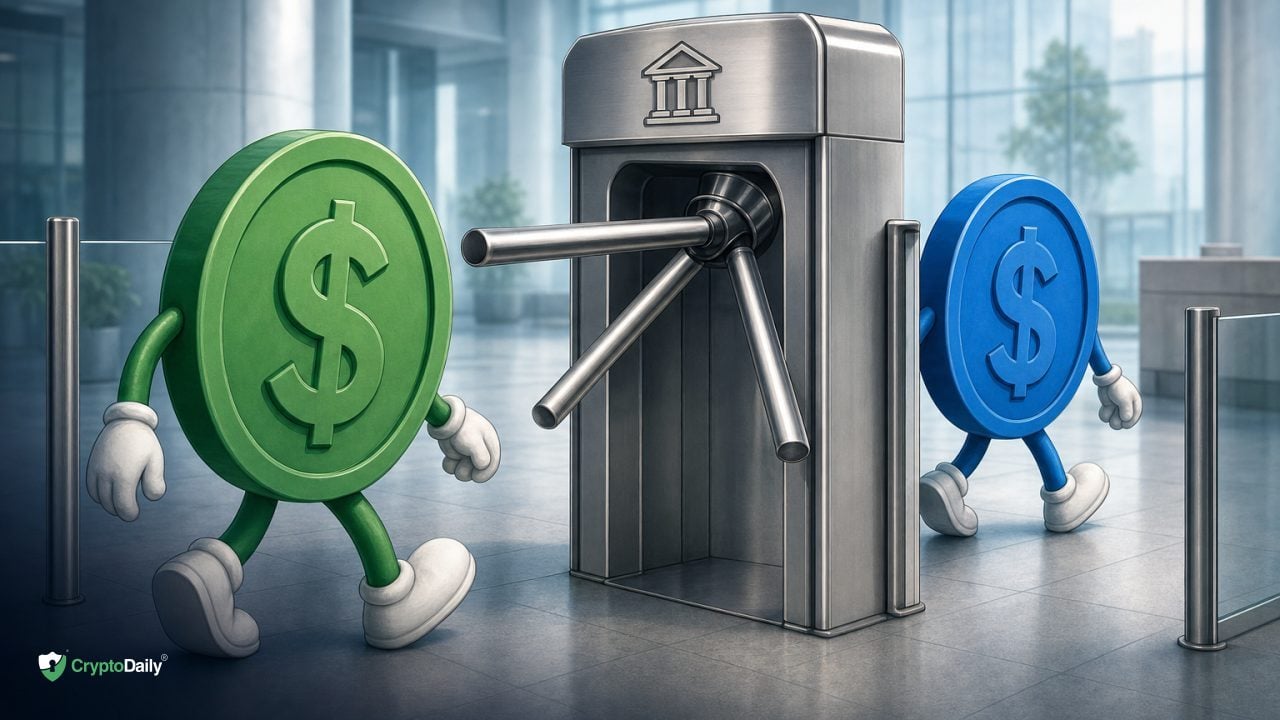
Stablecoin conversion services let institutions swap one dollar‑pegged token for another, or move the same token across blockchains, while aiming to keep value at 1:1 with dollars. They are packaging of custody, issuer connections, compliance, and payment rails that execute mint, burn, and redemption steps on behalf of clients.
These services matter because payment stablecoins function as instruments whose reliability depends on redemption, backing, and settlement arrangements. Conversions touch all three: they use the issuer’s redemption promise, reconcile reserves, and settle across blockchains or bank ledgers. That framing is consistent with central‑bank research on payment stablecoins’ real‑world usefulness and constraints (Federal Reserve FEDS Note).
How a stablecoin conversion actually works
Institutions convert stablecoins through two broad paths:
- On‑chain, where the token is burned on one chain and newly minted on another, or routed through a protocol that proves a burn and authorizes a mint.
- Off‑chain, where a custodian adjusts client balances and coordinates mint/redemption with issuers and bank rails behind the scenes.
For example, Circle’s Cross‑Chain Transfer Protocol moves USDC by burning on the source chain, issuing an attestation, and minting the same amount on the destination chain, preserving 1:1 supply across networks (Circle CCTP).
Custodial platforms expose this as a single API call. Paxos documents a Stablecoin Conversion API that performs 1:1 conversions between supported stablecoins or USD by updating custodial profiles and orchestrating any mint or redemption required in the background (Paxos API docs).
- Client requests a conversion (e.g., USDC to USD or USDC to another supported stablecoin).
- Platform checks balances and compliance, then routes via on‑chain burn/mint or off‑chain ledger adjustments.
- Issuer attests and mints if needed, or the custodian posts the new token balance to the client’s account.
- Final settlement lands either on a blockchain address or a bank ledger, depending on the route.
Core components of a conversion stack
Institutional conversion services bundle multiple layers so the swap feels like a single step to the client:
- Custody and wallets: Secure storage and policy‑driven signing for on‑chain moves.
- Issuer integrations: Connectivity to programs like CCTP for on‑chain burns/mints and to issuers’ mint/redeem endpoints for off‑chain flows (Circle; Paxos).
- Banking rails: Fiat funding and redemption using ACH, wires, or real‑time payments, enabling the “fiat → stablecoin → fiat” loop often used for payouts and treasury.
- Orchestration and routing: Business logic that chooses the lowest‑risk or fastest path, handles attestations, and reconciles balances.
- Compliance and monitoring: KYC/KYB, sanctions screening, and transaction analytics embedded in the workflow.
Industry guides describe this end‑to‑end “stablecoin sandwich” of mint, on‑chain routing, and redeem that banks and payment firms use for treasury, cross‑border settlement, and payouts (Fireblocks guide).
On‑chain vs off‑chain conversions
The right path depends on speed, chain coverage, operational control, and counterparty model. This comparison highlights the trade‑offs.
| Method | What happens | Strengths | Trade‑offs | Typical tools |
|---|---|---|---|---|
| On‑chain burn and mint (same issuer) | Token is burned on source chain; issuer attests; same amount is minted on destination chain. | Programmatic 1:1 supply integrity across chains; fast on finality. | Chain fragmentation and bridge/attestation dependencies add operational risk. | Circle CCTP |
| Custodial ledger conversion (across issuers or to USD) | Custodian updates client balances and executes mint/redemption behind the scenes. | Simplifies multi‑issuer swaps; abstracts blockchain steps; integrates bank rails. | Relies on custodian and issuer operations; subject to compliance and operational windows. | Paxos Stablecoin Conversion API |
| Fiat redeem and re‑mint | Redeem stablecoin to dollars; send via bank rails; mint the target token with its issuer. | Resets exposure to fiat reserves; clear accounting between programs. | Bank‑rail timing; multiple settlement legs; potential cut‑off constraints. | Issuer redemption portals; banking partners (industry stack) |

Redemption, reserves, and why settlement design matters
Payment stablecoins are intended to hold a 1:1 value with fiat, but that usefulness depends on credible redemption, robust backing, and sound settlement design, according to central‑bank researchers (Federal Reserve FEDS Note).
Issuer terms make these mechanics concrete. For example, Paxos states its USD stablecoins are fully backed by U.S. dollar‑denominated assets in segregated accounts and are redeemable 1:1, subject to compliance checks and operational timing (Paxos terms). Conversion services depend on such promises to complete off‑chain swaps and fiat legs.
Where settlement is not anchored in central‑bank money, episodes of discounting can occur under stress, especially if redemption access or reserve quality is uncertain. Policymakers have flagged the roles of counterparty and liquidity risk, and the added operational and security risk from fragmentation across blockchains and bridges (BIS speech). Research also shows pegs are more fragile without strong collateralization and credible redemption, a key consideration for any conversion path that relies on timely redemptions (FDIC‑affiliated paper).
Who uses these services and why
Banks, payment firms, and corporate treasuries use conversion services to simplify on‑ and off‑ramps, standardize treasury operations, and reduce settlement frictions across blockchains. Documented industry patterns include:
- Treasury routing: Holding a single stablecoin and converting on demand for payouts on the destination chain.
- Cross‑border settlement: The “stablecoin sandwich” of fiat → mint → on‑chain routing → redeem to local fiat, used to compress settlement windows across time zones (Fireblocks guide).
- Vendor and payroll payouts: Automated, rules‑based conversions to meet counterparties on their preferred chain or token.
- Interoperability: Moving the same token across networks via burn‑and‑mint to access liquidity or applications anchored on another chain (CCTP).

Circle CCTP "how it works" diagram: programmatic burn on the source chain → Circle attestation → mint on destination chain (visual of the burn‑and‑mint conversion used to move USDC across blockchains). — Source: Circle — CCTP 'How it works' diagram (programmatic burn-and-mint)
Limitations, risks, edge cases, and misconceptions
- Not all swaps are the same: Moving the same issuer’s token across chains via burn/mint is different from swapping between two issuers. The former preserves total supply programmatically; the latter relies on custodial balance updates and separate redemption lines.
- Counterparty and liquidity risk: If redemption access is delayed or reserve quality is unclear, temporary discounts can emerge. Central‑bank officials and researchers warn of run risk and bridge‑related operational exposures (BIS speech).
- Operational windows and cut‑offs: Off‑chain conversions can depend on bank‑rail hours, issuer mint/redeem schedules, and compliance reviews, which may slow end‑to‑end timing.
- Peg fragility under stress: Academic and regulatory work finds that collateralization and credible redemption mechanisms materially affect stability during shocks (FDIC‑affiliated paper).
- “Bridging equals conversion” misconception: Some bridges lock tokens and mint a wrapped representation, which is not the same as an issuer‑attested burn/mint model. Institutions often prefer issuer‑run paths because they align with reserve and redemption logic (CCTP).
- Compliance dependencies: KYC/KYB and sanctions screening are integral. Conversion requests can be rejected or delayed if requirements are not met.
When you will encounter these services
You will most often see stablecoin conversion services when money has to move across chains or counterparties demand a different dollar token than the one you hold. Treasury teams use them to settle suppliers on their preferred networks, consolidate balances to a single token, or route funds to a chain with better application access.
In short, conversion services are the institutional plumbing that ties together issuer redemption, on‑chain movement, and bank settlement. They are practical whenever the goal is the appearance of “same dollars, different rails” without your team stitching together custody, bridges, and issuer portals manually.
Frequently Asked Questions
Is converting between two dollar stablecoins always 1:1?
Issuers commit to 1:1 redemption with dollars, but conversions between different issuers can involve routing, timing, and operational steps. Custodial services aim to deliver a like‑for‑like result, subject to compliance and process windows, rather than guaranteeing instantaneous parity across programs.
How is cross‑chain USDC different from swapping USDC to another stablecoin?
Cross‑chain USDC via CCTP burns USDC on one chain and mints the same amount on another, preserving total supply under a single issuer. Swapping to another stablecoin typically uses a custodian to redeem and mint across separate issuers’ programs.
Do banks need crypto wallets to use these services?
Institutional platforms abstract wallets for clients. On‑chain steps still require wallets and signing, but custody providers manage policies and execution so banks and payment firms can route funds without handling raw keys.
What ensures a stablecoin’s convertibility in these flows?
Issuer terms and reserve arrangements, plus operational redemption processes, underpin convertibility. Public materials describe fully backed reserves and 1:1 redemption subject to compliance and timing, which conversion services rely on to complete swaps.
Why do regulators highlight bridge and fragmentation risks?
Multiple chains and interoperability layers add operational and security complexity. Officials point to counterparty and liquidity risks, and to the possibility of temporary discounts if redemption access or reserve quality is uncertain during stress.
Disclaimer: This article is provided for informational purposes only. It is not offered or intended to be used as legal, tax, investment, financial, or other advice.
Related Stories