When Locked Tokens Arrive: The Risk in Vesting Cliffs
 Ethan Caldwell
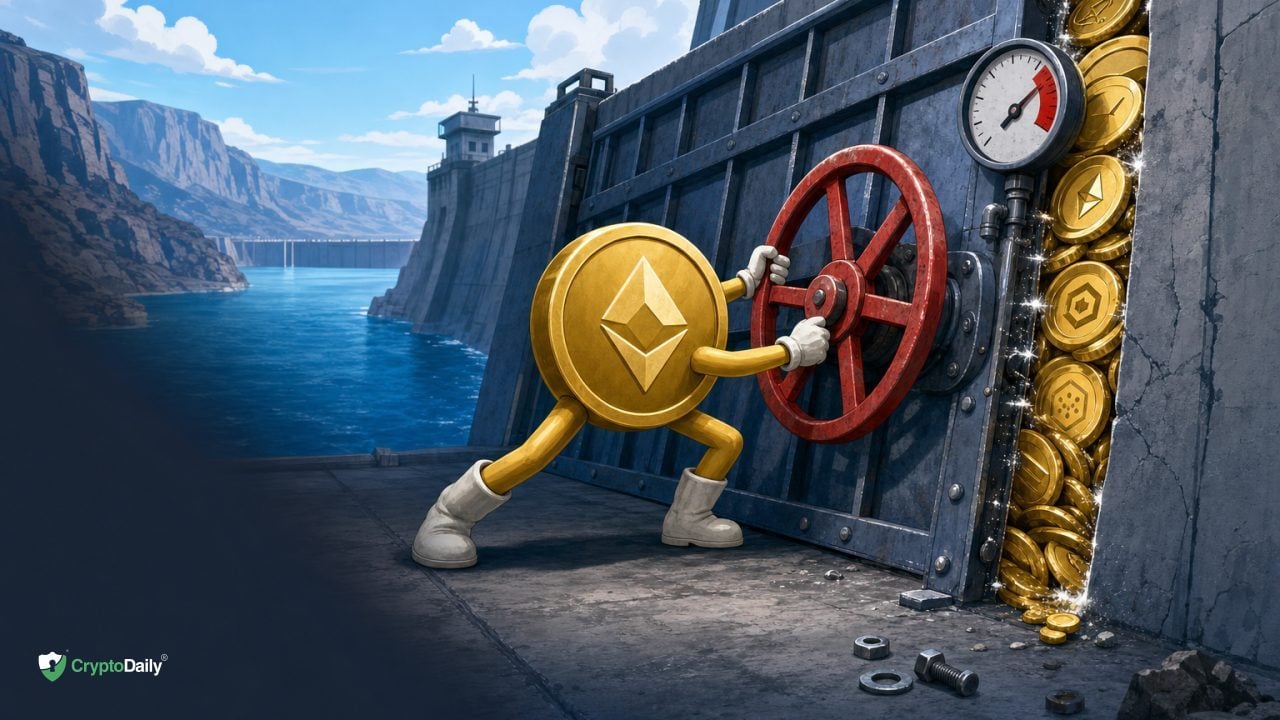
Locked tokens always feel distant, right up until they show up in wallets and the market has to swallow them. That turn from abstract schedule to actual supply is where a lot of people get hurt.
This guide breaks down how vesting cliffs work, what really drives the price moves, and a practical way to trade or sidestep the risk. No drama. Just the mechanics, the incentives, and the tells.
| Aspect | What to Know |
|---|---|
| Supply shock | Cliffs introduce a lump of new tokens at once. Even if holders claim slowly, the overhang appears immediately. |
| Who gets tokens | Usually teams, investors, advisors, market makers, and sometimes ecosystem funds. Each has different sell incentives. |
| Price drivers | Size vs circulating supply, unlock cadence, liquidity depth, and how recipients distribute post-cliff. |
| Timeline | Front-running often starts days or weeks ahead; distribution can run for hours to months after the cliff date. |
| Signals to watch | Exchange inflows, on-chain outflows from team wallets, perp basis flips, open interest, and slippage on large quotes. |
| Risk filters | Vesting docs, cliff size as % of float, holder mix, market maker mandates, and treasury runway. |
| Positioning | Scale risk, hedge with perps, step aside if liquidity is thin, or rotate after distribution stabilizes. |
Core Concepts: How Vesting Cliffs Actually Work
Every token has two supplies: what trades now and what exists on paper. Cliffs pull part of that paper supply into the real world in one jump. If the chunk is big relative to what already trades, markets usually need a new price to clear it.
Context helps. Between July 1 and August 1, 2026, scheduled unlocks across projects added up to almost 2 billion dollars in value, according to Streamflow (citing Tokenomist). That kind of calendar doesn’t guarantee red candles, but it raises the odds of volatility around specific dates.
Real examples illustrate the pattern. On July 12, 2026, 82.5 billion PUMP tokens hit a cliff, the first insider release worth around 125 million dollars, lifting available supply by roughly 20.3 percent of the circulating base at that time, per Tokenomist. Two days later, the team wallet began distributing, moving over 6 million dollars in the first hour and more than 19 million that day, reported by CryptoBriefing. Supply didn’t just “exist.” It started traveling to the places where it could be sold.
That same week, Tokenomist’s unlock updates highlighted a Hyperliquid (HYPE) cliff of about 15.55 million dollars, around 8.6 percent of then-circulating supply, slated for around July 20, 2026 (Tokenomist). Again, the detail that matters is the size versus what already trades, and who receives the tokens.
Glossary you’ll actually use
- Cliff A one-time release of locked tokens at a set date before linear vesting continues.
- Linear vesting Tokens unlock gradually per block or per month after an initial cliff period.
- Circulating supply The amount currently tradable in the market, excluding most locked allocations.
- Float The part of circulating supply that truly moves, not held by long-term or restricted holders.
- Overhang Known future supply that the market expects to arrive, often weighing on price ahead of time.
- Distribution schedule How recipients actually transfer or sell tokens after they unlock, which can stretch for weeks.
Step-by-Step Playbook
- Map the calendar Pull the unlock dates from the whitepaper, investor docs, and third-party trackers. Note the cliff percentage versus current circulating supply.
- Segment the recipients Break down how much goes to team, investors, market makers, and ecosystem funds. Each bucket behaves differently on sell pressure.
- Check liquidity math Compare cliff size to average daily volume and on-chain liquidity. If the unlock dwarfs daily turnover, slippage risk is real.
- Watch wallets early Tag known team and investor addresses. Look for claim transactions, exchange deposits, and OTC-labeled movements in the days around the date.
- Read perp signals Basis flipping negative, funding compressing, and rising open interest into the event often signal hedging or shorts leaning in.
- Plan your posture Decide whether to reduce exposure, hedge with perps, or sit flat through the event. Write the plan before emotions spike.
- Wait for the second move Initial prints can be fake-outs. Often the truer move happens when distributions start or a treasury statement lands.
- Reassess after flows Once distribution slows and market depth rebuilds, revisit the thesis. Sometimes cliffs clear overhang and improve the setup.
Cliffs vs Linear Unlocks in the Wild
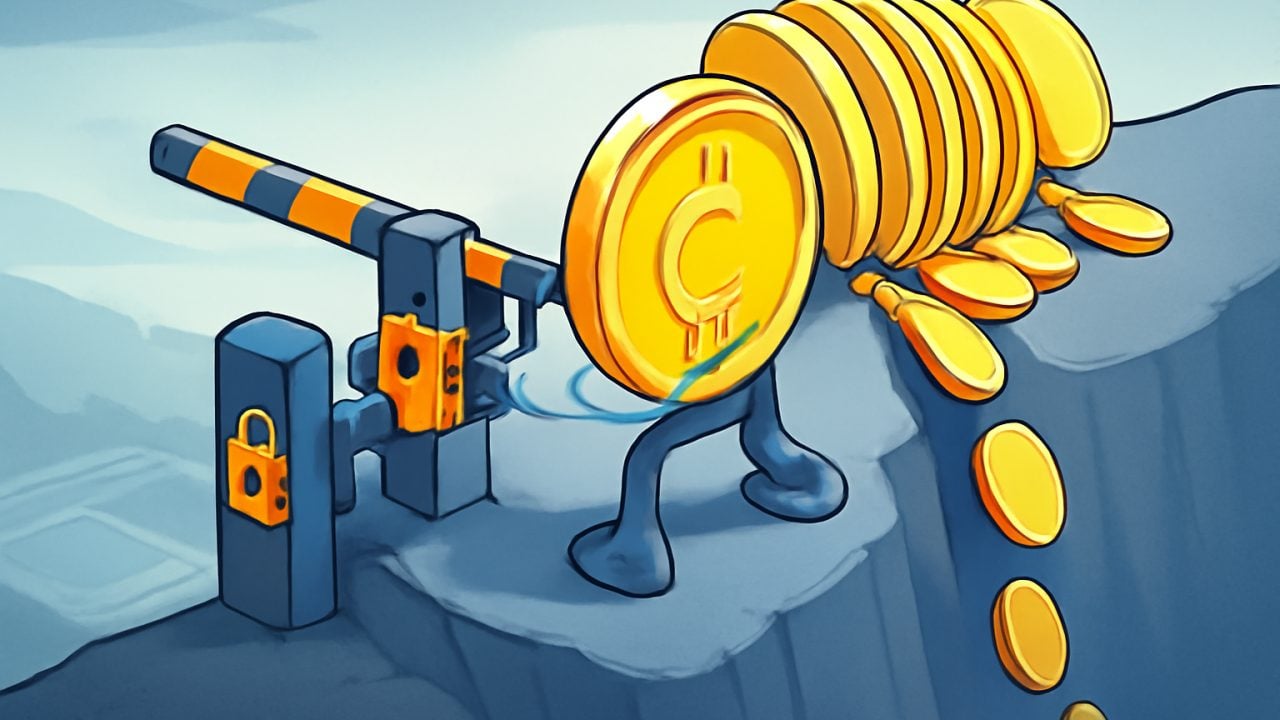
Most projects mix a cliff with linear vesting. The cliff is the punch. Linear is the steady drip. Neither is automatically “bad,” but the market reacts to different profiles in predictable ways.
| Dimension | Cliff Unlock | Linear Unlock |
|---|---|---|
| Supply shock | High at a single time, then lower | Low each period, persistent |
| Price impact window | Hours to days around the date | Ongoing, often fades into baseline |
| Market behavior | Front-run selling, hedge build, volatile tape | Less dramatic, but can cap rallies |
| Signal to watch | Recipient wallet outflows post-cliff | Monthly claim cadence and MM quotes |
| Holder incentives | Investors rebalance; teams manage optics | Recipients schedule sales more evenly |
| Narrative risk | News cycles amplify negative headlines | Less headline-driven, more structural |
Take PUMP’s July 12 insider cliff as a case study. The unlock itself didn’t sell the tokens. The follow-on distribution from the team wallet on July 14, moving tens of millions, was the price-relevant action because it turned potential supply into tradable supply (CryptoBriefing). That sequence is common.
Reading the Market Around Unlock Days
Markets try to get ahead of cliffs. If a large unlock is widely known, you’ll see hedges and reduced risk into the date. But the reaction path still depends on who sells, how quickly they can, and what liquidity can absorb.
Into July 2026, the calendar itself was heavy. Nearly 2 billion dollars of scheduled unlocks in a month concentrates attention and positions (Streamflow citing Tokenomist). That focus can produce both over-shoots and clean post-event rallies when feared supply doesn’t immediately hit the tape.
Pro tip: build a simple sheet that maps each unlock to average daily volume and expected recipient mix. If the ratio of unlock size to 30-day volume is over 3x, treat it as a high-impact date until proven otherwise.
Perps also matter. If basis compresses or flips negative ahead of the day, a lot of the risk may already be priced in. If funding stays buoyant and spot outflows spike post-cliff, late sellers often push price lower than models assume. Watch exchange inflows from known wallets, not just headlines.
Who Sells First? Incentives by Holder Type
Not all unlock recipients behave the same. Understanding incentives helps handicap the path of flows.
- Early investors Some funds systematically distribute on unlock to rebalance. Selling can be paced, but mandates matter more than vibes.
- Team and advisors Optics-sensitive. Teams may stagger sales, route OTC, or seed liquidity to smooth price. Cash runway needs can override optics.
- Market makers Rarely directional. They warehouse, hedge, and drip inventory to keep spreads tight. Their flows can look like selling but are often neutral.
- Ecosystem/treasury These allocations often fund grants and growth. Sales might track milestone budgets, not market levels.
With HYPE’s July 2026 cliff flagged at about 8.6 percent of circulating supply, the marginal seller risk was obvious, but the distribution path would still depend on whether recipients routed to exchanges quickly or staged sales over weeks (Tokenomist).
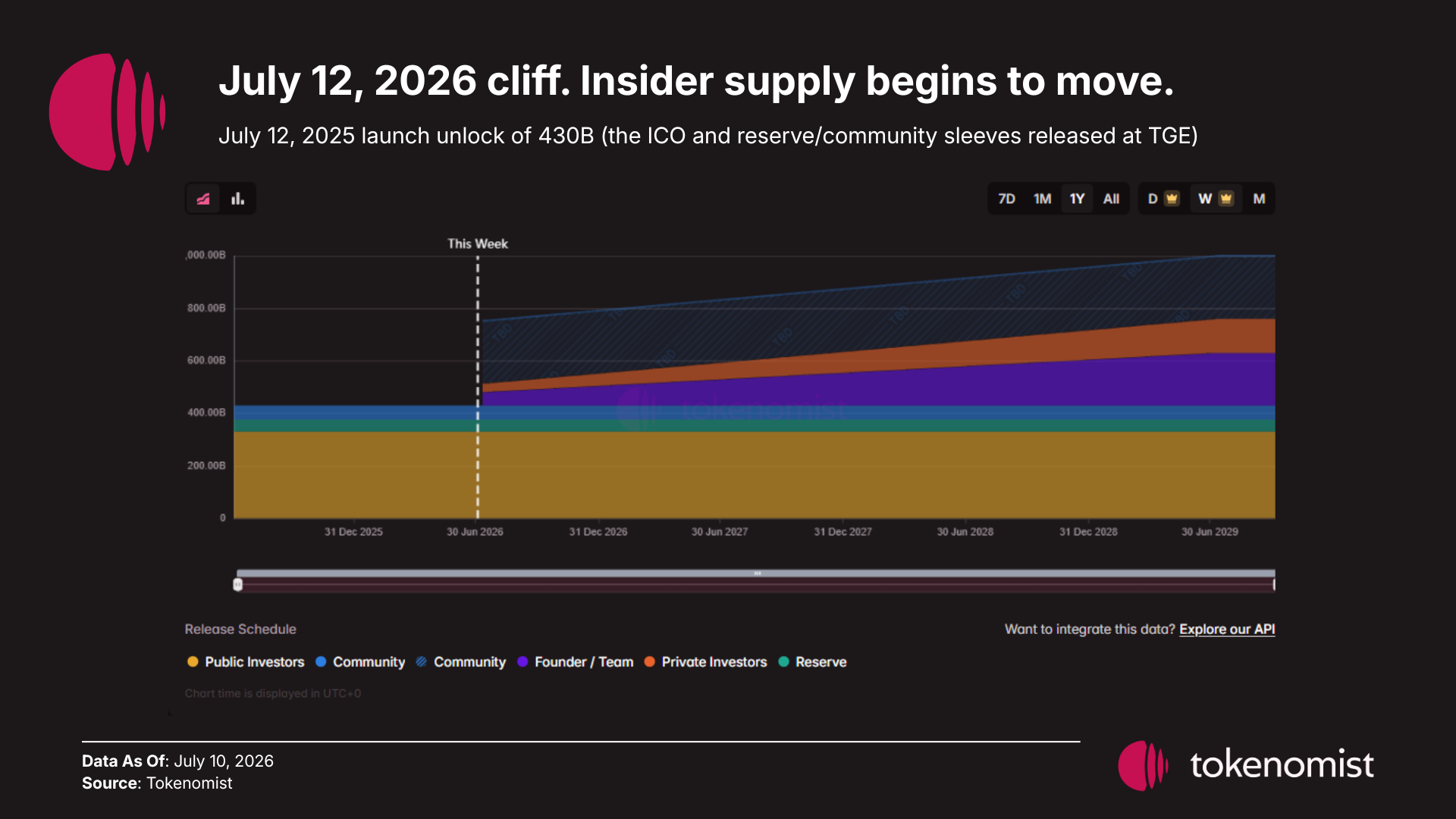
Tokenomist infographic showing PUMP's allocation and the July 12, 2026 cliff (82.5B PUMP) — visually highlights how concentrated the unlock is relative to circulating supply and why a single-date cliff can create outsized market pressure. — Source: Tokenomist
Scenarios: When Unlocks Hurt or Help
Cliffs don’t have to be bearish. They’re inflection points. Here are the two common arcs.
- Bearish arc Big cliff relative to float, thin liquidity, recipients with short horizons, and exchange inflows right after the date. Price reprices lower, bounces get sold until distribution fades.
- Bullish or neutral arc Cliff is expected, OTC absorbs early, recipients stake or lock, and on-chain shows little movement. Shorts cover into nothing and price mean-reverts or grinds up.
In PUMP’s case, the sequence showed how quickly a neutral-looking unlock can tip bearish once distribution starts moving in size through liquid venues (CryptoBriefing). In other projects, heavy cliff months have passed with muted impact when treasuries prearranged OTC deals or placed tokens with liquidity providers under time-based agreements.
Pitfalls & Red Flags
- FDV illusions Fully diluted values can look cheap, but near-term unlocks change who holds the bag. Focus on float-adjusted metrics.
- Hidden cliffs Advisor or market maker deals can have separate schedules. Cross-check team blog posts, governance forums, and on-chain multisigs.
- Liquidity mismatch A cliff that is multiple times daily volume is not just a headline. It’s a mechanical problem for price discovery.
- Wallet misreads A claim isn’t a sale. But large, repeated exchange deposits after the date are usually a tell.
- Derivatives whipsaw Shorting obvious cliffs can work, until OTC soaks supply and a squeeze rips. Size accordingly and set stops.
- Overfitting past events Each token’s holder mix and treasury needs differ. Don’t force the last unlock’s pattern onto the next one.
If you want ongoing coverage and context across unlock calendars, trading flows, and tokenomics trends, Crypto Daily tracks the moving pieces. Visit Crypto Daily for regular breakdowns.
Frequently Asked Questions
How do I find the real unlock schedule?
Start with the whitepaper and tokenomics page, then cross-check with trackers and governance posts. When in doubt, follow the smart contracts and team multisigs on-chain. If dates differ across sources, default to the most conservative interpretation.
What percent of circulating supply is a “big” cliff?
Context rules, but anything above 5 to 10 percent of circulating supply in one shot deserves attention. The July 2026 examples around PUMP and HYPE both crossed that seriousness threshold per Tokenomist.
Do all cliffs cause price drops?
No. Markets front-run. If the unlock is fully expected and recipients prearrange OTC or lock tokens, price can hold or even rally as shorts cover. The key is whether unlocked supply actually becomes sellable float.
What should I watch on-chain on the day?
Recipient claims, team wallet movements, and exchange deposit addresses tied to the project. Size, timing, and repetition matter more than a single transaction.
What about hedging with perps?
Perps can help neutralize exposure around the date, but basis and funding move. Hedges are not free. Track liquidity, slippage, and liquidation distances. Don’t let a hedge become the main bet.
Can cliffs ever be bullish long term?
Yes. Clearing a known overhang can reset the market and attract new buyers who waited for supply risk to pass. It’s less about the day and more about the distribution that follows and the project’s execution path.
Is there a simple rule for sizing positions into unlocks?
There isn’t a one-size rule. A practical approach is to size so a two to three standard deviation move against you on the day doesn’t knock you out of the broader thesis. Smaller is usually wiser into uncertainty.
Disclaimer: This article is provided for informational purposes only. It is not offered or intended to be used as legal, tax, investment, financial, or other advice.
Related Stories