Prediction Markets Now Earn Robinhood More Than Crypto
 Maya Sinclair
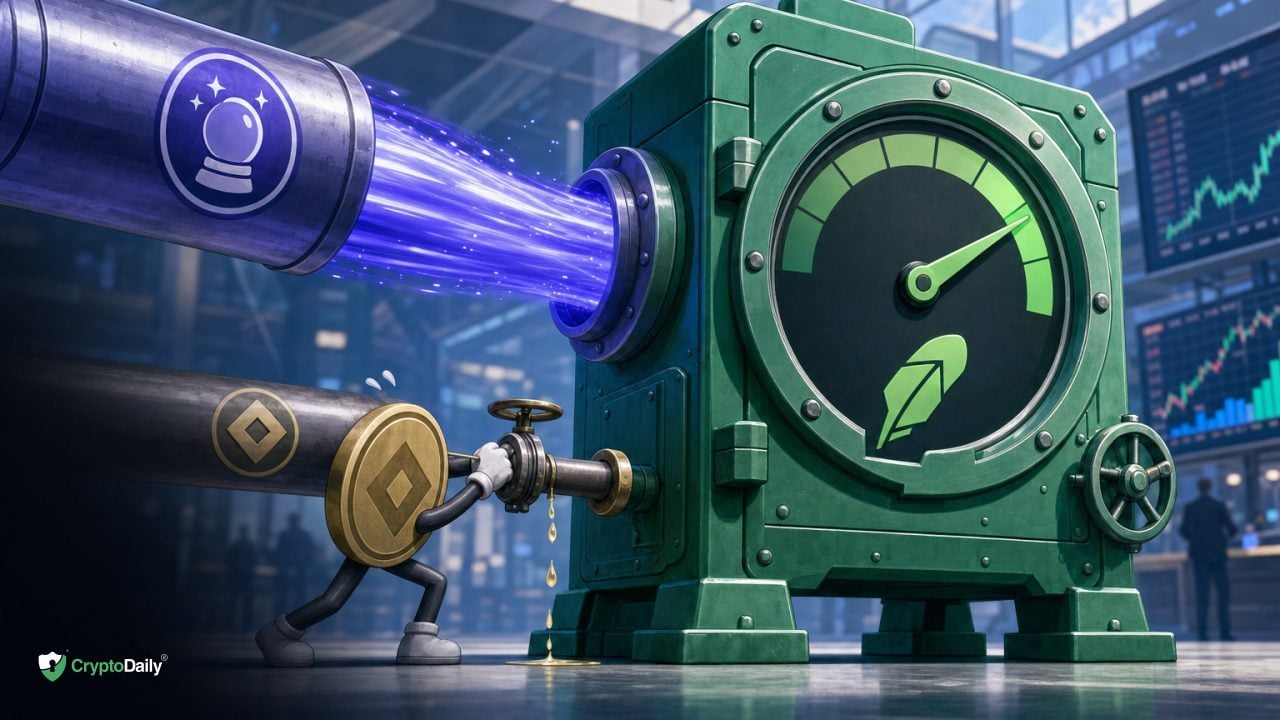
There’s a quiet shift happening in retail finance. It’s not a new coin listing or a buzzy wallet feature. It’s people placing small, frequent bets on real-world outcomes — elections, sports, macro prints — and doing it inside familiar broker experiences. If you’ve noticed the energy around prediction markets lately, you’re not imagining it.
The working thesis: event-driven markets now contribute more to Robinhood’s take than crypto trading does. Robinhood hasn’t carved out a clean line item for this in public disclosures, so call it a strong signal rather than a courtroom exhibit. The engagement patterns, fee mechanics, and regulatory drift all point the same way.
Let’s unpack what that actually means, where the revenue comes from, where the risks sit, and what to watch next quarter.
| Point | Details |
|---|---|
| Revenue mix is tilting | Lower crypto volatility compresses trading spreads and order-flow value, while frequent, low-stake event bets keep engagement and fee capture high. |
| Product fit | Event-style contracts resemble options with fixed outcomes, slotting neatly into Robinhood’s retail flow and monetization model. |
| Regulatory hinge | U.S. rules around event contracts remain unsettled; CFTC actions shape what’s allowed and where. Compliance is the bottleneck and the moat. |
| Onchain vs brokered | Onchain venues like Polymarket show demand spikes around elections; brokered, KYC’d rails can monetize that interest at scale in the U.S. |
| What to watch | Robinhood disclosures, CFTC guidance, Bitstamp integration progress, and event-driven DAUs around political and sports calendars. |
What changed in Robinhood’s revenue mix
Start with the obvious: crypto trading revenue is a rollercoaster. When volatility and narrative heat up, retail swipes in and fees flow. When things cool off, spreads tighten, order flow is less valuable, and volumes sag. Robinhood’s past filings have been clear about that cyclicality in transaction-based revenue, including crypto. You can see the pattern in prior shareholder letters and the annual report on the company’s investor relations site (Robinhood IR).
Overlay that with rising interest in outcome markets. The loop is powerful: daily engagement, new markets every week, simple UX, and low ticket sizes. Even modest fees on frequent tickets add up. Event-driven markets also pair well with Robinhood’s core options audience. If you’ve ever traded a short-dated earnings play, you already think in probabilities and odds.
The acquisition track also matters. Robinhood agreed to acquire Bitstamp in 2024, putting a regulated, global exchange stack under its roof — custody, order matching, and institutional channels included (Robinhood Newsroom). Whether or not that directly powers event products, it signals a broader push to own infrastructure where fees accrue, not just front-end clicks.
What counts as a “prediction market” here
Let’s define terms, because “prediction market” means different things to different people.
- Onchain markets: tokenized, permissionless venues where you buy shares in outcomes (think crypto-native platforms that price the odds of “X happens”). U.S. access can be restricted depending on the venue.
- Brokered event contracts: listed, regulated products that look more like binary options with fixed payouts. The CME literally calls them “event contracts” and offers daily markets across commodities and indices (CME Group).
- Sports and novelty markets: overlaps with regulated sportsbooks. Odds-based interfaces, small stakes, lots of events.
Robinhood doesn’t have to become a crypto prediction market to benefit from the same behavioral loop. If it onboards brokered event contracts or embeds event-like structures around macro prints, earnings, or sports, the engagement and monetization look awfully similar.
Pro tip: Don’t get hung up on labels. If a product lets retail express a view on whether something happens by a date for a known payout, it rhymes with prediction markets even if it’s routed through a listed exchange or a partner.
The revenue math: why events can out-earn crypto
Frequency beats size
Crypto trading is feast-or-famine. Event-driven activity is calendarized: earnings seasons, CPI prints, rate decisions, match days, playoff runs, election milestones. That cadence creates repeatable traffic. Even if average ticket size is smaller, the number of touches per user per week can be much higher. Fee capture compounds.
Spread, rebates, and float
Robinhood’s monetization is a cocktail of routing economics, spreads, and interest on idle cash. Event products can light up all three:
- More orders to route more often.
- Stable spreads when the user base is broad and non-institutional.
- Cash that sits between events or settles frequently, boosting net interest income during high-rate regimes.
Crypto, by contrast, has seen spread compression on major pairs and more price-sensitive retail execution. When volatility dips, users simply don’t tap as much.
Attention follows stories
Outcome markets monetize narratives in real time. Politics, sports, and headline macro are sticky. Onchain activity reflects this: crypto-native venues have repeatedly seen surges around big moments like the 2024 U.S. election cycle, with media coverage marking record volumes and new-user spikes (CoinDesk). Brokered platforms can translate that same energy into compliant, scalable products for U.S. retail.
Regulation is the speed limit
The catch, as always in the U.S., is the rulebook. The CFTC has taken a skeptical stance on some classes of event markets, particularly election-related contracts. In 2023 the agency moved to block political contracts proposed by a U.S. venue, underscoring how contested this category remains (CFTC).
Crypto-native markets haven’t been immune either. A prominent onchain platform settled charges with the CFTC in 2022 and agreed to block U.S. users, a reminder that permissionless design doesn’t sidestep jurisdictional rules (CFTC).
Put simply: compliance is both bottleneck and moat. If Robinhood advances event-style products, expect them to skew toward what’s squarely within current frameworks (think non-political listed events, macro prints via listed venues, and sports via licensed partners). Big addressable markets, smaller regulatory blast radius.
Risk reminder: Event products can be highly speculative. Fixed payouts and all-or-nothing profiles make it easy to overbet conviction. Limit sizing, use checklists, and treat these as trades, not entertainment.
Onchain vs brokered: a practical compare
| Attribute | Onchain venues | Brokered event products |
|---|---|---|
| Access | Often geo-restricted for U.S.; wallet-based | KYC/AML; available via registered brokers where permitted |
| Product form | Outcome shares; markets spin up fast | Listed contracts (binary/event contracts), exchange-routed |
| Fees and spreads | Transparent protocol fees; variable liquidity | Broker fees embedded; routing economics; tighter UX |
| Regulatory posture | Patchy; prior enforcement actions on U.S. access | Defined in futures/options frameworks; category-specific limits |
| Liquidity drivers | Crypto-native users; viral events | Broker DAUs; cross-sell from options and equities |
Demand exists on both sides. Onchain platforms have proven the appetite around high-signal moments. Brokered rails translate that into something large U.S. audiences can actually touch, which is where fee capture can scale.

Signals to watch next quarter
- Disclosures and commentary: Robinhood’s shareholder letters sometimes add color on product engagement even without granular revenue lines. Read the footnotes and the Q&A on earnings calls.
- Regulatory breadcrumbs: Any CFTC clarity on event contracts, even in narrow categories, can open the door. Start with official education and advisories for hints at scope (CFTC).
- Onchain pulse: Spikes on crypto-native prediction markets during political debates, CPI days, or playoffs tend to foreshadow brokered engagement a week later. Media coverage around election cycles is a decent proxy (Bloomberg).
- Bitstamp integration: Any hint that Robinhood is leveraging exchange infrastructure for event-like exposure — even if not called that — is material (Robinhood Newsroom).
- Wallet rails: Robinhood Wallet development and supported networks can signal optionality for future onchain integrations (Robinhood Wallet).
Playbook for traders and builders
For retail traders
- Cap your exposure. Fixed-payout markets tempt oversized bets. Decide your max loss per thesis before you tap.
- Triangulate odds. Compare brokered pricing with onchain odds and sportsbook lines. Discrepancies happen around news; don’t chase without a plan.
- Use the calendar. Earnings dates, CPI, FOMC, big matches, debates. Pre-plan entries and exits; don’t wing it during the spike.
- Mind settlement mechanics. Read the fine print on how outcomes are determined and when cash settles. Ambiguity can tie up capital.
For crypto and fintech builders
- Design for clarity. Outcome definitions and dispute processes should be boringly explicit. Nothing erodes trust faster than fuzzy resolution.
- Liquidity bootstrapping. Seed both sides early; asymmetric books create stale pricing and bad fills. Consider market-maker partnerships.
- Compliance-first in the U.S. Don’t improvise on election or sports markets. Follow formal event-contract pathways or geofence hard.
- Interoperability. If you’re onchain, build clean bridges to fiat on- and off-ramps. If you’re brokered, expose APIs and webhooks for community tools.
Pro tip: Narratives drive flow. Build features around the calendar: alerts, pre-market content, position templates, and post-event recaps. Traders return for rhythm, not just payouts.
Common mistakes to avoid
- Overfitting to polls or a single model. Markets price surprise risk; so should you.
- Ignoring fees. Small tickets with frequent turns can stack meaningful costs. Track all-in P&L, not just win rate.
- Liquidity blindness. Wide spreads during off-hours and niche events can erase edge.
- Underestimating headline risk. Rule changes or court orders can shutter whole categories overnight.
A quick word on what this means for crypto
If event markets are eating into Robinhood’s crypto revenue, it doesn’t mean crypto is fading. It means retail attention is cycling toward outcome-centric products that feel tangible and time-bound. In a way, that’s bullish for crypto too: onchain markets are the lab where new formats get tested, and brokered platforms are the distribution layer.
The more people get comfortable pricing probabilities, the more natural it becomes to trade tokenized risk as well — from options on majors to tokenized event exposure. Watch for bridges: listed instruments referencing onchain data, and onchain venues offering compliant access points for U.S. users. The Bitstamp deal gives Robinhood optionality on both sides of that bridge (Robinhood Newsroom).
If you want steady, sober coverage of how this side of the market evolves — the rules, the rails, the incentives — we track it closely at Crypto Daily.
Frequently Asked Questions
Does Robinhood officially offer prediction markets right now?
Robinhood hasn’t billed any product as a crypto prediction market. The discussion here focuses on event-style, outcome-driven products that can be routed through listed venues or licensed partners. They rhyme with prediction markets even if they’re packaged differently.
How could event markets out-earn crypto for Robinhood?
Frequency and engagement. Event products create regular, calendar-based activity, which supports consistent fee capture. Crypto revenue is more cyclical and tends to spike only when volatility and narratives align. In quieter periods, event markets can pull ahead.
Are political prediction markets legal in the U.S.?
It’s complicated. The CFTC has pushed back on listed political event contracts, signaling significant limits in that category (CFTC). Other event types, such as macro prints or commodity-linked outcomes, can be offered through established frameworks.
What’s the role of onchain platforms like Polymarket in this story?
They prove demand. Onchain venues routinely see volume spikes around big moments, especially elections and high-stakes events, as covered by mainstream and crypto media (CoinDesk, Bloomberg). Brokered platforms can translate that interest into compliant U.S. access.
Will the Bitstamp acquisition change Robinhood’s approach?
It gives Robinhood more control over exchange infrastructure and institutional channels, which can help with product velocity and economics. Whether it directly powers event products remains to be seen, but the optionality is real (Robinhood Newsroom).
What are the biggest risks for users?
Binary outcomes make it easy to overbet conviction. Liquidity can vanish in niche markets or off-hours. Rules can change midstream if regulators intervene. Treat sizing, settlement rules, and fees as first-class parts of the trade.
How does this affect crypto investors on Robinhood?
It may mean fewer promotional cycles for new coins and more focus on event-driven engagement. If you’re a crypto-first user, watch for onchain-to-broker bridges and listed instruments that reference tokenized data. Diversifying venues can help manage liquidity and fee risk.
Disclaimer: This article is provided for informational purposes only. It is not offered or intended to be used as legal, tax, investment, financial, or other advice.
Related Stories