AMD Earnings Preview: MI450 Demand and AI Margins
 Lena Carter
AMD’s next print has one big question baked into it: are customers lining up for MI450 at prices that actually fatten margins, or just kicking tires while they wait for more benchmarks and capacity? If you’re trading the headline, that’s one thing. If you care about the multi-quarter setup, it’s all about orders, shipment timing, and the cost stack behind those AI racks.
This preview keeps it practical. What to listen for, where demand is real versus aspirational, and how the Helios ramp could change the margin math. You don’t need every spec. You need the few tells that move estimates and sentiment.
| Aspect | What to Know |
|---|---|
| MI450 order visibility | Look for named customers, backlog quality, and delivery windows. Soft MOUs won’t cut it; signed POs with shipment schedules matter. |
| Helios ramp timing | Management has flagged H2 2026 shipments; confirm cadence by quarter and how quickly racks convert to revenue. |
| AI gross margins | Margins hinge on HBM cost, yields, packaging, and rack mix. Any guide on improvement pace is a key read-through. |
| Pricing and tokens per dollar | AMD is pushing a performance-per-dollar story; watch if customers validate pricing power in the field. |
| Supply health | HBM4 and substrate availability, plus foundry allocation, will cap upside if tight. Any commentary on constraints matters. |
| Software and ecosystem | ROCm maturity, framework support, and reference deployments reduce friction and improve win rates. |
| Competitive posture | How AMD positions MI450 and Helios versus the incumbent affects discounts, mix, and margins. |
Core concepts: how AI racks turn into revenue and margins
An AI chip announcement doesn’t become revenue until it ships and gets accepted. For AMD, MI450 is the accelerator, but the big lever is Helios, the rackscale system that bundles dozens of GPUs with memory, networking, and power. Enterprise buyers don’t want parts. They want capacity they can light up fast, with predictable cost per token and a service plan.
That’s why you’ll hear tokens per dollar and time to deploy almost as much as raw flops. AMD has pitched Helios as a performance-per-dollar leader. In its July update, AMD said a single Helios rack integrates 72 GPUs and up to 31 TB of HBM4, with peak throughput measured at up to 2.9 exaflops FP4, and claimed roughly 30 percent more tokens per dollar versus the leading alternative AMD Newsroom (Helios press release / press kit). If customers echo that math, pricing power improves and margins can climb even without massive volume surprises.
Backlog quality is the second pillar. Named hyperscalers, AI labs, and cloud VMs signal durable demand and faster deployments. AMD and Microsoft announced that Azure will ramp Helios at scale, with shipments to customers including Microsoft starting in the second half of 2026 AMD Newsroom (press release). That’s the kind of date-certain guidance you want to hear repeated and expanded.
Finally, watch the cost stack. HBM4 memory, advanced packaging, and substrate availability determine how much of each Helios dollar falls to gross margin. Early ramps tend to be margin-dilutive as yields improve. The tell is whether management can frame a clear step-up path quarter by quarter.
Glossary, no fluff
- MI450 The latest AMD Instinct accelerator aimed at training and inference for large models. Core unit of compute inside Helios.
- Helios AMD’s rackscale AI system bundling accelerators, memory, networking, and power into ready-to-deploy racks.
- HBM4 High Bandwidth Memory generation used in Helios, a big driver of performance and bill of materials.
- ROCm AMD’s open software stack for GPU compute. The more mature it is, the easier customer migrations become.
- ASP Average selling price. Higher ASPs help margins if costs are contained and customers validate value.
- Backlog Signed orders with delivery windows. Strong backlog equals clearer revenue timing and less downside risk.
Step-by-step playbook for the earnings call
- Map the timeline Write down Helios shipment milestones and MI450 contribution by quarter. Press for H2 2026 split and early 2027 ramp trajectory.
- Qualify demand Separate named, funded customers from exploratory pilots. Ask for rack counts, not just GPU totals.
- Pin the margin path Request a simple framework: what lifts AI gross margins first, second, third. Yields, HBM cost, or pricing mix.
- Check pricing power Look for tokens per dollar proof from customers, not just AMD slides. Field validation supports higher ASPs.
- Probe supply bottlenecks Ask directly about HBM4, substrates, and packaging capacity. Any constraint can cap upside even with demand in hand.
- Track ecosystem wins Note ROCm updates, framework compatibility, and reference deployments. Each reduces switching cost and sales cycles.
- Listen for cohort momentum Hyperscalers, model labs, and enterprise each ramp differently. Tie commentary to who buys first and at what scale.
- Run scenarios Before the call, sketch upside, base, and downside cases for AI revenue and gross margin. Update live as management talks.
MI450 demand: reading the real signals
The market already knows AI capex is big. What it doesn’t know is how much of that spend AMD can capture this year versus next, and at what price. Three demand markers matter more than anything: named rack deployments, customer quotes on value, and accelerated delivery schedules.
On the named side, AMD and Anthropic just put real weight behind the roadmap. The two companies announced a strategic partnership where Anthropic plans to deploy up to 2 gigawatts of MI450 series GPUs, with the first gigawatt starting in the first half of 2027. AMD also committed up to $5 billion in Anthropic equity AMD Newsroom (press release). That’s a powerful signal for pipeline scale, even if the bulk lands in 2027 and beyond. For this print, you want to hear how much of that turns into 2026–2027 backlog and whether any early capacity pulls forward.
Azure is the other big pillar. AMD said Microsoft will ramp Helios at scale on Azure, and that Helios shipments to customers including Microsoft begin in the second half of 2026 AMD Newsroom (press release). If management confirms multiple Azure regions, VM preview timelines, or customer previews, that shortens the path from shipment to revenue recognition and supports a stronger guide.
Then there’s deployment speed across the model labs. After AMD’s late July event, reporters quoted Lisa Su saying Helios is in full production, with shipments slated to start at the end of Q3 2026. OpenAI’s compute lead also said they expect to begin deploying Helios racks later in 2026 and accelerate through 2027 Reuters. If OpenAI is actually installing racks by year-end, that’s a clean tell that MI450 is past the brochure stage and into real workloads.
The last demand signal is buyer math. AMD’s Helios claims are aggressive: up to 2.9 exaflops FP4 per rack and roughly 30 percent more tokens per dollar than the leading competitor AMD Newsroom (Helios press release / press kit). If at least one marquee customer says that holds in their tests, it opens the door to firmer pricing and less discounting, which feeds margins directly.

AI margins: where the leverage can show up
AMD’s AI gross margin trajectory is the swing factor for the multiple. Early in a product cycle, costs are heavy. HBM4 isn’t cheap, packaging yields need to mature, and you’re still climbing the learning curve on racks in the field. But the operating model has clear levers.
First is scale. The more identical Helios racks that ship, the better the cost absorption and the faster yields improve. Second is mix. Full racks can carry higher blended margins than standalone accelerators if AMD keeps a tight rein on integration costs and services. Third is price integrity. If the tokens per dollar story lands, AMD can defend ASPs without leaning on discounts to win share.
During the call, listen for specifics. Are HBM4 costs easing via long-term supply agreements. Is substrate availability balanced against expected volumes. How much of the rack is AMD-built versus partner-sourced. Each answer nudges the gross margin curve up or down a couple of points over a few quarters.
Who’s buying and when: cohort comparison
| Customer type | Current status | Near-term catalyst | Risk to watch |
|---|---|---|---|
| Microsoft Azure | Public commitment to ramp Helios at scale on Azure | H2 2026 shipments to Microsoft and VM previews for customers AMD Newsroom | Deployment speed by region and software readiness for broad GA |
| Anthropic | Strategic partnership with up to 2 GW of MI450 planned | Backlog conversion and early capacity pull-ins ahead of 1H 2027 AMD Newsroom | Timeline slippage or dependency on future model roadmaps |
| OpenAI | Helios deployments expected to begin later in 2026 | Late 2026 install base and 2027 acceleration pace Reuters | Integration complexity and ROI versus incumbent stacks |
| Enterprises and ISVs | Pilots and targeted workloads; ROCm maturity is key | Reference deployments, partner solutions, and vertical templates | Longer sales cycles and budget gating into 2027 |
Pro tip: when management highlights tokens per dollar, translate it into unit pricing power. If customers back the claim, you can underwrite stronger ASPs without assuming heroic volumes.
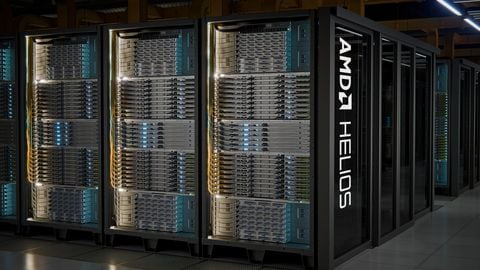
Photo of AMD Helios rackscale systems — shows the rack density/form factor used to host MI455X/MI450 GPUs and illustrates the physical basis for AMD’s performance and tokens‑per‑dollar claims. — Source: AMD Newsroom (Helios press kit)
Timing versus valuation: trading the print
Even with healthy demand, revenue recognition is a timing game. Helios racks shipping in H2 2026 may not show up as fully recognized revenue until install and acceptance. That can push part of the upside into the following quarter. If you’re setting expectations around the print, separate “orders in hand” from “revenue booked.”
Guidance tone matters too. If AMD frames Q4 as the first clean quarter of volume, the market might look through a lighter Q3 exit as long as the backlog and delivery windows tighten. Conversely, any hint that HBM4 or packaging is crimping output could cap the guide even with a strong pipeline.
Don’t forget operating expenses. Scaling field engineering, software, and customer support for racks will lift opex. That’s fine if it’s tied to ramps, but it will mute near-term operating margin expansion. The healthier signal is gross margin climbing as AI mix rises, even if opex inches up to support deployments.
Pitfalls and red flags
- Vague backlog Big numbers without customer names, delivery dates, or rack counts are hard to underwrite.
- HBM4 tightness Any indication that memory supply or substrate availability is gating shipments will cap upside near term.
- Discount-driven wins If deals depend on heavy pricing concessions, AI gross margins may lag despite unit growth.
- Software friction Delays tied to ROCm support, framework compatibility, or migration tooling can slow deployments.
- China export limits Shifts in export rules could limit certain configurations, complicating regional plans.
- Double ordering risk If customers ordered ahead of confirmed benchmarks, cancellations could emerge if alternatives improve.
If you want more context as AI infrastructure collides with digital assets and decentralized compute, we cover the crossover stories daily at Crypto Daily.
Frequently Asked Questions
What’s the single most important metric to watch this quarter?
Backlog quality tied to Helios racks. Named customers, delivery windows, and any quarter-by-quarter shipment cadence will do more to shape the outlook than broad market commentary.
When could MI450 start contributing meaningfully to revenue?
Management has pointed to the second half of 2026 for Helios shipments, with deployments picking up into 2027 for some labs. If acceptance happens quickly, late 2026 could start to show lift, with a bigger step in 2027.
Does the Anthropic deal mean guaranteed near-term upside?
It signals long-term scale but most of the deployment is positioned for 2027 and beyond. The near-term read-through is stronger pipeline visibility and potential backlog conversion, not immediate revenue.
How should I think about AI gross margins versus the rest of AMD?
Early AI margins can be below corporate average due to HBM and packaging costs. As yields improve, mix shifts to full racks, and pricing power firms, AI margins can climb. The slope of that curve is what to track.
What could derail the MI450 ramp?
Supply constraints on HBM4 or substrates, slower than expected ROCm adoption, or customers delaying deployments while they validate performance and software. Export restrictions can also affect certain regions.
Is Helios mainly a hyperscaler story, or will enterprises buy soon?
Hyperscalers and AI labs lead because they deploy at rack scale and can absorb early complexities. Enterprises will follow with reference designs and partner solutions once tooling and support mature.
Why does “tokens per dollar” keep coming up?
It’s how buyers compare value across platforms. If Helios reliably delivers more tokens per dollar in production, AMD can defend ASPs and lift margins without needing to win every raw performance race.
Disclaimer: This article is provided for informational purposes only. It is not offered or intended to be used as legal, tax, investment, financial, or other advice.
Related Stories