Altcoin Season 2026? XRP, HYPE and LINK Outpace Bitcoin After Crypto Rally
 Elliot Veynor
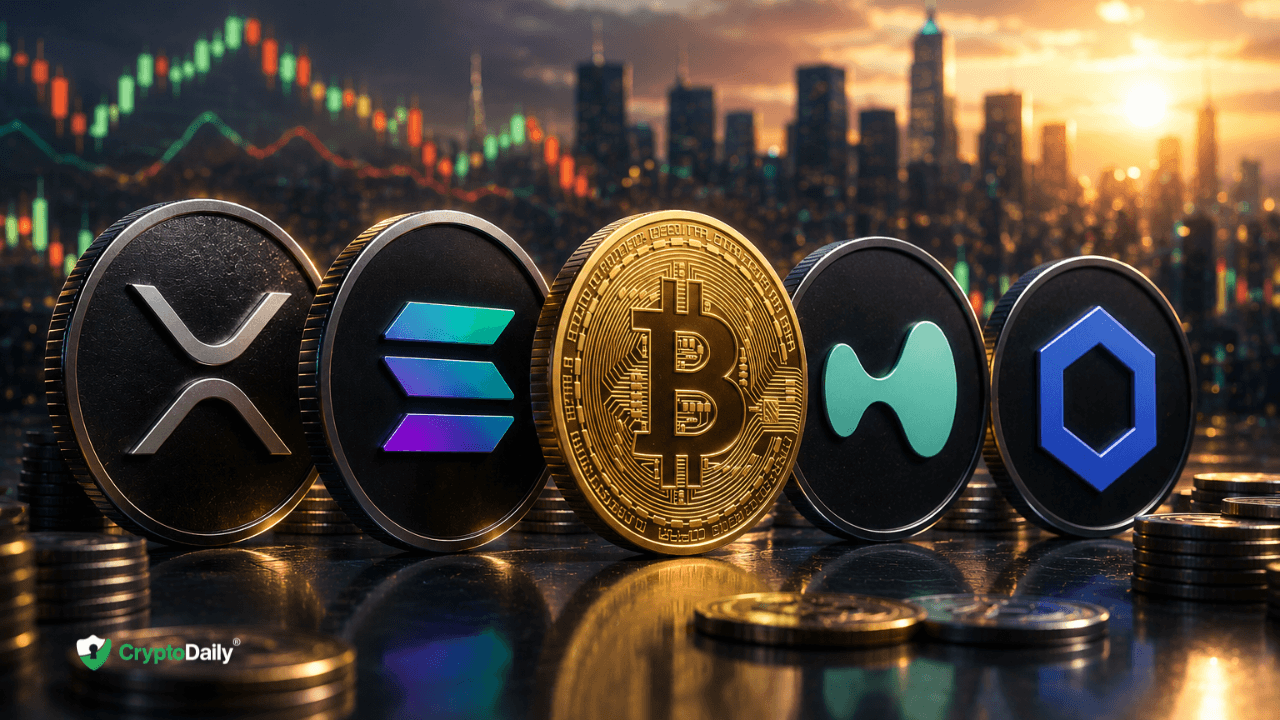
Bitcoin's latest rally has done something that many previous rebounds failed to achieve: it has pulled a much broader section of the crypto market higher with it.
XRP gained approximately 39% over the week ending August 21.
Hyperliquid's HYPE token climbed around 37%.
Chainlink rose more than 30%.
Solana, Cardano and several other large-cap altcoins also posted substantial gains.
Bitcoin itself surged roughly 24% during the same broad move, producing its strongest weekly performance in years.
That makes the latest rally different from periods when Bitcoin rose while most of the altcoin market remained largely stagnant.
Capital appears to be moving further down the crypto risk curve.
But does that mean altcoin season has finally arrived?
Not necessarily.
The latest performance provides evidence of a genuine market rotation, but a few days of strong altcoin gains are not enough to confirm a sustained altcoin cycle.
The more important question is whether XRP, LINK, HYPE and other tokens can continue outperforming once Bitcoin's short squeeze fades and the broader market enters a more normal trading environment.
XRP Leads the Latest Altcoin Rally
XRP has been one of the clearest winners.
The token gained approximately 39% during the week and climbed above $1.40 for the first time in months.
That performance significantly exceeded Bitcoin's own advance.
Part of the move appears connected to the improving U.S. regulatory environment.
XRP has historically been particularly sensitive to changes in American crypto regulation because of Ripple's long-running disputes with regulators and the token's close association with debates over whether digital assets should be treated as securities.
The current environment looks considerably more constructive.
Washington is moving toward clearer crypto market-structure rules, while regulators have adopted a more supportive approach toward bringing digital-asset products into compliant U.S. markets.
That gives XRP a catalyst that extends beyond the broader crypto rally.
But it also creates an important question.
Was XRP's 39% move the beginning of sustained relative strength, or simply a catch-up rally after months of weaker performance?
The answer will become clearer once the market's initial momentum fades.
Hyperliquid's HYPE Hits a New All-Time High
HYPE has another catalyst entirely.
The Hyperliquid token gained around 37% during the week and reached a new all-time high near $78.
Its rally accelerated after U.S. President Donald Trump said the Commodity Futures Trading Commission was working toward bringing Hyperliquid into the United States in a fully compliant and legal framework.
That statement immediately changed the market's perception of Hyperliquid's potential addressable market.
The decentralized perpetual futures platform has already processed enormous trading volumes outside the conventional U.S. financial system.
A regulatory pathway into America could significantly expand its user base and institutional relevance.
HYPE therefore benefited from both the broad crypto rally and a project-specific regulatory catalyst.
That distinction is important when evaluating altcoin season.
A genuine altcoin cycle normally involves broad participation.
If HYPE were rising solely because of Hyperliquid-specific news while most other tokens were flat, it would tell us little about overall market conditions.
But XRP, LINK and other large altcoins were also rallying strongly.
That makes the market-wide signal more interesting.
Chainlink Gains More Than 30%
Chainlink also gained more than 30% during the latest weekly move.
LINK's performance is particularly useful when examining market breadth because Chainlink occupies a different segment of the crypto economy from XRP and Hyperliquid.
XRP is closely associated with payments and regulatory developments.
Hyperliquid is a decentralized derivatives platform.
Chainlink provides oracle and interoperability infrastructure used across decentralized finance and tokenized asset systems.
When assets with different narratives begin rising simultaneously, the rally is less likely to be driven by one isolated theme.
That is one of the strongest arguments that the latest move represents genuine crypto market rotation.
Broad rallies generally have healthier market structure than advances concentrated in only one or two tokens.
Bitcoin Started the Move
None of this would have happened without Bitcoin.
BTC broke out of a six-week trading range on August 20 and moved above $71,000.
The breakout triggered one of the largest crypto short squeezes in years.
More than $3 billion of bearish positions were liquidated as traders who had bet against Bitcoin were forced to buy back exposure.
Bitcoin continued rising and briefly moved above $79,000 by August 21.
The weekly advance reached around 24%, its strongest performance in several years.
This is a familiar pattern in crypto cycles.
Bitcoin often moves first.
Once BTC breaks higher and establishes a new trading range, investors begin looking elsewhere for assets offering greater potential percentage returns.
Ethereum is usually one of the first beneficiaries.
Large-cap altcoins can follow.
Eventually, if liquidity remains abundant, capital may rotate into progressively smaller and more speculative tokens.
The latest market action appears to have moved at least one step down that path.
Why Bitcoin Rallies Can Trigger Altcoin Rotation
Bitcoin is the crypto market's primary liquidity anchor.
When Bitcoin falls sharply, investors generally reduce risk across the entire asset class.
Altcoins typically suffer even larger declines.
When Bitcoin rises rapidly, however, the relationship can change.
BTC's initial rally improves market sentiment and increases the value of crypto portfolios.
Investors who have already captured Bitcoin gains may then look for additional upside elsewhere.
An altcoin trading at a fraction of Bitcoin's market capitalization can theoretically produce larger percentage moves from the same amount of incoming capital.
That creates an incentive to rotate.
The process is sometimes described as moving down the risk curve.
Bitcoin sits near the most established end of that curve.
Ethereum follows.
Large-cap altcoins such as XRP, Solana and Chainlink involve greater volatility.
Smaller tokens sit further out.
A sustainable altcoin season normally requires capital to continue moving through several of these layers.
Is This an Altcoin Season Yet?
The evidence is promising, but incomplete.
A strong week for XRP, HYPE and LINK does not automatically establish an altcoin season.
There is no universally accepted definition of the term.
Generally, however, investors use "altcoin season" to describe a sustained period when a large percentage of major cryptocurrencies outperform Bitcoin.
The word sustained is important.
Altcoins frequently outperform BTC for several days during relief rallies.
Many of those moves disappear just as quickly when Bitcoin volatility returns.
A more convincing altcoin season would require broader and longer-lasting evidence.
That means multiple weeks of relative strength rather than one explosive move.
It would also normally involve declining Bitcoin market dominance.
Bitcoin Dominance Is the Key Metric
Bitcoin dominance measures BTC's share of the total cryptocurrency market capitalization.
It is one of the most closely watched indicators for altcoin rotation.
When Bitcoin dominance rises, BTC is generally absorbing a larger percentage of crypto capital.
When it declines, other cryptocurrencies are growing faster.
A sustainable drop in Bitcoin dominance alongside rising total crypto market capitalization would provide a stronger confirmation that investors are moving into altcoins rather than simply buying the entire market equally.
The ideal environment for altcoins is often not a collapsing Bitcoin price.
It is a stable or gradually rising BTC price combined with declining Bitcoin dominance.
That allows investors to retain confidence in the broader market while searching for higher returns elsewhere.
Ethereum Is Also Sending a Rotation Signal
Ethereum adds another piece to the puzzle.
The ETH/BTC ratio has gained significantly from its June lows and recently produced a golden cross, with its 50-day moving average crossing above its 200-day moving average.
That indicates Ethereum has also been outperforming Bitcoin.
Ethereum's relative strength matters because ETH often acts as the bridge between Bitcoin and the wider altcoin market.
A common market sequence is:
Bitcoin leads the initial rally.
Ethereum begins outperforming Bitcoin.
Large-cap altcoins start outperforming both.
Smaller speculative assets eventually participate.
The current market has shown elements of the first three stages.
It has not yet demonstrated that the final stage can persist.
The Rally Is Broader Than Earlier Crypto Rebounds
One positive signal is market breadth.
Recent crypto rallies were frequently concentrated in a handful of tokens with specific catalysts.
That creates fragile market structure.
If one narrative weakens, the entire rally can disappear.
The latest move has been different.
Analysts at Nexo described the rally as genuinely broad-based across the sector.
XRP rallied.
LINK rallied.
HYPE rallied.
Solana and Cardano advanced.
Bitcoin and Ethereum also posted substantial gains.
That breadth suggests investors are becoming more comfortable holding crypto risk in general rather than chasing one isolated narrative.
Historically, broad participation is usually healthier than a market carried by one asset.
But the Rally Began With a Massive Short Squeeze
There is an important counterargument.
The initial Bitcoin breakout was amplified by more than $3 billion in short liquidations.
Short squeezes can produce extremely fast price moves.
A trader who is short Bitcoin profits when BTC falls.
If Bitcoin instead rises sharply, the trader may be forced to close the position.
Closing a short requires buying the asset.
That additional buying pushes prices higher, forcing more shorts to close.
The result can become self-reinforcing.
But short-squeeze demand is temporary.
Once the bearish positions have been liquidated, that source of forced buying disappears.
Bitcoin's stabilization around the upper-$70,000 area after the rally suggests the market has already moved into this second phase.
The next question is whether genuine spot demand can replace forced short covering.
That matters enormously for altcoins.
If Bitcoin reverses sharply once the squeeze fades, the altcoin rally could unwind even faster.
ETF Demand Provides a More Constructive Signal
There is evidence that the rally is not entirely derivative-driven.
Analysts have pointed to renewed institutional ETF demand as another source of support.
That is much more important for sustainability.
Short liquidations create temporary demand.
ETF inflows represent investors actively allocating capital.
If institutional flows remain positive while Bitcoin consolidates, the market could maintain enough underlying liquidity for investors to continue rotating into Ethereum and other altcoins.
That would provide a much healthier foundation for an altcoin cycle.
Regulation Is Helping Several Altcoins at Once
Another difference in 2026 is the regulatory environment.
U.S. crypto regulation is gradually becoming more defined.
That affects more than Bitcoin.
XRP can benefit from reduced legal uncertainty.
Hyperliquid could gain from a regulatory route into the U.S. derivatives market.
Tokenization projects such as Chainlink may benefit from increased institutional use of blockchain infrastructure.
Stablecoin legislation can bring additional liquidity on-chain.
Clearer rules can also make exchanges, custodians and asset managers more willing to support a broader range of digital assets.
This means regulation is becoming a market-wide liquidity catalyst rather than simply a Bitcoin ETF story.
That is potentially constructive for altcoins.
XRP Could Be the Regulatory Trade
Among the major altcoins, XRP may remain especially sensitive to Washington.
Its history with the SEC makes it one of the clearest beneficiaries of a shift toward more predictable digital-asset regulation.
The token's nearly 40% weekly gain demonstrates how aggressively markets are pricing that possibility.
However, regulatory optimism can become overextended.
If investors price years of future adoption into a token within several trading sessions, even positive regulatory news may eventually struggle to generate additional upside.
For XRP, the next test is therefore whether price strength continues once the immediate policy narrative cools.
HYPE Has a Different Risk Profile
Hyperliquid presents a different setup.
Its token is tied more directly to the growth of one specific trading ecosystem.
That creates potentially stronger fundamental links between platform activity and token demand.
But it also increases concentration risk.
A regulatory breakthrough could dramatically expand Hyperliquid.
A regulatory setback could have the opposite effect.
After HYPE's 37% weekly rally and new all-time high, expectations are already elevated.
That can make the token more vulnerable to sharp corrections even if the long-term platform thesis remains intact.
Altcoin seasons tend to amplify both sides of this behavior.
LINK Could Benefit From Tokenization
Chainlink's position may be more structural.
Traditional financial firms are increasingly experimenting with tokenized funds, bonds and other real-world assets.
Those systems need reliable ways to connect blockchains with external data and different networks.
Chainlink has spent years positioning itself as infrastructure for that environment.
Franklin Templeton, major banks and regulated digital asset platforms are now pushing tokenization further into institutional markets.
If that trend accelerates, blockchain infrastructure projects could receive renewed investor attention.
LINK's latest rally may therefore reflect both broad crypto risk appetite and expectations around tokenized finance.
What Would Confirm an Altcoin Season?
Several developments would strengthen the argument considerably.
First, Bitcoin needs to remain relatively stable.
A violent BTC correction would probably damage altcoins more than Bitcoin itself.
Second, ETH/BTC should continue trending higher.
Ethereum outperforming Bitcoin often supports broader crypto rotation.
Third, Bitcoin dominance should decline sustainably.
A one-day drop is not enough.
Fourth, market breadth should remain strong.
It should not be only XRP, LINK and HYPE making gains.
Solana, Cardano and other large-cap assets would ideally continue participating.
Finally, spot trading volume and institutional inflows should remain healthy after the short squeeze fades.
Those signals together would provide much stronger evidence of a genuine cycle change.
What Could End the Altcoin Rally?
The largest risk remains Bitcoin volatility.
Altcoins generally perform best when Bitcoin is bullish but relatively stable.
If BTC surges too quickly, capital can rotate back toward Bitcoin.
If BTC crashes, investors tend to reduce risk everywhere.
Either scenario can hurt altcoins.
The second risk is liquidity.
If ETF flows weaken and trading volumes decline after the recent squeeze, there may not be enough new capital to sustain widespread gains.
Macroeconomic conditions are another factor.
Higher Treasury yields, stronger inflation or tighter Federal Reserve expectations can reduce demand for speculative assets.
Finally, large recent gains themselves create risk.
XRP gaining nearly 40% and HYPE 37% in a week means a significant amount of bullish positioning may already be reflected in prices.
Altcoin Season Is Becoming More Plausible — But Is Not Confirmed
The latest crypto rally provides some of the strongest evidence this year that market leadership is broadening beyond Bitcoin.
XRP has gained around 39%.
HYPE is up roughly 37%.
Chainlink has risen more than 30%.
Ethereum is outperforming Bitcoin.
Several additional large-cap altcoins have joined the move.
That is substantially more constructive than a Bitcoin-only rally.
But the market still needs to demonstrate that this rotation can survive once the initial short squeeze is fully absorbed.
Bitcoin's ability to hold its breakout range will matter.
So will ETH/BTC, Bitcoin dominance, ETF flows and overall market breadth.
If those indicators continue moving in favor of altcoins, August's rally could eventually be remembered as the point when the 2026 crypto market shifted from a Bitcoin-led recovery into a broader altcoin cycle.
For now, the most accurate conclusion is more cautious.
Altcoin season has not been confirmed.
But for the first time in some time, the market is beginning to behave like one.
Disclaimer: This is a sponsored article and is for informational purposes only. It does not reflect the views of Crypto Daily, nor is it intended to be used as legal, tax, investment, or financial advice.
Related Stories