5 Times Bots Cost Big Brands Millions and the Technologies That Could Have Stopped Them
 CryptoDaily
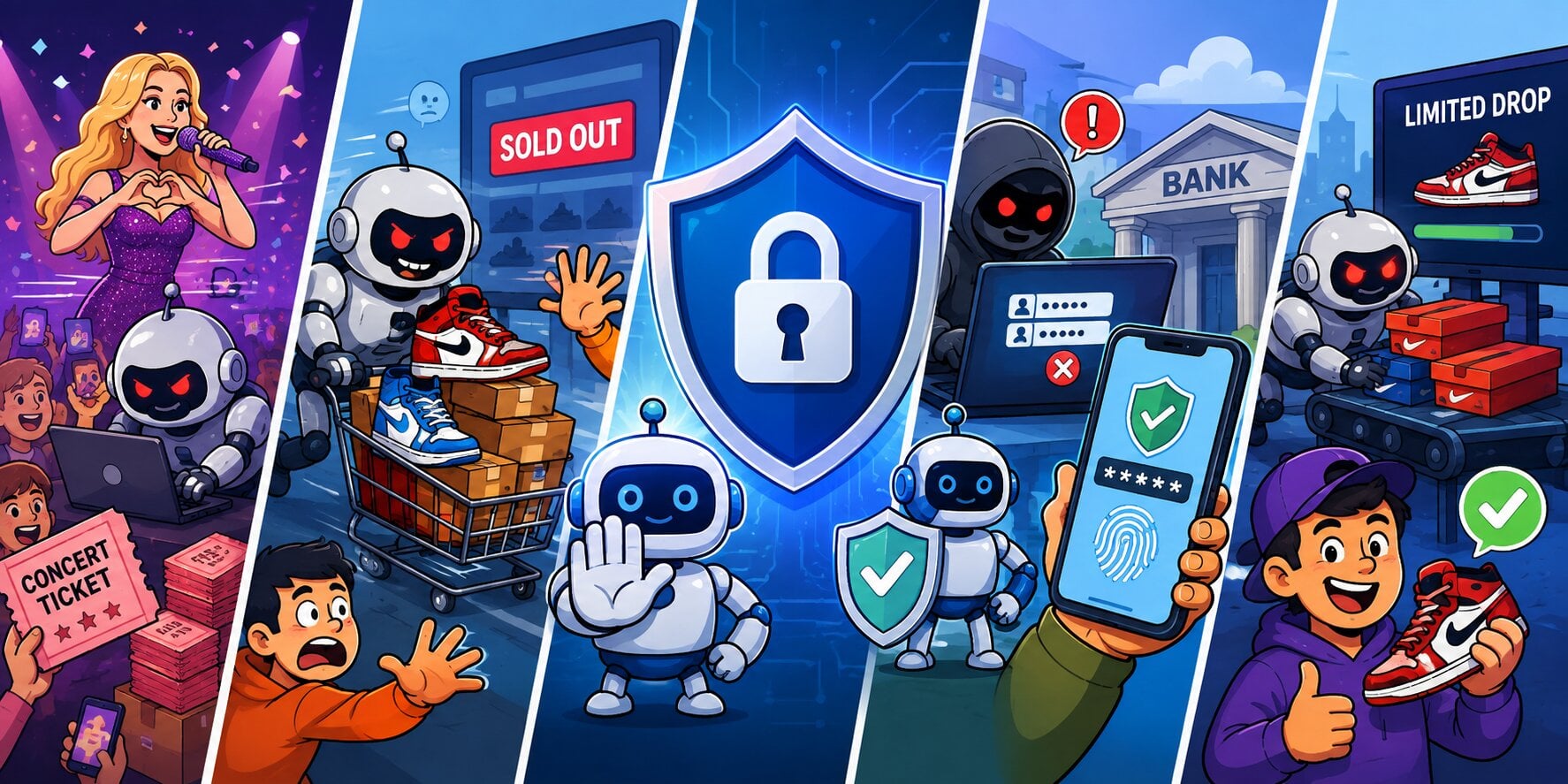
Bots have evolved far beyond simple scripts. Today, they buy sold out products before customers, hijack accounts, scrape valuable data, and overwhelm digital services in seconds. The good news is that modern bot management has evolved just as quickly.
Here are five famous incidents and the real technologies that could have reduced or prevented them.
1. Taylor Swift's Eras Tour: When Buying a Concert Ticket Became Impossible
In November 2022, millions of fans logged on to Ticketmaster hoping to buy a concert ticket for Taylor Swift's Eras Tour. Instead, many spent hours in virtual queues, watched the website crash, or never reached checkout at all. Ticketmaster later disclosed that the platform received billions of requests during the sale, including traffic generated by automated scalper bots trying to purchase tickets faster than humans.
The incident became so significant that it sparked a U.S. Senate hearing and renewed global conversations about ticket scalping.
Technology that could have helped: World's Concert Kit
World's Concert Kit takes a different approach to the scalper problem by giving artists the option to reserve tickets specifically for verified humans. Fans can prove they are real people through World ID, which can involve verifying their identity with an iris scan at one of World's Orb devices, helping prevent automated bots from claiming those tickets.
The idea has already moved beyond theory. World says its human-verification system blocked more than 100,000 bot requests for tickets to its Humans Only Concert, while nearly 1,000 verified people secured tickets. The technology is also being tested on a larger commercial scale through a partnership with Thirty Seconds to Mars, fronted by Jared Leto, which is offering verified fans two-for-one tickets in select European cities.
For an event as large as the Eras Tour, a system that reserves inventory for verified humans could have given genuine fans a better chance of reaching checkout before scalper bots exhausted the available tickets. At the same time, World's reliance on biometric verification introduces its own trade-off: the company has faced significant privacy and regulatory scrutiny over its collection and handling of biometric data.
2. Sony's PlayStation 5 Launch
When the PlayStation 5 launched, inventory disappeared almost instantly. Retailers struggled to keep products in stock because shopping bots continuously monitored inventory and completed purchases within milliseconds. Thousands of consoles immediately appeared on resale sites at double or triple the retail price.
Technology that could have helped: DataDome
French cybersecurity company DataDome specializes in protecting ecommerce websites against shopping bots.
Its platform analyzes hundreds of signals in real time, including browser behavior, device characteristics, IP reputation, and interaction patterns. Rather than simply blocking suspicious requests, it continuously scores every session and prevents automated checkouts before inventory reaches scalpers.
Today, many global retailers use DataDome to protect product launches and flash sales.
3. LinkedIn's Battle Against Mass Scraping
Public profiles are one of LinkedIn's greatest assets, but they have also attracted large scale scraping operations. Automated bots have collected millions of profiles for recruiting databases, spam campaigns, AI training datasets, and phishing attacks.
Because scraping bots often behave similarly to legitimate users, blocking them without disrupting real visitors is extremely difficult.
Technology that could have helped: Cloudflare Bot Management
Cloudflare Bot Management uses machine learning to evaluate every request before it reaches a website.
Instead of relying on traditional CAPTCHAs, it examines browser fingerprints, JavaScript execution, network behavior, request sequencing, and dozens of additional signals to determine whether traffic originates from a human or an automated scraper.
This allows organizations to stop sophisticated scraping while maintaining a seamless experience for legitimate visitors.
4. Banks Versus Credential Stuffing
Every day, banks receive millions of login attempts generated by credential stuffing attacks. Criminals take usernames and passwords leaked from unrelated breaches and automatically test them against banking websites, knowing many customers reuse passwords.
Even a tiny success rate can lead to significant financial fraud.
Technology that could have helped: Akamai Account Protector
Akamai Account Protector is designed specifically to stop automated account takeover attacks.
The platform combines behavioral biometrics, device intelligence, risk scoring, and machine learning to detect suspicious login activity before authentication is completed. Unlike traditional security tools, it focuses on identifying malicious automation even when attackers have valid credentials.
Many of the world's largest financial institutions rely on similar technology to protect online banking.
5. Nike and adidas Versus Sneaker Bots
Limited sneaker releases have become a playground for automated purchasing software. Bots monitor inventory, instantly add products to shopping carts, and complete checkout long before human shoppers can react.
The result is familiar to sneaker enthusiasts: products sell out within seconds and immediately reappear on resale marketplaces at inflated prices.
Technology that could have helped: HUMAN Bot Defender
HUMAN Bot Defender was built to detect sophisticated automated traffic across ecommerce platforms.
Its machine learning models analyze user behavior, browser integrity, and network signals to identify automated purchasing tools without creating unnecessary friction for genuine shoppers.
The technology helps brands protect product launches while ensuring inventory reaches real customers instead of scalpers.
The Takeaway
Every one of these incidents involved a different industry, but the underlying challenge was the same: bots acting faster than humans.
Today's bot management platforms such as World's Concert Kit, DataDome, Cloudflare Bot Management, Akamai Account Protector, and HUMAN Bot Defender use AI, behavioral analysis, device fingerprinting, and real time risk scoring to stop malicious automation before it affects customers.
The biggest lesson is simple. The earlier bots are detected, the less likely they are to become tomorrow's headline.
Disclaimer: This article is provided for informational purposes only. It is not offered or intended to be used as legal, tax, investment, financial, or other advice.
Related Stories