340,000 Token Launches Push Uniswap Into Discovery
 Elliot Veynor
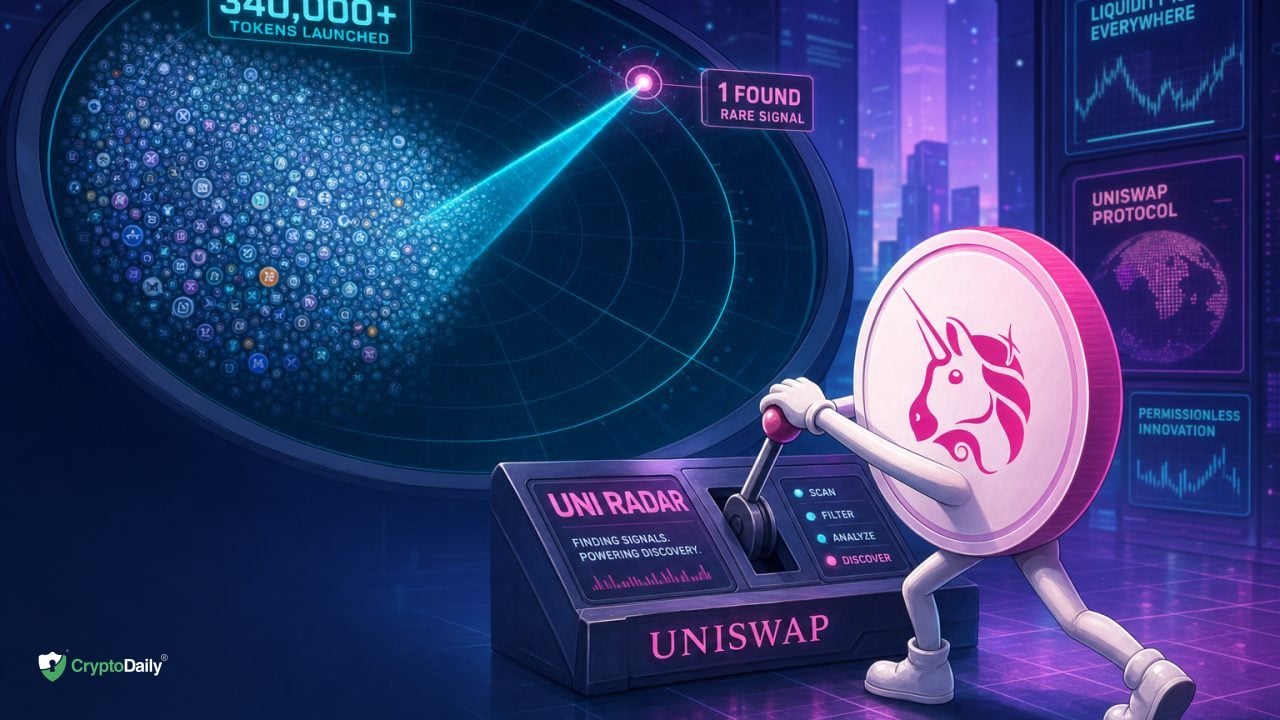
There’s a number doing the rounds: 340,000. That’s the ballpark count people cite for how many tokens have been fired into EVM land over a recent stretch. However you slice it, the launch machine is redlining. And Uniswap is getting pulled straight into price discovery.
Not just as a place where things trade after the fact. Uniswap’s own tooling now runs auctions that set the opening price and seed the pool at that level. That’s a real shift in the exchange’s role.
Below, I’ll unpack why this is happening, how Uniswap’s Continuous Clearing Auctions actually work, and what you need to watch if you’re bidding on day one or listing a token yourself.
| Point | Details |
|---|---|
| Launch surge | Hundreds of thousands of token contracts deployed across EVM chains; the “340,000” figure captures the sheer scale and churn of recent launches. |
| Uniswap as discovery | Uniswap’s Continuous Clearing Auctions (CCA) set on-chain clearing prices and seed Uniswap v4 pools at that price, pushing Uniswap into primary price discovery. |
| Pons data point | Dune-tracked Pons completed 66,000+ launches with about $380M cumulative volume as of July 20, 2026, showing the size and speed of this launch wave (KuCoin (reporting Dune)). |
| Mechanics matter | CCAs batch orders, find a clearing price, then seed the v4 pair so trading starts where the auction settled (DefiLlama Research; Uniswap). |
| New venues | Uniswap deployed v2/v3/v4 and UniswapX on Robinhood Chain at launch, adding a fresh flow of retail-adjacent order flow to its discovery stack (Uniswap Labs blog). |
| Risk profile | High failure rate among new tokens, smart contract risk, MEV, thin liquidity, and regulatory uncertainty. Treat early participation as speculative. |
What 340k launches actually means
The 340,000 headline is less a precise census and more a sign of the times. Token creation has become cheap, fast, and automated. A single deployer can spray dozens of contracts a day. Meme seasons pull in bots that fork, tweak, and relist with microscopic changes. Some of those contracts never trade. Others see a blip of activity and die. A handful stick.
So when you hear 340k, think order of magnitude. It tells you the funnel is huge and noisy. It also tells you the old model — list on a CEX after months of courting market makers — just doesn’t cover this firehose. Most of these tokens will live and die on-chain, and a lot of them will clear price for the first time on Uniswap.
That’s why Uniswap building native discovery tools isn’t a side quest. It’s a necessary adaptation to where issuance now happens.
Uniswap turns liquidity into discovery
The pivot is straightforward: instead of passively waiting for someone to create a pool and let price wobble into place, Uniswap’s Liquidity Launchpad runs a Continuous Clearing Auction (CCA), finds a clearing price, and then seeds a v4 pool at that level.
DefiLlama’s Boardwalk report documents this design clearly: CCAs do on-chain price discovery and seed Uniswap v4 pools, acting as a bridge between a launch event and a tradable market (DefiLlama Research).
Uniswap’s own product page says the same thing, spelling out that auctions are built to discover price on-chain and initialize v4 liquidity at the discovered price (Uniswap).
How a CCA flows, in plain English
- Orders are collected over a window. You’re not fighting tick-by-tick; you’re lining up into a batch.
- The system finds the price where the most volume can clear. That’s the clearing price.
- Allocations are filled at that single price, not a sliding ladder.
- Right after that, a v4 pool is seeded at the auction price so secondary trading starts where the auction left off.
This helps cut the chaos you get when someone YOLOs a tiny pool and bots slam it around for 30 minutes. It’s not magic. But for legitimate launches, it’s cleaner.
CCA vs throwing a pool live
| Approach | What you get | Trade-offs |
|---|---|---|
| CCA + v4 seeding | Single clearing price, batch fairness, immediate pool at that price | More prep, rules to follow, auction window risk if sentiment flips |
| Direct pool bootstrap | Instant trading, minimal coordination | Wild slippage, easy MEV targets, manipulative anchors |
| OTC/fair drop then pool | Some price signal from OTC, curated distribution | Opaque fills, secondary market shock when pool opens |
Early auctions can still be gamed. They just raise the cost of obvious manipulation and make the “first print” less of a dart throw.
Pons shows the scale — and the noise
If you want a feel for the pipeline, look at Pons. On-chain dashboards tracking Pons show over 66,000 token launches completed with roughly $380 million in cumulative trading volume as of 4:00 PM UTC on July 20, 2026 (KuCoin (reporting Dune)).
That’s a staggering count. But it also hints at the hit rate problem. If nearly all of those tokens exist, only a fraction pulled meaningful liquidity. A smaller fraction sustained it. And yet, these launches still drive a ton of first-touch demand, which bleeds directly into the pools that pick them up — often on Uniswap.
The practical takeaway: the faucet isn’t slowing down. So discovery tooling has to scale. Auctions, pooled liquidity templates, rollout rails — that’s the stack Uniswap is building toward.
Robinhood Chain gave Uniswap a new runway
Another piece of the puzzle is venue. When Robinhood Chain went live on July 1, 2026, Uniswap deployed v2, v3, v4, and UniswapX out of the gate, becoming the primary public AMM at launch (Uniswap Labs blog).
That matters because a lot of fresh retail-adjacent flow will try things there first. If Uniswap is the default lane on that chain, discovery doesn’t detour elsewhere. It lands in Uniswap’s liquidity. From there, activity can spider out to other EVMs via bridges, but the price imprint often starts where the first legit pool sits.
Layer those deployments with CCAs and you’ve got a full pipeline: launch page, auction, seed pool, secondary trading. It’s not a guarantee of quality — it’s a process that can scale without imploding at the first trade.
How to approach a CCA if you’re tempted to bid
Quick reality check: most new tokens go to zero or near it. This is not advice. It’s a simple flow to keep you from tripping over obvious stuff.
Step-by-step
- Find the official auction link. Spoofs are everywhere. Cross-check the project’s site and socials. If it’s Uniswap’s CCA, the docs and URLs should align with Uniswap’s product page.
- Read the auction parameters. Supply on offer, reserve price (if any), accepted assets, start/end times, allocation rules, refund logic.
- Decide your max willingness to pay. Not the hype price — the price you’re fine holding through a 50% drawdown.
- Place the order and walk away. CCAs aren’t a race. Over-tinkering just invites mistakes and extra gas.
- After settlement, check the seeded v4 pool. Confirm the token address, fee tier, and that the initial price matches the clearing price.
- Set alerts, not 24/7 screens. Day-one swings can be brutal as price meets real liquidity.
Pro tip: If there’s a reserve price way above comps, treat it as marketing, not a floor. A no-fill outcome can actually be the best protection from overpaying.
Red flags to pause on
- Tokenomics that hand a majority to insiders or unlock a giant chunk in the first week.
- Opaque treasury wallets or “multi-sig” that resolves to one hot address.
- Audits that aren’t audits. PDFs without a firm name or commit hash are noise.
- Over-optimized Twitter hype, under-optimized code repos.
Signals a new token might actually survive the week
None of this guarantees anything. But these are the tells I check before touching a launch:
- Distribution that isn’t a joke. Reasonable float at launch, vesting that doesn’t cliff into oblivion.
- A clear buyer cohort. Not just “the community.” A known group that benefits if the token exists and trades.
- Some builder receipts. Live code or an existing product. A roadmap isn’t a product.
- Liquidity commitments. Named market makers or on-chain incentives that last longer than a weekend.
- Credible venue choices. If they’re using Uniswap’s CCA and seeding a v4 pool, show me the parameters. If not, explain the plan.

Liquidity games and risks to watch
Price discovery is messy. CCAs tidy up one part of the mess. The rest is still there:
- Smart contract risk. Auctions and tokens run on code. If the contract has a bug or a malicious function, all bets are off.
- MEV and sandwiching. Auctions reduce sniping, but once the pool is live, toxic order flow comes back. Use limit-like flows or RFQ routes where possible.
- Custody and wallets. If you’re switching chains (say, bridging into Robinhood Chain or elsewhere), triple check addresses and approvals. Revoke spend permissions you don’t need.
- Regulatory friction. Depending on jurisdiction, participating in token sales may have constraints. Projects can change terms pre-settlement to stay compliant. Read the fine print.
- Liquidity mirages. TVL screenshots can hide concentrated LP positions. If one LP yanks, slippage explodes.
Guardrails you can actually use
- Cap your exposure per launch. The hit rate doesn’t justify going heavy.
- Prefer auctions or listings with transparent parameters over stealth pool drops.
- Set post-settlement alerts at 10–15% bands. If momentum dies, don’t become exit liquidity.
- Track whale wallets that got big fills. If they dump immediately, that’s your signal.
For teams: designing a launch that doesn’t backfire
If you’re on the other side of the book, CCAs give you structure, but you still have choices to make.
Checklist before you hit “create auction”
- Reserve price logic. Set it based on comps and runway, not vanity. If it’s too high, you get a failed auction and a credibility dent.
- Float and vesting. Put enough in circulation to enable real markets, but don’t set up a week-one unlock cliff.
- Post-auction liquidity. Who’s LPing the v4 pool beyond the initial seed? Outline incentives and duration.
- Market structure. If you plan a Robinhood Chain pool plus a mainnet pool, explain routing and bridges. Fragmented liquidity confuses users.
- Docs and comms. Publish the token address early, pin the auction link, and keep everything in one place to reduce spoof risk.
Handled well, CCAs can save you from the worst parts of day-one chaos. Handled badly, they just move the chaos into a nicer wrapper.
Why Uniswap is the center of gravity right now
Three forces line up here:
- Launch velocity. With Pons-scale pipelines pushing tens of thousands of creations into the wild, there’s constant demand for first pricing (KuCoin (reporting Dune)).
- Native discovery tools. Uniswap’s CCAs explicitly target on-chain price discovery and seed v4 pools at the discovered price (DefiLlama Research; Uniswap).
- New distribution lanes. Uniswap’s presence on Robinhood Chain as the go-to AMM at launch funnels fresh users and assets into its pools (Uniswap Labs blog).
Put together, Uniswap isn’t just where price happens to be shown. It’s where price is increasingly made, at least for the long tail. That carries responsibility — and a lot of temptation for speculators.
Stay ahead without the noise
If you want more straight-shot explainers like this, Crypto Daily tracks launch mechanics, on-chain flows, and the stuff that actually changes outcomes. You can find our latest coverage at cryptodaily.co.uk.
Frequently Asked Questions
Is the “340,000 launches” number verified?
It captures scale more than a single authoritative count. Token creation is fragmented across chains and dashboards. Treat it as directional, not a certified tally.
What exactly is a Continuous Clearing Auction on Uniswap?
It’s a batch auction that collects orders, finds a single clearing price, fills allocations at that price, and then seeds a Uniswap v4 pool at that level. Uniswap’s product page spells this out, framing CCAs as on-chain price discovery and liquidity seeding.
Why would a team choose a CCA over just launching a pool?
To avoid chaotic first prints and extreme slippage. A CCA can improve fairness and give a cleaner opening price. The trade-off is more prep and the risk that sentiment changes during the auction window.
Where does Robinhood Chain fit into Uniswap’s role in discovery?
Uniswap deployed v2/v3/v4 and UniswapX on Robinhood Chain at mainnet, positioning it as the default AMM there. That setup routes early trading in new assets into Uniswap’s pools and tooling on that chain.
Are most of these new launches worth trading?
Most won’t hold value. The hit rate is low, and the risks — contract bugs, thin liquidity, manipulation — are high. If you participate, cap exposure and assume high volatility.
How do I check if an auction link is real?
Cross-check the project’s website and socials, verify the token address, and confirm the interface matches Uniswap’s official CCA domain if applicable. Be wary of lookalike URLs and fake X accounts.
What changes after the auction ends?
The v4 pool seeded at the clearing price becomes the main venue. That’s where MEV, liquidity shifts, and real price discovery continue. Set alerts and expect big swings in the first sessions.
Disclaimer: This article is provided for informational purposes only. It is not offered or intended to be used as legal, tax, investment, financial, or other advice.
Related Stories