YGG's AI Game Jam: Why Web3 Gaming Is Shifting From Token Drops to Creator Tools
 Maya Collins
Picture a Saturday morning sprint. A handful of indie devs open their laptops, fire up a new AI tool, and spend two weeks turning a rough idea into something people can actually play. Not a token farm. Not a Discord points grind. An actual game.
That is the vibe around VibeBlitz, an AI game jam from Yield Guild Games that quietly says a lot about where Web3 gaming is heading. The prize money is fine. The bigger prize is momentum for creators.
And the timing is not an accident. YGG just shut down its publishing arm and is leaning hard into the AI data economy. Less splashy token drops. More rails for people who build.
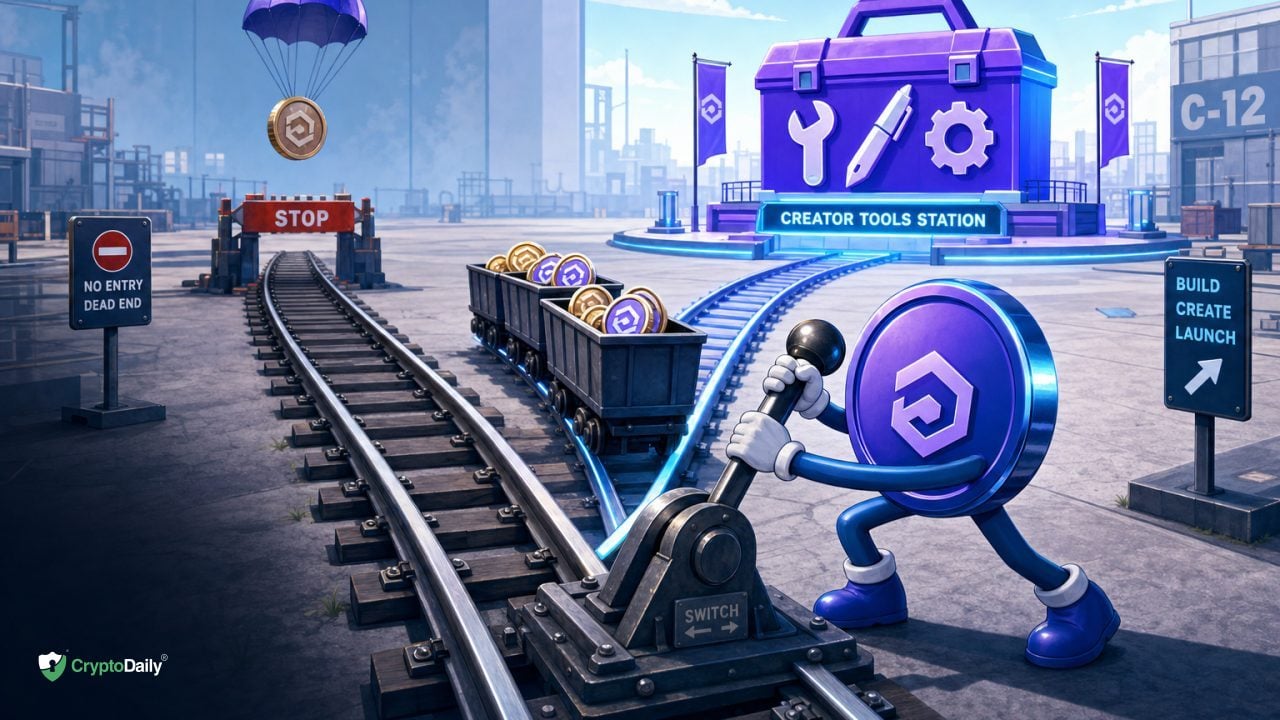
Token carrots are giving way to creation rails
For a good two years, token-heavy campaigns did the heavy lifting for Web3 games. They juiced MAUs, boosted Discords, and sometimes pulled in real players. But they often left developers holding the bag on retention and live ops, while users drifted after the airdrop snapshot.
Creator tools, especially AI-assisted ones, change the center of gravity. Instead of paying users to show up, you lower the cost and time it takes for creators to ship. The flywheel starts with supply, not speculation.
When you optimize for builders instead of bounty hunters, you trade short spikes for compounding output. It is slower at first and usually stronger later.
YGG is putting that theory into practice with its new jam and a broader strategy shift that prioritizes data, tooling, and the folks who make the content in the first place.
Inside YGG’s VibeBlitz jam
VibeBlitz is the inaugural game jam on vibecode.game, built in partnership with Minds by Animoca Brands. Submissions run July 13 to July 27, with a community play week July 27 to August 2 and winners on August 10. Those dates are straight from the jam page, which also lists a $5,000 prize pool split between $2,500 in Minds Cognition Credits and $2,500 in $YGG, with a top prize of $1,000 in each bucket (vibecode.game (YGG)).
There is a twist: the rules say entries must use the Minds “Game Designer Mind” for at least 50% of production. That is not a suggestion. It is a judging criterion (vibecode.game (YGG)).
Key dates at a glance
| Phase | Dates (2026) | What happens |
|---|---|---|
| Submission window | Jul 13 – Jul 27 | Teams build and submit playable entries using Minds tools |
| Community play week | Jul 27 – Aug 2 | Open playtesting and feedback to surface the most engaging builds |
| Winners announced | Aug 10 | Prizes split between $YGG and Minds Cognition Credits |
Why these constraints matter
Forcing AI use is a strong signal: YGG wants to see whether rapid, AI-heavy workflows can get small teams to playable faster. If it works, the formula can scale to future jams, onchain modding events, and maybe live ops where AI helps produce new levels, challenges, or cosmetics every week without burning out designers.
What creator tools unlock that token drops rarely do
Token incentives are not disappearing. But creator tools shift the economics and the culture. Here is the blunt comparison.
| Dimension | Token-first campaign | Creator-tools program |
|---|---|---|
| Primary goal | Short-term user spikes, social metrics | Long-term supply growth, quality content |
| Upfront spend | High token/points outlay | Tooling grants, infra credits, smaller prizes |
| Acquisition quality | Spec driven, churn prone | Builder driven, community rooted |
| Output velocity | Low unless budget repeats | Compounds as creators learn tools |
| Legal surface | Higher token marketing scrutiny | Lower marketing risk, more IP and platform considerations |
| Retention loop | Events tied to incentives | Fresh content tied to creator pipeline |
Retention mechanics
People return for something new. A tool-enabled creator base can ship new maps, quests, cosmetics, even minigames at a weekly cadence. That lays a content path in front of existing players and reduces the need to repeatedly bribe new ones to come back.
Economics for lean teams
AI systems that handle early design passes, light art, or quest logic free up human time for the parts that really need taste and playtesting. If the cost to ship one feature drops, the runway gets longer, and experiments multiply.
The regulatory chill factor
Another quiet reality: public token campaigns draw attention from regulators. Tooling contests and creator grants do not magically remove risk, but they shift it to areas like IP and content moderation where the rules are more familiar to game studios.
How AI actually fits the VibeBlitz workflow
The jam is explicit about using Minds’ “Game Designer Mind” for at least half of production. In practice, a small team could run a loop like this:
- Ideation sprint. Use the designer agent to generate 3 to 5 game concepts, pick one with clear moment-to-moment gameplay.
- Greybox and rules. Lean on the agent to draft level layouts, enemy behaviors, and scoring rules, then manually tweak for feel.
- Content passes. Have the tool suggest dialog, item descriptions, or quests; keep human editing for tone and clarity.
- Playtest pack. Generate tutorial prompts and UI copy, export a build to ship into the community play week.
- Iteration. Use player feedback to ask the agent for focused changes, like difficulty curves or loot tables.
Why force this? Because teams often poke at AI tools without fully committing. A 50 percent requirement ensures entrants bump into the strengths and the limits of the workflow. That pressure test is useful signal for anyone planning live updates after the jam. The schedule and rules are detailed on the jam page (vibecode.game (YGG)).
Upstream economics: data, not only tokens
On July 6, YGG announced it is sunsetting YGG Play, letting 35 employees go, and shifting resources to what it calls the AI data economy. The same note cited a treasury of $20.6 million at the end of Q1 2026, with $6.2 million in stablecoins, T-bills, and large-cap tokens (YGG Play).
That is not a small change. Publishing units try to find, fund, and market games. A data-and-tools posture tries to standardize creation inputs and outputs: prompts, playtest telemetry, iterative content diffs, economy parameters. If enough teams use the same rails, two things happen. Costs go down. Data gets comparable across projects.
The VibeBlitz format fits this. Minds supplies structured AI workflows. Vibecode provides the staging lane. YGG brings incentives and a funnel of creators. The more cycles they run, the better their understanding of what prompts and patterns correlate with engaging play. Not to mention where the AI still falls flat and needs human craft.
What this could mean for onchain parts
Web3 hooks do not need to be loud to matter. A jam that ships small, replayable games can later weave in onchain collectibles, skins, or season-long ladders without turning everything into a speculative event. If you are already producing content weekly, a light economy can sit on top rather than replace the game loop.
Signals across the Web3 stack
We are seeing a few patterns repeat across projects, not just this jam:
- UGC-first roadmaps. Teams start with a sandbox, then invite modders. Web3 adds portable identity and asset ownership for the best creators.
- Hybrid monetization. Free to start, with optional onchain cosmetics or passes for those who want them. Less pressure to push a token day one.
- Live ops at indie scale. AI tools acting as co-pilots let small teams run events that used to require larger staff.
- Community testing as product research. Structured play weeks, like the VibeBlitz schedule, generate feedback and telemetry before anyone talks listings or drops.
None of this dismisses tokens. Tokens are useful when they have actual jobs to do. The shift is about sequence. Build loops that people enjoy. Use AI to ship content faster. Layer onchain features where they can amplify, not distract.
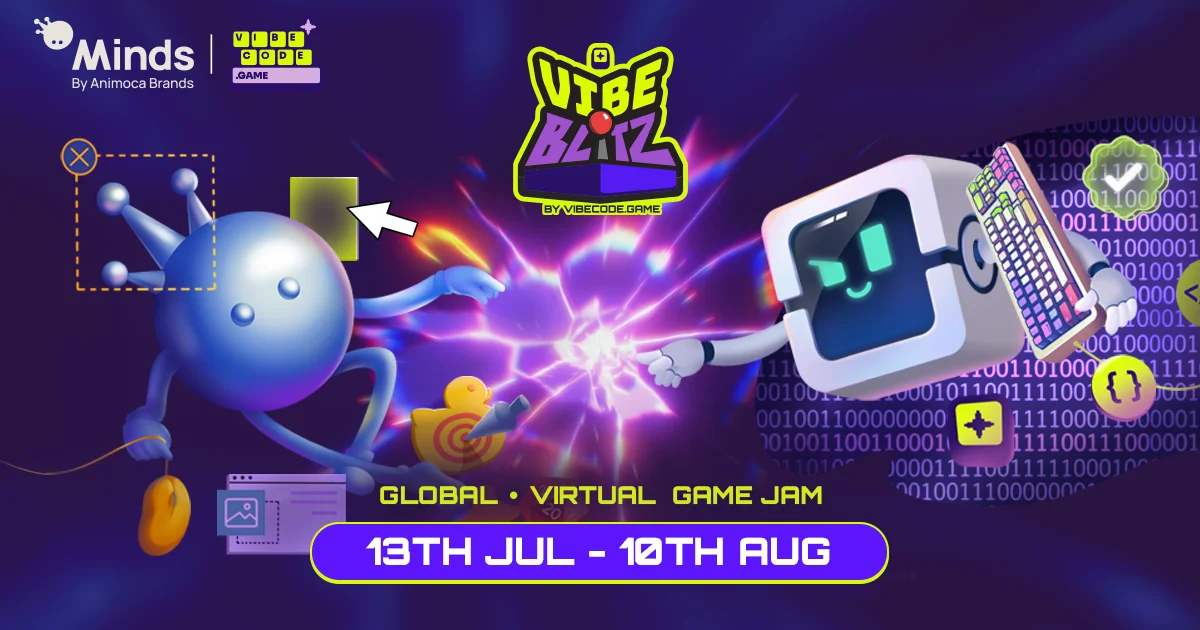
Promotional cover for VibeBlitz (shows partnership with Minds by Animoca Brands and event dates), illustrating YGG’s AI-assisted game-jam approach that emphasizes creator tools over pure token drops. — Source: vibecode.game (YGG)
What to watch over the next two quarters
Creator participation, not just player counts
If YGG runs more jams, track how many teams return for a second round and whether their build times shrink. Repeated participation is a better health metric than one big leaderboard.
Output quality under time pressure
AI can speed up story beats and level layouts, but it can also flatten them. Watch whether the winning entries feel distinct. If they do, the tools are amplifying human taste. If they do not, expect the rules or the tools to evolve.
Post-jam survivability
Do any top entries stick around for a season with weekly updates? If even a few manage that, it suggests the workflow is more than a demo machine.
Data discipline
YGG’s pivot to an AI data economy invites a question: will they publish anonymized learnings about prompts, iteration counts, or playtest funnels that correlate with retention? Transparency would build trust and accelerate the ecosystem.
Risks & What Could Go Wrong
- Spam and sameness. If too many teams lean on the same AI defaults, entries could blur together.
- IP and licensing. AI-generated art, text, or mechanics may raise rights issues depending on training data and output policies.
- Tool lock-in. If a pipeline depends on one vendor, pricing or policy shifts could break roadmaps.
- Moderation overhead. UGC always brings edge cases. The more content you ship, the more careful you need to be.
- Spec creep. Even tool-first programs can drift back into token-first incentives if budgets or KPIs demand fast optics.
- Regulatory uncertainty. Revenue shares, prize structures, and token rewards still need careful legal review in many regions.
Speed helps you learn. It does not excuse skipping IP reviews, content checks, or player safety. The faster the loop, the more disciplined the guardrails need to be.
If you want a clean daily rundown of Web3 gaming moves like this, we track them closely at Crypto Daily with a focus on practical takeaways and what teams are actually shipping.
Frequently Asked Questions
What exactly is the VibeBlitz jam and who is running it?
VibeBlitz is an AI-focused game jam hosted on vibecode.game with support from Minds by Animoca Brands and incentives from Yield Guild Games. It is the first jam on the platform and it centers on building with AI as part of the production process (vibecode.game (YGG)).
What are the key dates and the prize structure?
Submissions are open July 13–27, 2026. A community play week runs July 27–August 2. Winners are announced August 10. The total prize pool is $5,000 split evenly between Minds Cognition Credits and $YGG, with a top prize of $1,000 in each category (vibecode.game (YGG)).
Why does the jam require using the Minds “Game Designer Mind” for 50% of production?
The organizers want to test whether AI-assisted workflows can reliably speed up small teams without gutting creativity. Making AI use a judging criterion forces deeper engagement with the tools and produces clearer signal on what works.
Do entrants need to hold YGG tokens to participate?
There is no public requirement to hold $YGG in order to enter the jam. Rewards include $YGG, but participation is tied to the submission and tooling rules listed on the event page.
How does this relate to YGG sunsetting its publishing unit?
YGG announced on July 6 that it is winding down YGG Play, reducing headcount, and shifting toward the AI data economy, noting a $20.6 million treasury at the end of Q1 2026. The jam aligns with that pivot by emphasizing tooling and creator pipelines over pure token marketing (YGG Play).
Will the games be onchain or just inspired by Web3?
The jam focuses on rapid prototyping with AI. Some entries may include onchain elements, but the format is about building playable experiences first. Teams can add blockchain hooks later if they enhance the game loop.
What will judges likely prioritize?
Expect emphasis on fun, clarity of the core loop, smart use of AI to increase velocity or polish, and how well teams iterate based on community feedback during play week. Hype alone will not carry a build here.
Disclaimer: This article is provided for informational purposes only. It is not offered or intended to be used as legal, tax, investment, financial, or other advice.
Related Stories