U.S.-UK Tokenized Finance Rules: Can Regulatory Alignment Unlock Cross-Border Markets?
 Elliot Veynor
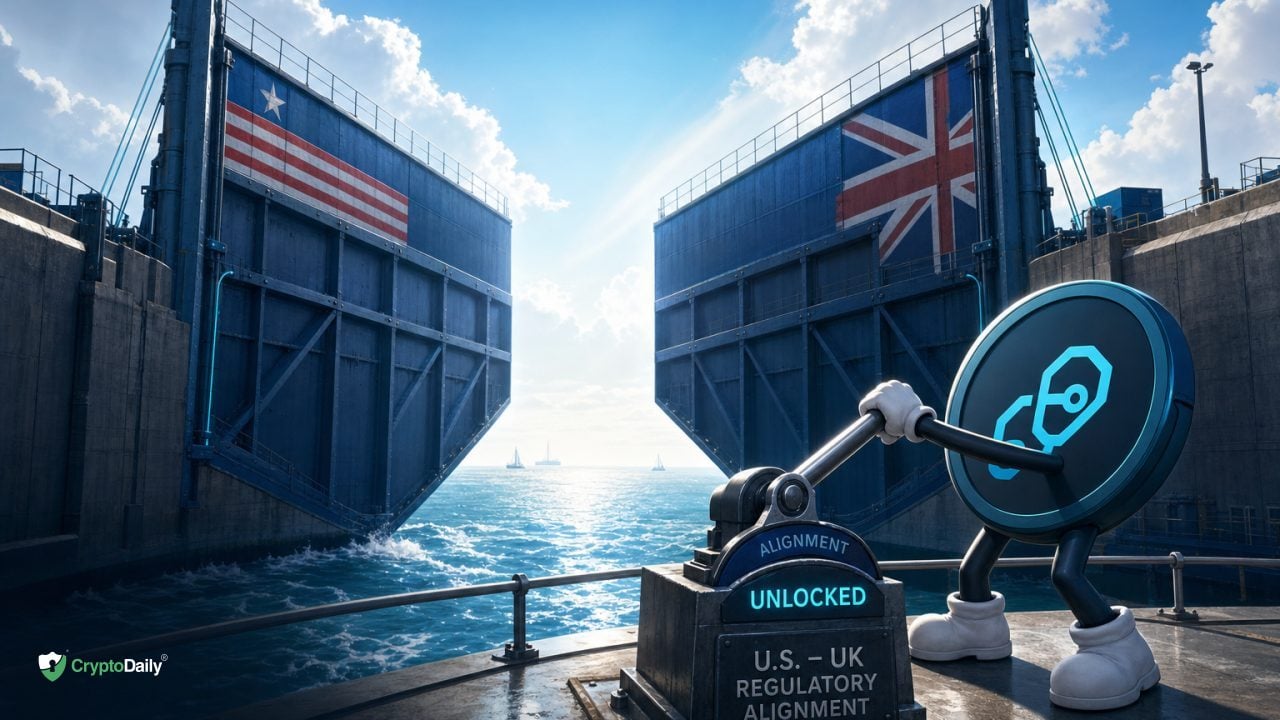
If you care about tokenized bonds, funds, and stablecoin settlement actually working across borders, this is one of those weeks you bookmark. Washington and London just put fresh guidance on the table, and the tone is finally about building, not banning.
We’re going to cut through the noise. What the U.S. and UK just said, what it unlocks, what still blocks you from shipping a cross‑border tokenization pilot, and how to plan for the next 12 to 18 months without stepping on a regulatory rake.
Short version: alignment is closer than it’s been, but the plumbing still needs to click into place. Let’s get specific.
Yes, closer U.S.-UK alignment can open cross-border tokenized markets, but only if both sides lock in common rules on backing, custody, disclosures, and supervisory cooperation. July 2026 brought coordinated recommendations and timelines, which is a meaningful pivot. The path is there. Execution, audits, and licenses still decide the pace.
- Shared direction: both Treasuries endorsed a 10-point agenda on tokenized activity and cooperation.
- Stablecoins: both sides back 1:1 reserves and cross-border pathways, which is key for on-chain settlement.
- Retail tokenized securities: U.S. staff push 1:1 backing, regulated custody, and audits before trading.
- UK timeline: FCA’s crypto permissions gate opens September 2026, with rules biting from October 2027.
What does regulatory alignment actually cover here?
In mid-July, the U.S. Department of the Treasury and HM Treasury published recommendations from their Transatlantic Taskforce. The document urges deeper cross-border capital raising, updated supervisory cooperation, and clarity for tokenized financial activity. It’s framed as an initial 10-point agenda delivered to both Treasuries, so it’s guidance for the next stretch of policymaking, not law by itself. You can read the U.S. release here: U.S. Department of the Treasury (press release).
On the UK side, the same day also brought a joint U.S.-UK statement on stablecoins. It explicitly says stablecoins held out as money should be fully backed, one-to-one, by high-quality liquid assets, and it calls for practical pathways for cross-border stablecoin activity. That’s a concrete standard to engineer around. Source here: HM Treasury / GOV.UK (UK‑US Joint Statement on Stablecoins).
So what’s actually in scope if the two align? Think core market infrastructure rules: how tokenized shares or bonds map to underlying instruments, who can custody the backing assets, what audits are needed, how redemptions work, and how supervisors share data for cross-border flows. None of this is glamorous. All of it is what unlocks real issuance and secondary trading.
How would cross-border tokenized securities and funds move under aligned rules?
Picture a U.S. asset manager issuing a tokenized short-duration bond fund on a permissioned chain, with UK wealth platforms as approved investors. If both sides agree on the basics, the mechanics get simple enough to ship:
First, the tokens represent claims on an underlying portfolio held by a regulated custodian. Second, a playbook exists for subscriptions, redemptions, and what happens if the issuer or custodian fails. Third, the transfer restrictions are enforced on-chain, so only permitted wallets can hold or trade the thing. Finally, cash legs settle in a stablecoin both regulators accept as fully backed and redeemable at par.
With aligned supervision, the UK platform can rely on the U.S. custodian’s status, and the U.S. manager can rely on the UK distributor’s licensing. When the rules match at those touchpoints, cross-border stops being a legal scavenger hunt and starts being a checklist exercise.
What actually changed in July 2026?
Three items matter for anyone planning pilots or scale-up:
One, a transatlantic recommendations paper exists, and it’s not vague. The call to deepen cross-border capital raising and clarify tokenized financial activity is now on both Treasuries’ public docket. That’s new political cover for agencies to build pipes, not just issue warnings. See the announcement: U.S. Department of the Treasury (press release).
Two, the joint stablecoin statement sets a clear anchor: 1:1 backing in high-quality liquid assets and routes for cross-border use. If your settlement layer is a stablecoin, this is the signal to align treasury operations and disclosure with that standard. Source: HM Treasury / GOV.UK.
Three, U.S. staff went on record about tokenized securities. On July 1, the SEC Crypto Task Force posted a submission recommending that tokenized securities offered to retail be backed one-to-one by the underlying security, held by a regulated custodian, with regular independent audits and with custody, redemption, bankruptcy, and investor-recovery rules in place before retail trading opens. That’s a useful blueprint. Link: U.S. Securities and Exchange Commission (SEC) — Crypto Task Force written submission.
Finally, the UK is putting dates on the board. The FCA published final rules and guidance for its cryptoasset regime on June 30, said the gateway for firms to apply for crypto permissions opens in September 2026, and the rules will apply to firms authorized on or after 25 October 2027. That gives a real planning horizon. Details here: Financial Conduct Authority (FCA) — CP26/4 page / policy statements.
| Topic | United States | United Kingdom | Practical read-through |
|---|---|---|---|
| Tokenized securities | SEC staff suggest 1:1 backing, regulated custody, independent audits, and pre-baked recovery rules for retail. | FCA ruleset is landing with permissions gateway opening Sept 2026 and application to authorized firms from Oct 2027. | Retail access likely demands rigorous backing and disclosures. Firms should architect custody and audits now. |
| Stablecoins | Joint statement with UK affirms 1:1 backing concept and cross-border pathways. | Same joint position: fully backed by high-quality liquid assets, with cross-border enablement. | Settlement tokens must be redeemable at par with transparent reserves and strong liquidity management. |
| Supervisory cooperation | Transatlantic agenda urges updates to share data and supervise cross-border tokenized activity. | Same agenda on the UK side. | Expect more standardized requests for wallet whitelists, transfer controls, and incident reporting. |
| Timeline certainty | Momentum via taskforce and SEC staff submission, but rulemakings may vary by product. | Permissions window in 2026, full application in 2027 for authorized firms. | 2026 pilots, 2027 scale, assuming licenses and controls hold up under scrutiny. |
Where do the regimes still diverge, and why does it matter?
Even with the same north star, the routes differ. The U.S. tends to funnel products through securities classifications and existing broker-dealer, exchange, and transfer agent frameworks. That can be slow but predictable once scoped. The UK is rolling out a dedicated cryptoasset permissions regime under the FCA, with room to tailor activities and disclosures.
Disagreement isn’t always visible in headlines. It shows up in the footnotes: who is the recordkeeper of truth, how token transfers map to legal title, where location-based restrictions bite, and which disclosures count as sufficient for retail. If you get these wrong, your secondary market shrinks to a handful of whitelisted wallets.
It matters because cross-border lives in the overlaps. If U.S. rules say the underlying must sit with a U.S. qualified custodian, but a UK distributor wants a UK trustee of record, you’ll juggle parallel structures or accept a smaller market. Aligning on bankruptcy remoteness, net asset value calculation, and what counts as a trade confirmation is what turns a pilot into a product.

How would stablecoin alignment change settlement for tokenized assets?
Stablecoins are the cash leg for on-chain markets. If the U.S. and UK agree that stablecoins held out as money must be fully backed by high-quality liquid assets, with clear redemption rights, you can finally design settlement flows with reasonable confidence. That’s exactly what the July joint statement says. Source: HM Treasury / GOV.UK.
In practice, this could mean a tokenized bond trades T+0 versus a 1:1 backed stablecoin, with both legs cleared on the same network and finality recognized by both jurisdictions. Market makers can manage inventory and FX risk in near real time, and custodians can reconcile positions against chain data plus traditional books.
There are still gotchas. Access policies for banks and brokers need to be explicit. Some venues will prefer permissioned versions of stablecoins to control counterparty risk. And if a single issuer dominates flows, you’ll inherit concentration risk that looks fine until it suddenly doesn’t.
Pro tip: do not architect settlement around a single stablecoin issuer. Build multi-issuer rails, test stress redemptions in playbooks, and wire in circuit breakers for de-peg events.
What technical and operational standards need to line up first?
Even with policy alignment, mismatched standards can stall everything. The boring bits decide whether regulators sign off.
- Token design: use a standard that supports transfer restrictions, partitioning, and whitelist logic suitable for securities. Make sure legal title follows the token, not just a database entry.
- Identity: tie investors to verifiable credentials and LEIs where relevant. Map Travel Rule data flows so cross-border transfers don’t break compliance.
- Custody: segregate client assets on-chain and off-chain. Reconcile to the penny. Be able to prove control of keys and continuity if a custodian fails.
- Valuation and oracles: document your pricing sources, update frequencies, and fallback when oracles fail.
- Incident response: who pauses transfers, under what conditions, and how do you notify supervisors on both sides.
The SEC Crypto Task Force’s July submission puts audits, custody, redemption, and bankruptcy treatment front and center for retail tokenized securities. That is a good proxy checklist until formal rules land. Source: SEC — Crypto Task Force.
Is 2026–2027 the right window to pilot cross-border tokenization?
It’s a practical window. The UK has published final cryptoasset rules with an application gateway slated for September 2026 and full application in late 2027 for authorized firms. The U.S. has a public transatlantic agenda and specific staff guidance on how retail tokenized securities should be backed and governed. That combination is rare.
The sensible approach is to stand up small, ring-fenced pilots in 2026 that mirror the likely steady state. Use fully backed settlement tokens, pick a chain with mature permissioning, and define investor recovery steps in plain language. Turn those into artifacts you can show supervisors.
If you wait for every rule to be final, you’ll start in 2028. If you start without a paper trail and robust controls, you’ll end in enforcement. The middle path is to build as if the July 2026 guidance is the floor, not the ceiling, and be ready to swap components if a rule tweaks.
Common Mistakes
- Assuming any stablecoin will do. If it’s not 1:1 backed with high-quality liquid assets and redeemable at par, you may be offside for settlement. Bake in multi-issuer support and clear disclosures.
- Ignoring bankruptcy remoteness. If the custodian fails, who owns the underlying? Document legal title, segregation, and recovery steps up front.
- Underbuilding transfer controls. Cross-border means different eligibility rules by wallet. Use token standards that can enforce whitelists, lock-ups, and geography checks on-chain.
- Skipping audits until launch. The U.S. staff view puts regular independent audits front and center for retail-facing products. Treat audit readiness as a build requirement, not a postscript.
- One-jurisdiction thinking. If your disclosures satisfy the UK but not U.S. expectations on custody or vice versa, your addressable market shrinks. Draft for both from day one.
If you want a steady beat on policy shifts and practical build notes, we cover them daily at Crypto Daily.
Frequently Asked Questions
Do tokenized securities need to be backed 1:1 by the underlying?
If you plan to offer them to retail in the U.S., the SEC Crypto Task Force’s July 1 submission recommends exactly that: one-to-one backing, regulated custody, regular independent audits, and clear rules on redemption and investor recovery before retail trading. That is not a final rule, but it’s a strong signal on what acceptable looks like.
Will the UK’s new regime let overseas firms market tokenized products to UK investors?
The FCA has published final rules and a permissioning path. The gateway opens September 2026, with rules applying to authorized firms from 25 October 2027. Cross-border access will still hinge on permissions, disclosures, and the activity type, so expect case-by-case assessments rather than a blanket pass.
Can U.S. firms settle UK trades in a U.S. stablecoin if it’s fully backed?
The joint statement affirms 1:1 backing and calls for cross-border pathways, which is supportive. Actual usage depends on the issuer’s licensing, disclosures, and whether UK firms are allowed to hold and use that particular token. Expect permissioned channels and clear redemption mechanics to be the default.
Which chains are regulators comfortable with for securities?
Regulators rarely pre-endorse a chain. What they look for are controls: permissioning, transfer restrictions, auditability, and operational resilience. If you can demonstrate that on a given network, and the legal title mechanics are solid, the chain choice becomes a technical question, not a policy blocker.
How do I prove investor protections in a tokenized fund?
Map every protection to an artifact: custody agreement with segregation, audit engagement letter and cadence, redemption policy, outage playbook, and communications templates. Then tie each to the applicable U.S. and UK expectations. If you can show both supervisors the same binder, you’re on the right track.
Will ETFs tokenize their shares for cross-border trading?
Some issuers are experimenting with tokenized share classes and wrappers. Whether mainstream ETFs tokenize depends on custody, transfer agency, and exchange rules getting updated. The cross-border part adds another layer. It could happen, but the gating items are operational, not technological.
Does tax treatment change when coupons or dividends are paid on-chain?
Generally, the tax character follows the underlying instrument. Paying on-chain does not magically change interest into something else. That said, withholding and reporting can get messy across borders. Coordinate early with tax counsel and your transfer agent or administrator.
Disclaimer: This article is provided for informational purposes only. It is not offered or intended to be used as legal, tax, investment, financial, or other advice.
Related Stories