Trump Crypto Ethics Rule Bars Officials From Issuing Tokens
 Darnell Whitaker
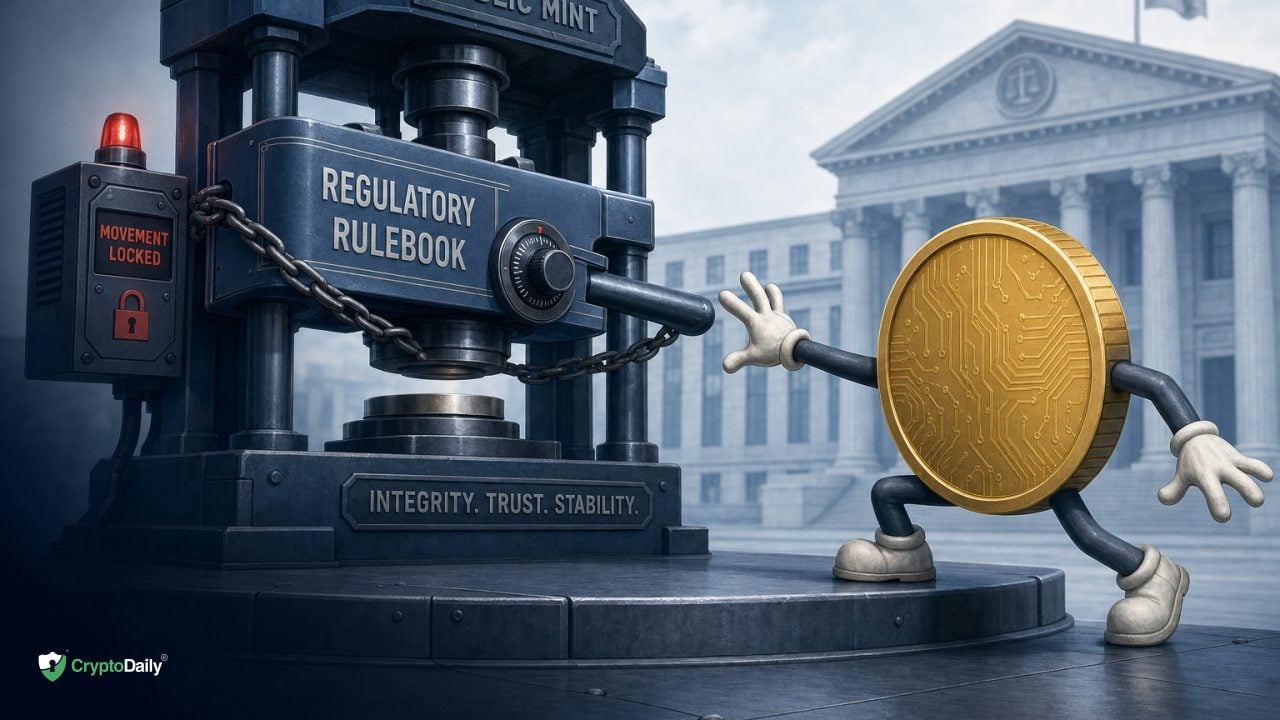
So here’s the practical problem. Your team is planning a token launch or a public pilot, and you’ve been building policy relationships in DC. Overnight, headlines say a Trump-backed ethics rule would bar federal officials from issuing tokens and put the Department of Justice in charge of enforcement. What can you still do, and what’s now off-limits?
This piece breaks down what changed, who is covered, and the tactical adjustments that keep you out of the blast radius. No drama. Just how to operate safely while the rules harden.
| Aspect | What to Know |
|---|---|
| What changed | Reporting on July 21, 2026 says newly approved ethics language signed by President Trump would prohibit federal officials from issuing cryptocurrencies and assign DOJ as lead enforcer (The Block; CryptoBriefing). |
| Who is covered | Per reporting, the prohibition would apply to federal officials including the president, vice president, and members of Congress (The Block). |
| What is banned | Issuing tokens by covered federal officials. Details around definitions and edge cases will matter; assume a conservative reading until final text is public. |
| Enforcer | The Department of Justice would be the chief enforcer under the provision, a point that has already drawn pushback in Congress (The Block). |
| Status and timing | The ethics language is tied to ongoing CLARITY Act negotiations and was discussed on an industry call with White House crypto adviser Patrick Witt, according to multiple outlets (The Block). |
| Why it matters | Conflicts and optics around token issuance by officials are now front and center. Expect tighter boundaries on public-private experiments, pilots, and endorsements that look like issuance. |
| Immediate takeaway for teams | Scrub any plan that involves a federal official touching your token launch mechanics. Keep education and policy engagement, but firewall it from issuance. |
Core concepts you actually need
Editor's note: In Q1–Q2 2026 I watched policy risk get priced in real time. OTC desks widened quotes whenever DC floated enforcement shifts, and at least two token launches I tracked quietly moved mainnet dates to avoid overlapping with Hill briefings. On a couple of policy calls in June, the DOJ-only enforcement idea came up repeatedly, and legal teams started drafting stricter public-sector engagement policies. The other thing that stood out was how fast comms teams dropped NFT swag from government-facing events. None of this is about panic. It’s just playbook updates so launches don’t get tripped up by headlines and subpoenas. — Darnell Whitaker
Let’s anchor facts. On July 21, 2026, reporters said that ethics language signed by President Donald Trump would bar federal officials from issuing cryptocurrencies and put the Department of Justice in the driver’s seat for enforcement. That coverage also said the scope includes the president, vice president, and members of Congress, and that the language was aired on an industry call with White House crypto adviser Patrick Witt (The Block). CryptoBriefing independently reported the same core points (CryptoBriefing).
What does “issuing” mean in practice? Think origin, authorization, or distribution of a token from an official or an office under their control. The exact statutory text matters, but the compliance-safe reading is simple: if a federal official is anywhere near the mechanics of minting or allocating a token, step away.
Why this, why now? Optics and conflicts. The White House is trying to draw a hard line between public office and token issuance. That context lands harder when you remember President Trump’s certified 2025 public financial disclosure shows significant proceeds tied to a crypto-adjacent business, including $236,250,000 in token-sale proceeds distributed by World Liberty Financial and $65,625,000 from an equity sale tied to WLF Holdco LLC (U.S. OGE PDF). That’s not a judgment call, just the official record and the political backdrop.
There’s also a structural debate brewing. Putting DOJ in charge concentrates the stick. Some lawmakers aren’t thrilled. Sen. Angela Alsobrooks called the DOJ-only arrangement an “unserious offer” and said she wouldn’t support the bill if that stands (The Block). Expect that fight to shape the final contours.
Quick glossary
- Issuing: Creating, authorizing, or distributing a token. The conservative test is whether an official materially advances the token’s genesis or allocation.
- Federal official: Per reporting, includes the president, vice president, and members of Congress; final definitions may also capture appointees and certain staff.
- DOJ enforcement: The Department of Justice as chief enforcer, with criminal or civil tools depending on how Congress drafts the provision.
- CLARITY Act: The legislative package where this ethics language is being negotiated, according to multiple outlets.
- OGE 278e: The annual public financial disclosure form; the 2025 filing for President Trump details proceeds tied to World Liberty Financial.
- World Liberty Financial: The entity mentioned in the OGE filing in connection with equity and token-sale proceeds.
Step-by-step playbook for teams
- Audit any official touchpoints. Map where a federal official, office, or staffer interacts with your token lifecycle. If it smells like issuance, pause and reroute.
- Split education from execution. Keep policy briefings and technical demos, but clearly separate them from mint, allocation, and launch operations. No shared repos, no approval flows.
- Rework public pilots. If a proof-of-concept involved an agency or a congressional office in a way that could be read as “authorizing issuance,” move it to a sandbox or private testnet without their operational role.
- Tighten vendor and grant agreements. Add ethics reps and warranties that no covered official will authorize or distribute your token. Make counterparties attest too.
- Harden marketing and events. No NFT swag or commemoratives tied to a launch with a covered official’s name or office. Keep any collectibles far from token distribution timelines.
- Centralize approvals. Route anything that mentions “mint,” “airdrop,” or “allocation” through legal and policy counsel who are tracking the CLARITY negotiations.
- Document the separation. Keep a paper trail showing officials were briefed only on policy or research, not issuance. Meeting notes and versioned scopes help.
- Plan for DOJ queries. Have a single point of contact and a clean narrative ready if questions come. Clarity and documentation beat improvisation.
Who this really constrains, and who it doesn’t
The center of gravity is simple: people holding federal office. Reporting says the prohibition would apply to the president, vice president, and members of Congress. If you’re coordinating launches that rely on a sitting official to authorize the mint or distribute allocations, that lane is closing fast.
What about endorsements, shout-outs, or a congratulatory tweet? Those are different from issuing. Still, if a launch rolls those into a drop or a commemorative token, you can blur the line. Keep ceremonial or educational activities cleanly separated from any chain interactions that create or allocate tokens.
Campaign and political committees live in another rulebook. That said, given the optics and evolving scrutiny, threading the needle with clever structures is not worth the headache. The market will punish muddled ethics faster than the law will.
Enforcement architecture: DOJ-only vs shared oversight
Centralizing enforcement in DOJ is tidy on paper. One cop, clear accountability. The trade-off is flexibility and buy-in. Financial conflicts often touch OGE, ethics committees, and market regulators. Cutting them out can spark political resistance, which we’re already seeing. Sen. Angela Alsobrooks labeled the DOJ-only proposal an “unserious offer,” signaling it could change in negotiations (The Block).
| Model | Upside | Downside | What it likely means for teams |
|---|---|---|---|
| DOJ-only enforcer | Clear line of authority, faster case building. | Less specialized ethics input; higher fear factor even for gray areas. | Document everything and keep launches well outside any official function. Expect quicker, centralized inquiries. |
| Multi-agency with OGE and ethics committees | More nuance on conflicts and disclosures; clearer safe practices over time. | Slower coordination, mixed signals at the start. | More process, but better guidance. Use advisory opinions and pre-clearances when available. |
| Hybrid with DOJ lead and regulator referrals | Keeps DOJ’s weight while tapping subject-matter expertise. | Complex playbook; who speaks first can matter. | Assign counsel to track which agency holds the pen on your issue. Don’t assume silence equals safety. |

Scenarios you’ll probably face this quarter
Your policy team booked a Capitol Hill briefing the same week your mainnet goes live. The safe move is to keep the briefing, kill anything that smells like launch marketing, and push the genesis block timing outside the window. Short gap, different optics.
An agency demo asked for a small-batch test mint to measure throughput. If any covered official is in the loop, switch to synthetic data or a private testnet with no real token issuance. Share results, not tokens.
Your comms team wants an NFT keepsake for attendees at a federal roundtable. Do not. A freebie mint looks like issuance tied to official activity. If you must give something, make it physical merch with no token linkage.
Pro tip: build a standard “public-sector engagement” playbook that bans token creation, allocation, or signing authority anywhere near official participation. You’ll save yourself last-minute rewrites.
Pitfalls and red flags to avoid
- Commemorative mints around official events. Even if it’s “just a POAP,” it can look like issuance connected to an office.
- Advisor titles for sitting officials. If an official has any role that could touch token economics or distribution, it’s a problem.
- Pre-launch allocations to staffers. Optics are terrible and could be interpreted as indirect issuance ties. Keep them out of the cap table.
- Ambiguous language in MOUs. Words like “authorize,” “approve,” or “oversee mint” are landmines. Strip them out.
- Assuming state-level rules carry you. This is a federal ethics regime. A green light from a state pilot doesn’t translate.
- Letting DOJ-only rumors lull you. Whether it’s DOJ or multi-agency, the safe behavior is the same: no official near issuance.
If you want steady, noise-free coverage of how rules hit real launches, keep Crypto Daily on your radar. We track policy, markets, and infra with a builder’s eye at cryptodaily.co.uk.
Frequently Asked Questions
Is this rule already law, or still in motion?
Coverage on July 21, 2026 describes newly approved ethics language signed by President Trump and tied to CLARITY Act negotiations, with DOJ as enforcer. Until final text is public and enacted, treat it as active policy direction, not a finished statute.
Who exactly counts as a “federal official” here?
Reporting says the scope includes the president, vice president, and members of Congress. Final definitions could capture certain appointees and staff. Until clarified, assume a broad interpretation and structure your engagements accordingly.
What activities are most likely to be seen as “issuing” a token?
Creating, authorizing, or distributing a token. That can include signing off on a mint, controlling a distribution list, or greenlighting allocations. Education and policy briefings are different, but keep them far from launch mechanics.
Why is DOJ the proposed enforcer, and is that final?
Centralizing in DOJ simplifies accountability but is controversial. Sen. Angela Alsobrooks has already criticized DOJ-only enforcement as an “unserious offer.” Negotiations could evolve the model before anything is final.
Could commemorative NFTs from official events get caught by this?
Possibly. If an NFT is minted or distributed in connection with a covered official or office, it could be viewed as issuance tied to official activity. Safer to avoid on-chain gifts near anything governmental.
Can projects still brief lawmakers or show testnets?
Yes. Keep it informational. Use synthetic data or private testnets with no real issuance, and document the separation from your launch plan.
What if an official previously advised a project before taking office?
That’s a conflict and optics question. Pause any role that might touch issuance, disclose appropriately, and seek counsel. Clean separations age well; entanglements don’t.
Disclaimer: This article is provided for informational purposes only. It is not offered or intended to be used as legal, tax, investment, financial, or other advice.
Related Stories