Multi-Chain Crypto Casinos: Playing One Balance Across BTC, ETH, SOL, and TRX
 Crypto Daily
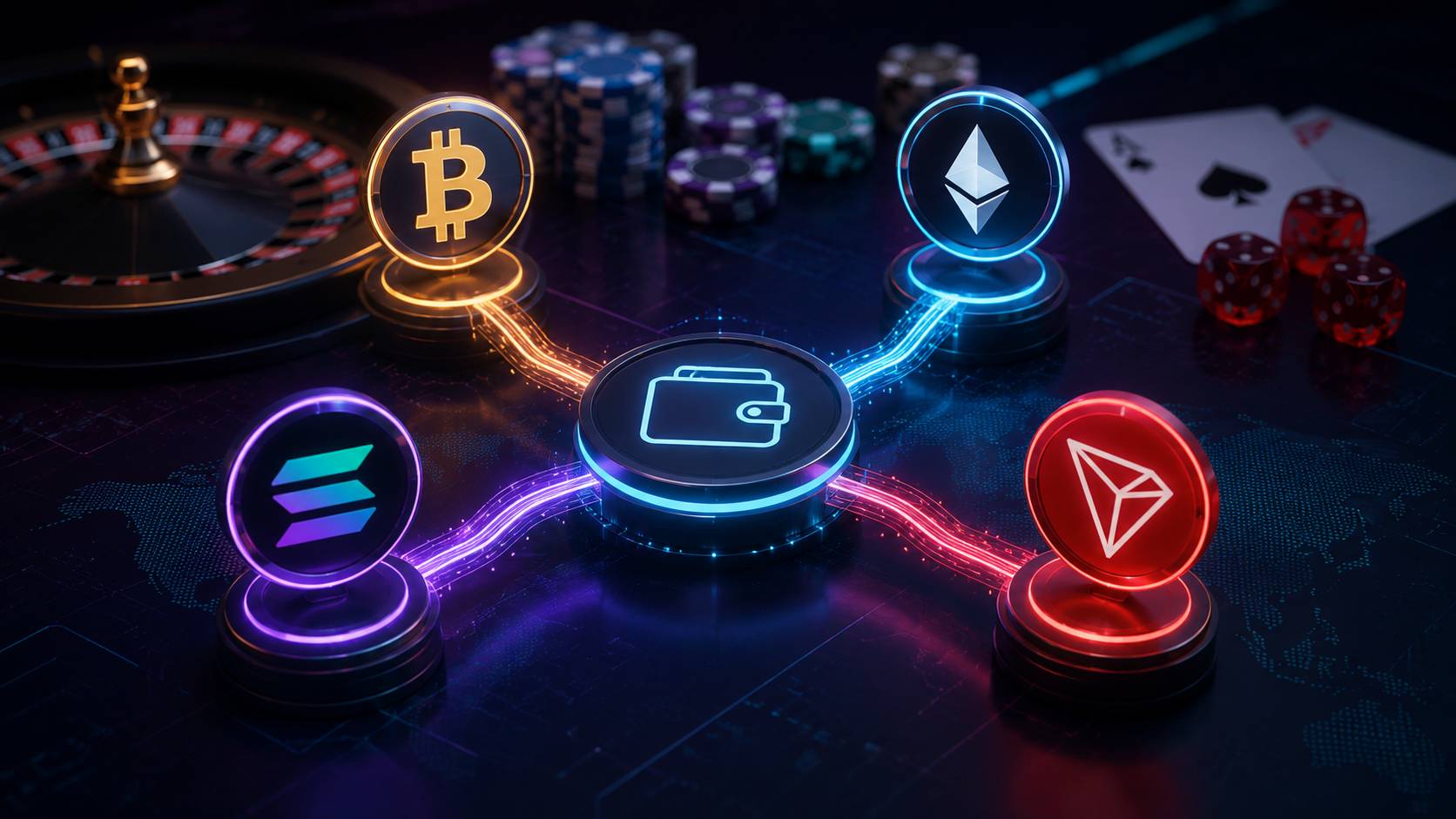
A player funds an account with Bitcoin one week, tops up with USDT on Tron the next, and cashes out to a Solana wallet after that, all on the same platform without a single manual bridge.
That is what a multi-chain crypto casino makes possible, and it changes how a bankroll is managed as much as where the funds sit.
The appeal is real, but so is the detail underneath it, because a balance spread across BTC, ETH, SOL, and TRX behaves differently on each network, and the choice of chain shapes the cost and the wait every time money moves.
Multi-Chain Means Networks, Not Just Coins
The label points at the wrong thing if it is read as a long coin list. Multi-chain support means a casino accepts deposits and settles withdrawals across several blockchains, so the supported networks matter as much as the tokens named in the cashier.
Stablecoins make the point sharply. A coin like USDT exists on Ethereum, Tron, and Solana, and each version is a separate token on a separate network with its own fees and confirmation time.
Choosing USDT is only half a decision; the network it rides on is the other half, and it is the half that sets the cost. Reading a cashier as a set of networks instead of a set of coins is the shift that makes multi-chain play make sense.
Each Chain Suits a Different Kind of Play
The four networks a player is most likely to meet behave distinctly, and matching the chain to the moment is where the flexibility pays off. The table sets each against its rough character and the use it fits.
|
Network |
Rough character |
Suits |
|
Bitcoin |
Mainnet settles over several confirmations; fees are usually modest |
A larger, less frequent deposit |
|
Ethereum |
It can cost several dollars and slow down when the network is busy |
Players already holding ETH on-chain |
|
Solana |
Fees are near a fraction of a cent, confirmation in moments |
Frequent, smaller deposits |
|
Tron |
Consistently cheap transfers, widely used for USDT |
Routine stablecoin movement |
None of these is the correct chain in the abstract. The right one depends on the size of the transfer, how often a player moves funds, and what already sits in their wallet, which is why the same person might use Bitcoin for one deposit and Solana for the next.
The Balance Updates Only After Confirmations
A multi-chain balance is not one pooled number that moves in a single step. Each transfer is a separate on-chain transaction, and the casino credits it only after the network reaches the required confirmations, which differ by chain.
That lag explains a common confusion, where a wallet shows funds sent but the casino balance has not yet moved.
The transaction is propagating and confirming, and the platform waits for enough blocks before treating the deposit as final to protect against a chain reorganisation. On a fast chain that wait is short, and on a busier network, it stretches, which is part of what the chain choice decides.
One Wrong Network Ends the Transfer
This is the risk that costs players real money, and it is worth stating plainly. Each network expects its own token on its own address, and sending a coin over the wrong network, such as an Ethereum-based token to a Tron address, usually loses the funds with no way to recover them.
The cashier shows the correct network for each coin, and the check takes a moment. The discipline is simple and non-negotiable: confirm the coin and the network match before every send, because an on-chain transfer cannot be clawed back once it is broadcast.
A balance verifiable on-chain is only an advantage when the transfer reaches the right address in the first place.
Chain Breadth and Custody Are Separate Questions
A wide network menu answers how a player can move funds, not who holds them between bets. Those are two different axes, and conflating them is easy. A casino can span many chains while still keeping the balance on its own books, or settle funds back to a wallet the player controls.
The distinction decides what a player actually holds mid-session. On a non-custodial platform, winnings settle across those chains to a wallet the player owns, while a custodial one holds the balance regardless of how many networks it lists, so a broad chain menu says nothing on its own about custody.
Reading both axes, the networks and the custody model, is how a player understands a multi-chain casino, not just its coin count.
Where Dexsport Sits on the Multi-Chain Axis
Dexsport pairs broad chain coverage with self-custody, spanning more than 50 cryptocurrencies across 23 networks including BTC, ETH, SOL, and TRX, with funds settling to a wallet the player controls instead of an operator-held balance.
That combination is the practical version of the two axes above: many rails to move on, and the balance staying in the player's hands between bets.
The honest boundary is the same across the segment. Its cashier is fee-free at the operator level, though the network fee for each chain still applies and a withdrawal can face a risk-based review, and its audited contracts lower but do not remove smart-contract risk.
Broad chain support is a convenience with the same per-network rules every platform faces, not a way around them.
Reading a Multi-Chain Cashier Before You Send
Managing one balance across four chains comes down to a few habits that keep the flexibility from turning into a costly mistake. Before moving funds, a player should:
-
Matching the network to the transfer: a fast, low-cost chain for frequent small deposits, a heavier one only when it suits the coin held.
-
Confirming the network on every send: the coin and the address network must agree, since a mismatch loses the funds.
-
Allowing for confirmation time: the balance updates after the chain confirms, not the moment the send leaves the wallet.
None of that changes the odds or the house edge, which sit apart from whichever chain funds the play. Confirm what is legal where you live, keep stakes within a set budget, and play only if you are of legal age, since KYC or AML checks may apply. Responsible gambling matters on every chain a balance touches.
Disclaimer: The information here is provided for general purposes only and is not legal, tax, investment, or financial advice. Network fees, confirmation times, and platform terms vary and change over time, so confirm current details before depositing. Betting carries risk, and rules vary by country, so check the law where you live. Please gamble responsibly, within your means, and only if you are of legal age.
Related Stories