FATF Crypto Crime Report: How Criminal Networks Move Billions
 Sophia Bennett

The latest FATF update lands with a thud. Criminal groups are still moving huge sums through crypto, just with slicker routes and better timing. Regulators are tightening screws, but the gaps are big enough for billions to slip through. If you run a platform, handle payments, or even trade regularly, you’re inside this story whether you like it or not.
In mid-July, the Financial Action Task Force published its seventh targeted update on virtual assets. Travel Rule coverage has widened, yet enforcement lags. Case studies are getting bolder too, from multi-billion laundering rings to mass-fraud takedowns that spanned almost a hundred countries. It’s not abstract policy. It’s how money moves today.
This piece breaks down the routes criminals use, what the FATF is really signaling, and a straight-up playbook to reduce your risk exposure starting this week.
| Aspect | What to Know |
|---|---|
| FATF’s 2026 Update | Issued 16 July 2026, it assesses how countries and VASPs are implementing standards for virtual assets and highlights real abuse cases (Comsure (reporting FATF)). |
| Travel Rule Status | 83% of surveyed jurisdictions passed Travel Rule laws, up from 73% in 2025, but consistent cross-border compliance remains patchy (Comsure (reporting FATF)). |
| Enforcement Gap | Only about 40% of those with Travel Rule laws report supervisory or enforcement action, a key reason data still goes missing in transit (Comsure (reporting FATF)). |
| Scale of Abuse | FATF cites a Cambodia-based financial group that laundered at least USD 4B between 2021 and 2025, illustrating industrialized laundering networks (LexisNexis (reporting FATF)). |
| Law Enforcement Moves | INTERPOL’s Operation First Light saw 5,811 arrests and USD 293M intercepted across 97 countries, including blocks on virtual wallets (INTERPOL). |
| Why It Matters | Criminals exploit enforcement gaps, cross-chain tools, and weak Travel Rule plumbing. Platforms that don’t adapt risk sanctions breaches, seizures, or offboarding by partners. |
How illicit crypto flows actually work
Criminal flows in crypto aren’t a single trick. They’re a sequence. First the “placement,” where stolen or illicit funds land on-chain. Then “layering,” where the money snakes across wallets, chains, and services to break associations and buy time. Finally “integration,” when it touches something spendable in the real world. That last move is where criminals still need human infrastructure: exchanges, OTC brokers, prepaid cards, or commerce networks.
Layering is the workhorse. It ranges from simple peel chains (lots of small forwards) to chain hopping via bridges and swaps. Mixers and privacy tools come in and out of fashion depending on enforcement pressure. Stablecoins tend to feature because they reduce price risk while a network tries to launder or cash out. The routes bend as surveillance tightens. When one road is blocked, traffic shifts to another with lower fees and looser checks.
Where do VASPs fit? They’re the choke points. Any service that holds customer funds or brokers transfers is expected to collect originator and beneficiary data and, crucially, pass it along. That’s the Travel Rule in action. The FATF’s 2026 update says many countries now have the law on paper, but only a minority are really testing and enforcing it across borders (Comsure (reporting FATF)).
And law enforcement is more coordinated than it used to be. Global actions like Operation First Light show the other half of the picture: when data, analytics, and jurisdictional teamwork are in sync, arrests and asset seizures scale fast (INTERPOL).
Glossary you’ll actually use
- Travel Rule: The requirement for VASPs to send verified originator and beneficiary information alongside qualifying transfers, similar to bank wire data standards.
- VASP: Virtual Asset Service Provider. Any business that exchanges, transfers, or safeguards digital assets on behalf of customers.
- Layering: The stage of laundering focused on breaking traceability through hops, swaps, or intermediaries.
- Peel chain: A method of sending many small outputs from a larger pot to obscure the trail and slow investigators.
- Cross-chain bridge: Software or services that move value between blockchains, often used to exit a monitored network quickly.
- OTC broker: A dealer that matches buyers and sellers off-exchange, common in cash-outs where privacy or limit sizes matter.
Step-by-step playbook for platforms and compliance teams
- Map your Travel Rule posture by corridor. List your top counterparty jurisdictions and VASPs. Note which have working Travel Rule messaging, which don’t, and where you routinely lose data in transit.
- Fix the last-mile data gaps. Implement fallback procedures when counterparties can’t accept Travel Rule payloads. Use secure portals or interim attestations while you phase in interoperable messaging.
- Turn on cross-chain visibility. Add analytics that link deposits to previous hops across chains. A single inbound address rarely tells the real story without bridge and DEX traces.
- Risk-tier counterparties and networks. Score exchanges, OTC desks, and chains based on enforcement maturity, sanctions exposure, and historic hit rates. Raise friction on the riskiest corridors.
- Harden withdrawal controls. Screen beneficiary addresses for proximity to mixers, fraud clusters, and sanctioned services. Delay or review suspicious outflows to cut off cash-outs.
- Close the SAR loop. Make sure suspicious activity reports feed back into rules and models. If alerts don’t change behavior, you’re just filing paperwork.
- Train for current scams, not last year’s. Rotate case studies that mirror what you see now: romance scams, work-from-home mule rings, investment groups on messaging apps. Update playbooks quarterly.
- Coordinate beyond crypto. Build contacts with banks, payment processors, and national cyber units. When off-ramps and wallet freezes line up, recoveries and deterrence improve, as seen in recent global actions (INTERPOL).
How criminal routes actually look in 2026
Imagine a phishing group that drains victims on a weekday evening when support desks are thin. The funds hit a fresh wallet, jump through a DEX swap to a stablecoin, traverse a bridge to a faster, cheaper chain, then move again into a hosted wallet at a smaller exchange that isn’t enforcing the Travel Rule consistently. If identity checks are weak, that’s a same-day offramp into cash-like rails.
Scale it up and you have an industrial laundering setup. FATF’s July update points to a Cambodia-based conglomerate that washed at least 4 billion dollars over several years, which implies not just clever chain moves but a human network of willing intermediaries and weak controls at multiple touchpoints (LexisNexis (reporting FATF)).
Where do defenders break that sequence? Early, ideally. Detect the bridge exit before it lands on your platform. Ask for and validate Travel Rule data before crediting a deposit. Profile first-time customers with high-velocity cross-chain histories. And don’t be shy about adding delay and review when the path in looks engineered.

Travel Rule reality check: progress, gaps, and what to do
On paper, the world moved. FATF says 83% of surveyed jurisdictions now have Travel Rule legislation. On the ground, only around 40% of those are actually supervising or enforcing it, which is why you still see deposits that arrive with zero counterpart data (Comsure (reporting FATF)).
Here’s a simple way to frame the implementation options and what they cost you.
| Implementation path | Pros | Trade-offs |
|---|---|---|
| Point-to-point messaging with known VASPs | Fast with trusted partners, lower false positives, easier SLAs | Limited coverage, brittle for new corridors, vendor lock-in risks |
| Interoperable network connectors | Broader reach, better for cross-border traffic, future-proofing | More moving parts, needs rigorous testing, onboarding overhead |
| Manual attestations as fallback | Keeps funds flowing, incremental rollout, practical for edge cases | Error prone, audit headaches, attackers exploit the manual gap |
| Strict block on non-compliant counterparties | Strong signal to market, reduces unknown counterparty risk | Customer friction, revenue hit on high-risk corridors, support load |
The short version: build multiple lanes. Use interoperable connectors for reach, maintain direct links with high-volume partners, and keep a well-documented manual fallback for now. Then shorten that manual lane as quickly as your counterparties catch up and regulators start asking for evidence that you really enforce what your policy says.
Spot the route, break the route
Criminals pick routes that minimize cost, time, and scrutiny. Defenders should map the observable signals those routes leave and respond before funds harden into fiat. Below is a practical comparison to align your detection with what’s on-chain today.
| Obfuscation route | What it often looks like | Best immediate counter |
|---|---|---|
| Bridge hop then DEX swap | Bridge deposit from fresh wallet, quick swap to stablecoin on arrival | Bridge-aware tracing, cool-off periods, Travel Rule data check before credit |
| Peel chain to hosted wallet | Many small forwards over hours, converging to one exchange deposit | Cluster-based screening, velocity rules, require enhanced KYC on credit |
| OTC broker cash-out | On-chain funds to a broker-linked wallet, then off-exchange fiat | Counterparty risk-tiering, payment partner alerts, joint investigations |
| Mixer detour | Known mixer ingress followed by gaps then reappearance on liquid chains | Proximity scoring, mandatory holds, notify relevant FIUs |
Pro tip: Time is leverage. The first clean hop after a dirty source is your best intercept. Add minutes to hours where your risk model blinks, not days after funds have scattered.
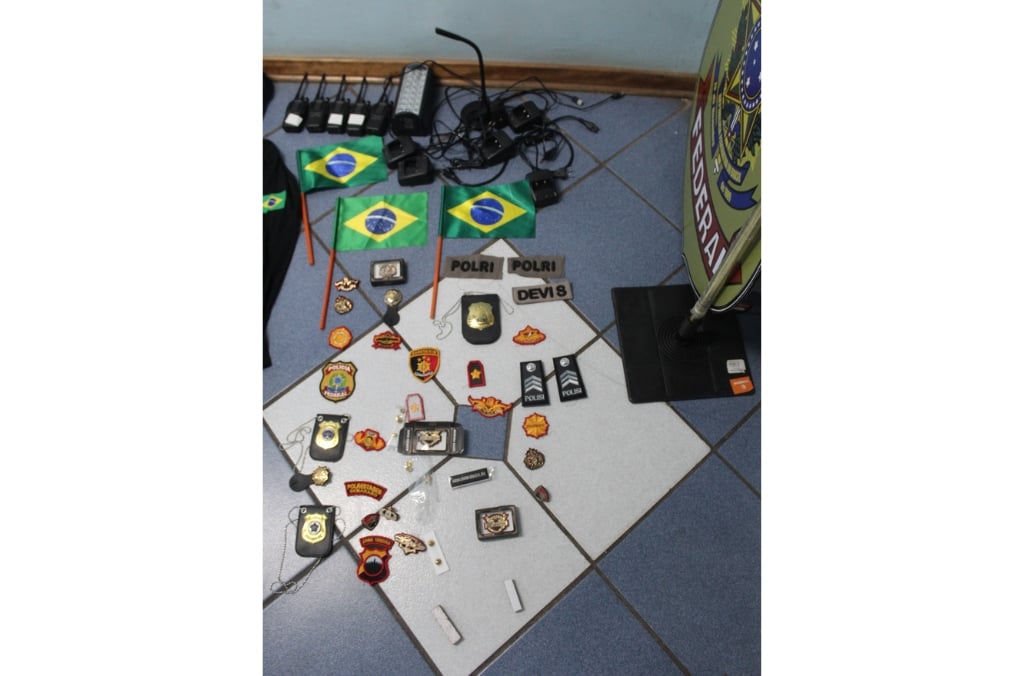
Seized items from an Eswatini scam centre (fake uniforms, electronic devices) recovered during INTERPOL’s Operation First Light — visual evidence of physical scam hubs that feed proceeds into virtual wallets. — Source: INTERPOL
Centralized choke points vs open protocols
There’s a tension here. Centralized platforms can enforce KYC, Travel Rule payloads, and sanctions screening. That makes them the natural choke points. But liquidity lives across both CeFi and DeFi, and criminals exploit open rails that don’t have an operator to subpoena.
What works is layered pressure. Exchanges shut doors on high-risk flows. Payment processors and banks raise questions at fiat edges. National units coordinate faster. When these align, you see outcomes like the 5,811 arrests and USD 293 million intercept reported in July’s global fraud sweep (INTERPOL).
On the policy side, FATF’s update is blunt: legal adoption rose to 83% of surveyed jurisdictions, but without active supervision and actual cases, criminals will keep exploiting the quiet corridors (Comsure (reporting FATF)).
Pitfalls and red flags to watch
- Assuming Travel Rule = solved. If counterparties can’t receive payloads or your jurisdiction isn’t enforcing, you still have blind spots.
- Over-reliance on address blacklists. Criminals rotate infrastructure. Proximity and behavior analytics matter more than static lists.
- Treating stablecoins as low risk by default. They’re convenient for launderers because price doesn’t move while they reroute.
- Ignoring cross-chain traces. Dirty funds rarely arrive straight. Missing the bridge hop breaks your context.
- Manual fallbacks without guardrails. If staff are copy-pasting ownership attestations, audits will be painful and attackers will notice.
- Underpowered SAR feedback loop. Filing without learning means the same patterns keep slipping through.
If you want more ongoing coverage, analysis, and context as this story shifts, we track these developments closely at Crypto Daily.
Frequently Asked Questions
What exactly did the FATF publish in July 2026?
It’s the seventh targeted update on how countries and VASPs are implementing FATF Standards for virtual assets. The report checks on Travel Rule adoption and highlights real-world abuse cases and enforcement patterns (Comsure (reporting FATF)).
Is the Travel Rule now universal in crypto?
No. While 83% of surveyed jurisdictions report Travel Rule laws on the books, the bigger issue is enforcement and functional interoperability. Only about 40% of jurisdictions with laws reported supervisory or enforcement action in the latest update (Comsure (reporting FATF)).
How do criminals move “billions” in practice?
They chain together methods: account takeovers or scams feed funds into fresh wallets, then comes cross-chain hops, DEX swaps, peel chains, and sometimes mixers. The cash-out often relies on OTC brokers or exchanges with weak checks. FATF’s update cites a Cambodia-based financial group laundering at least 4 billion dollars over several years to illustrate the scale (LexisNexis (reporting FATF)).
Are mixers illegal everywhere?
No. Legality varies by jurisdiction. Some mixers or privacy tools have been sanctioned or prosecuted when tied to crime, while others remain legal to use. From a compliance view, deposits with close mixer exposure warrant holds and enhanced review.
What role do global operations like INTERPOL’s play?
They connect the dots across borders, freezing funds and arresting people who operate mule networks, scam call centers, or laundering hubs. Operation First Light in July 2026 reported 5,811 arrests and USD 293 million intercepted, including actions on virtual wallets (INTERPOL).
What should an exchange do if counterparties won’t support Travel Rule messaging?
Use a documented fallback: secure portals or attestations with additional KYC checks, longer settlement windows, and defined thresholds. Risk-tier the counterparty and shorten the manual lane as they adopt interoperable solutions or as regulators start testing for compliance.
Is crypto becoming unusable for privacy-conscious but lawful users?
Not necessarily. The direction of travel is more data sharing between VASPs and stronger controls at off-ramps. Lawful users still have options, but expect added friction on cross-border transfers and closer scrutiny where signals resemble known laundering routes.
Disclaimer: This article is provided for informational purposes only. It is not offered or intended to be used as legal, tax, investment, financial, or other advice.
Related Stories