Are Memecoins Dead? Institutional Trading Changes Liquidity
 Ethan Caldwell
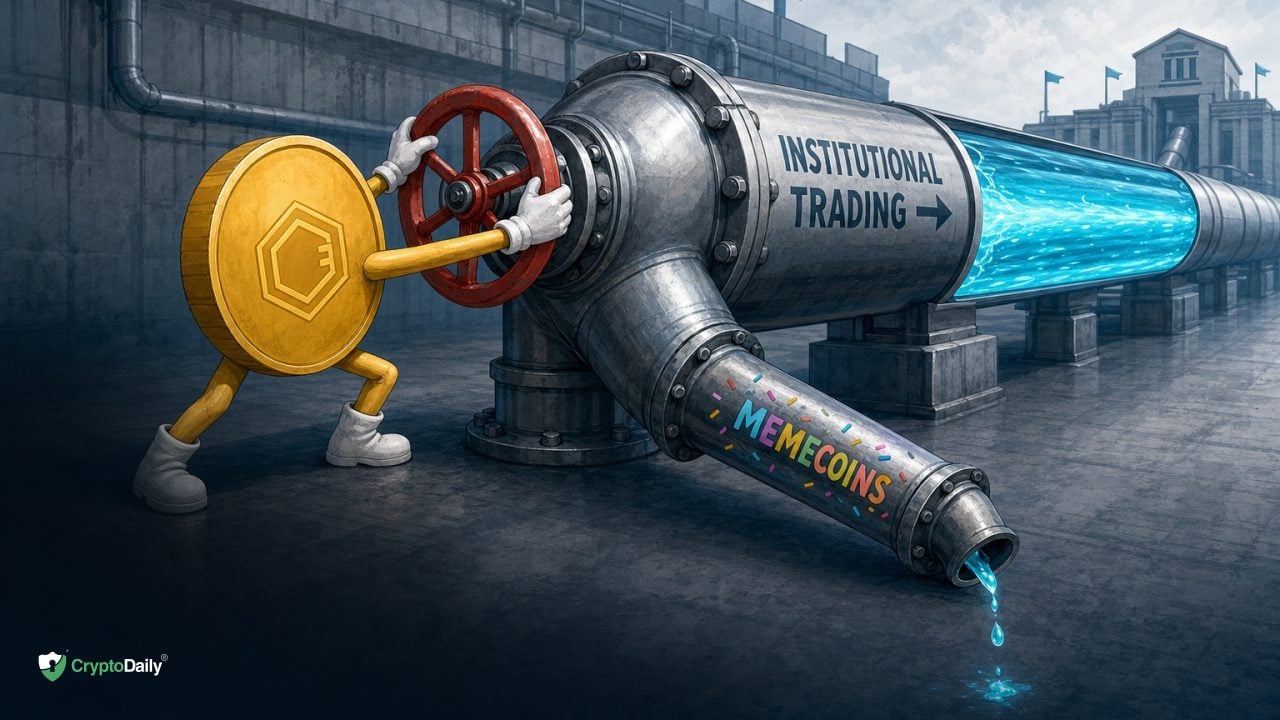
Memecoins aren’t gone, but the ground under them moved. If you’ve felt your fills get weirder, spreads change, and liquidity show up in odd places, you’re not imagining it. Institutions are changing how crypto trades, which changes what survives, where you can trade it, and how much it costs to get in or out.
This piece breaks down what actually shifted in 2026, why the big dog coins look tired while tiny tickers still moon and crash, and how to read liquidity before you click buy. We’ll look at risks that got louder, where the opportunities might still hide, and a simple checklist for staying out of trouble.
Short version, memecoins didn’t die. They migrated, fragmented, and professionalized, which sounds boring until you realize it’s exactly what drives the next wave of volatility.
Quick Answer
Editor's note: In Q1 and Q2 2026 I saw two things that changed my playbook. First, ETF-driven flow concentrated depth in BTC and ETH during US hours, which made my small-cap trades feel thinner and more binary. Second, tokenized equity venues woke up in June, and the liquidity there was finally tradeable. Meanwhile, the Robinhood Chain memecoin surge was real, but exits were tricky if you bridged late. I kept positions smaller, tested routes with dust, and watched governance like a hawk after the BonkDAO incident reminded everyone how social attack surfaces can be just as costly as code bugs. — Ethan Caldwell
No, memecoins aren’t dead. They’re evolving in a market that’s now shaped by ETFs, structured flow, and real-world-asset tokenization. Large caps like DOGE and SHIB lost relative share, while hyperlocal casino coins keep churning on new rails. Liquidity didn’t vanish, it moved and got picky.
- DOGE and SHIB’s combined cap fell to about $13.27 billion, a three-year low and roughly 1.02 percent versus Bitcoin’s value share (CoinDesk (Daybook)).
- Robinhood Chain, a new L2, reportedly clears more than $800 million a day on DEXs, mostly memecoins (CoinDesk).
- Institutional desks are rotating into tokenized equities, which saw a 145 percent jump in June to a record $3.86 billion in volume (CoinDesk Research).
- Risk isn’t lower. BonkDAO’s governance attack drained roughly $20 million after an attacker bought just over 1 percent of supply to pass a malicious proposal (CoinDesk).
What actually changed in crypto liquidity this year?
Two shifts landed at once. First, structured money came back. With spot ETFs and more conservative mandates in play, a lot of flow concentrates in BTC and ETH, and it behaves in a more programmatic way during the trading week. That tightens spreads at the top and drains speculative oxygen from the long tail, at least on main venues.
Second, institutions are finally experimenting with real-world-asset rails in size. On-chain trading of tokenized equities surged 145 percent in June to a $3.86 billion monthly record, according to CoinDesk Research. That rotation doesn’t directly kill memecoins, but it does pull liquidity and attention toward assets with clearer cash flow stories or equity narratives. The net effect is fewer casual bids under large memecoins and spikier microstructure in the tail.
Put simply, the top of the market got deeper and more orderly. The lower tiers got thinner, faster, and more segmented by chain and time of day.
Did memecoins die or just change address?
They moved. Liquidity hunts for the easiest path to trade, get attention, and cash out. In 2026 a big chunk of that action migrated to new venues and rails that reduce friction for retail style flows. The clearest example is Robinhood Chain, a layer 2 launched July 1, that was reportedly doing more than $800 million a day on DEXs, mostly memecoins (CoinDesk).
That doesn’t mean Solana, Base, or Ethereum mainnet lost the script. It means the casino keeps opening new rooms. Each room has different liquidity quirks, MEV dynamics, and exit doors. Some chains lean into social discovery and low fees, which breeds faster pump-and-dump cycles. Others have tighter rails, which slow the churn but can also trap you in thin books after the first hour of hype.
If it feels like memecoins are quieter on the big exchanges, it’s mostly optics. A lot of the noise moved on-chain or into L2s that your favorite price index doesn’t weight heavily yet.
Why are DOGE and SHIB slumping while new tickers still pop?
Brand memecoins trade like celebrity stocks. They need fresh narratives and big marginal buyers. In 2026 those buyers got more selective. DOGE and SHIB’s combined market cap sliding to roughly $13.27 billion and a record low 1.02 percent versus Bitcoin’s size tells you two things: Bitcoin dominance rose and the casual flow that once refilled the dog bowl is now elsewhere (CoinDesk (Daybook)).
New small-cap memecoins can still fly because they don’t need much capital to move. A few whales, a small pool, and a weekend narrative can turn into a 10x candle. But those same coins can round-trip just as fast. The market is rewarding speed, distribution chops, and being early to a new rail, not necessarily brand heritage.
This divergence is normal in a maturing market. The flagship memes get treated like mid-caps with options and perps, while the frontier stuff behaves like OTC biotech. Same category, totally different mechanics.
How does the new market structure impact slippage and fills?
When liquidity concentrates at the top, the bottom fragment. You see it in two places: your price impact on entry and how fast you can exit without wrecking your own trade. On DEXs, your slippage is a function of pool depth and who’s arbitraging you. On CEXs, it’s about order book density and whether market makers care to be there that day.
Here’s a rough comparison to ground expectations. These are general patterns, not guarantees.
| Venue or asset | Typical spread | Depth within 1% | Who’s on the other side | MEV risk | Rug/governance risk |
|---|---|---|---|---|---|
| BTC/ETH on major CEX | Very tight | Deep | Professional MMs, funds | Low | Low |
| DOGE/SHIB on CEX | Moderate | Variable, time dependent | MMs, retail | Low | Low to medium |
| New memes on L2 DEX | Wide | Shallow | Whales, bots | High | High |
| Tokenized equities on-chain | Tightening | Improving | Arb desks, niche funds | Medium | Protocol/legal dependencies |
What do you do with this? Size positions with your exit in mind. If your trade needs a 10 percent move just to cover slippage and fees, you’re playing a different game than you were in 2021. Also, watch time of day. Liquidity clumps around US market hours for anything that institutions touch, then drifts to weekends for memecoins.

What risks got louder in 2026?
Governance capture, for one. In early July an attacker reportedly spent around $4.4 million to buy just over 1 percent of BONK supply, used it to pass a malicious proposal, and drained roughly $20 million from BonkDAO’s treasury (CoinDesk). That’s not a smart contract bug. That’s social engineering wrapped in token economics.
Bridge risk is still there, especially if you’re hopping to newer L2s just to chase mint windows. And MEV isn’t going away. If you place big market buys in thin pools, you’re handing edge to searchers who can sandwich you for breakfast.
Pro tip: If a token’s governance can move treasury funds, your capital is downstream of that decision. Read the quorum rules, delegation patterns, and who can fast-track proposals before you size up.
Last, regulatory and listing risk can freeze liquidity for days. If a venue pauses deposits or a token gets swept into a surprise enforcement narrative, your “paper thin” exit turns into “no exit until Monday.”
Where’s the opportunity if you still want exposure?
Chasing every new ticker is optional. You can approach memecoins like event-driven trades. Focus on catalysts that create real order flow rather than just hashtags. New chain launches with built-in retail funnels are one of them. Robinhood Chain’s early days showed exactly that, with more than $800 million in daily DEX turnover and a lot of it in memes (CoinDesk).
Another angle is to lean into the institutional rotation itself. On-chain tokenized equities are getting real volumes now, as noted by CoinDesk Research. That doesn’t make them safer by default, but it means the flows are there. If you want volatility with better depth, this lane might fit your risk tolerance better than brand-new meme tickers.
- Checklist for positioning in this market:
- Define your exit criteria before entry, including slippage thresholds.
- Trade when depth is best, not when you’re most excited. Check overlapping US and EU hours.
- Favor venues with clear bridging and settlement paths you’ve tested with small sizes.
- When chasing new memes, cap your size to what you can exit into 5 percent slippage.
- Track governance power maps for any token that can move treasury or upgrade contracts.
And yes, sometimes the best trade is to do nothing for three days while a chain digests a big launch. The second wave can be cleaner than the opening candle.
How do you check liquidity before you click buy?
You don’t need a quant stack. You need a 10 minute routine that keeps you out of the worst traps. Here’s a simple flow that works across DEXs and CEXs.
- Open the pool or order book and test a dummy order. Note the price impact for 1 percent, 3 percent, 5 percent of your intended size.
- Chart volume by hour over the last week. Make sure you’re not buying into the quietest window.
- On DEXs, read the top holders. If the top 10 own more than half the supply, know that exits will be crowded.
- Scan for trading pairs. If the token only trades against a wrapped asset with limited bridges, your exit path narrows in a crunch.
- Run quotes on two aggregators and one native router. If they disagree wildly, a bot made a map of you already.
- Check recent governance proposals or admin keys. Time locks and multi-sigs are not perfect, but they are not the same as “trusted dev.”
If you can’t get confident in ten minutes, you can always skip it. You’re saving capital for when the odds tilt in your favor.
Common Mistakes
- Buying large caps for small-cap behavior. DOGE and SHIB won’t move like microcaps without a fresh catalyst. Size and expectations should match reality.
- Ignoring time windows. Liquidity now clumps around institutional hours. If you trade outside those, bake in more slippage and thinner books.
- Bridging blind to chase a launch. Test the bridge with a tiny amount first. Confirm return routes and gas before committing size.
- Skipping governance due diligence. If a DAO can move millions with a low quorum, you’re underwriting that risk, as the BonkDAO incident showed.
- Letting aggregators auto-route everything. Sometimes a native pool has better depth. Always compare routes and fees.
- Assuming attention equals exit. Trending feeds can fill the top of the candle, not the bottom where you’re trying to sell.
If you want daily market structure reads and nuanced takes without the hype, Crypto Daily covers the moving parts in plain English. Visit Crypto Daily for more on liquidity shifts, on-chain flows, and what they mean for real traders.
Frequently Asked Questions
Are memecoins now correlated with BTC and ETH because of ETF flows?
Day to day, big memecoins like DOGE and SHIB can shadow BTC and ETH when macro headlines hit, but microcaps still trade on local catalysts. ETFs deepen top-tier liquidity and pull attention to majors during US market hours. Outside those windows, memecoins can decouple and move on their own stories.
Do institutions actually trade memecoins?
Most regulated desks avoid smaller memes due to mandate limits, custody policies, and reputational risk. Some prop shops and crypto-native funds will trade them opportunistically, but the bulk of institutional capital sits in BTC, ETH, basis trades, and increasingly in tokenized real-world assets where mandates allow.
Is Robinhood Chain safe to use for memecoins?
Safety depends on bridges, wallets, and the specific contracts you touch. The reported liquidity is real enough to move prices, but new L2s can have immature tooling and evolving MEV dynamics. If you go there, start with small tests, learn the fee model, and double-check bridge routes in and out before trading size.
Why do memecoins pump on weekends?
Because institutional capital is less active then, and retail-style flows face fewer competing agendas. Thin liquidity plus focused attention can make prices move faster. The trade-off is worse exit quality if you’re caught on the wrong side of a fast dump.
How do I spot a potential governance attack early?
Watch proposal thresholds, delegation changes, and sudden concentration of votes around a new wallet. Low quorums and fast execution windows are red flags. If a treasury or upgrade key can move with minimal oversight, size down or skip. The BonkDAO episode is a reminder that governance is a live attack surface.
Do tokenized equities reduce crypto risk?
They shift it. You swap some smart contract or meme risk for legal, issuer, and oracle dependencies. The upside is growing depth and possibly tighter spreads as more professional desks join, as seen in June’s record $3.86 billion month reported by CoinDesk Research.
What’s the single best way to avoid bad fills?
Simulate your exit first. Put a small test order through the same venue, at the same time window, and note the slippage. If the dummy order looks ugly, assume your real exit will too and adjust or pass.
Disclaimer: This article is provided for informational purposes only. It is not offered or intended to be used as legal, tax, investment, financial, or other advice.
Related Stories