AI Crypto Trading Agents: What They Can and Cannot Do
 Elliot Veynor
Your friend swears his new AI bot “prints” on alt pairs while he sleeps. The next morning he’s staring at a red PnL and a pile of taker fees. If you’ve been around crypto long enough, you’ve seen this movie. Smart code. Dumb market.
AI trading agents are having a moment again. Demos look slick. Chat prompts spin up strategies in minutes. But when you push them into real markets with slippage, fees, and spiky liquidity, the story changes fast.
So let’s strip it down. What these agents do well, where they break, and how to use them without torching your stack.
AI is seeping into the trading stack. Not just for signals, but for research, code scaffolding, execution hints, and compliance monitoring. Still, full end-to-end autonomy remains the exception, not the rule.
In its July 2026 Financial Stability Report, the Bank of England flagged a simple reality: firms are mostly pointing AI at lower risk work today - research, coding support, surveillance - rather than letting it fully run portfolios (Bank of England — Financial Stability Report).
Most live stacks are “AI-assisted” rather than “AI-directed.” The human remains the portfolio manager. The agent is a tool, not a boss.
That balance exists for a reason. Crypto’s microstructure is hostile to naive automation. Latency games, fee drag, fragmented liquidity, and sudden regime shifts punish models that look great on static charts. Meanwhile, audits keep finding edge cases that push agents off the rails.
What an AI trading agent actually does today
Forget the hype. A practical crypto agent is a pipeline: pull data, generate a view, place or adjust orders, and watch risk. Most “AI” in the wild is a glue layer that speeds up these steps and keeps them in sync.
Data and signals
Agents ingest market data - candles, order books, funding, perp basis, on-chain flows if you wire that in - then spit out scores like “buy small,” “flatten,” or “rebalance to neutral.” Sometimes it’s a simple feature model. Sometimes it’s an LLM that interprets news and tags risk.
Execution and routing
From signals to trades, the agent handles order slicing, venue selection, and pacing. It might favor maker orders during quiet periods, or flip to taker during breakouts. When it works, you get better average fills than manual clicks.
Monitoring and guardrails
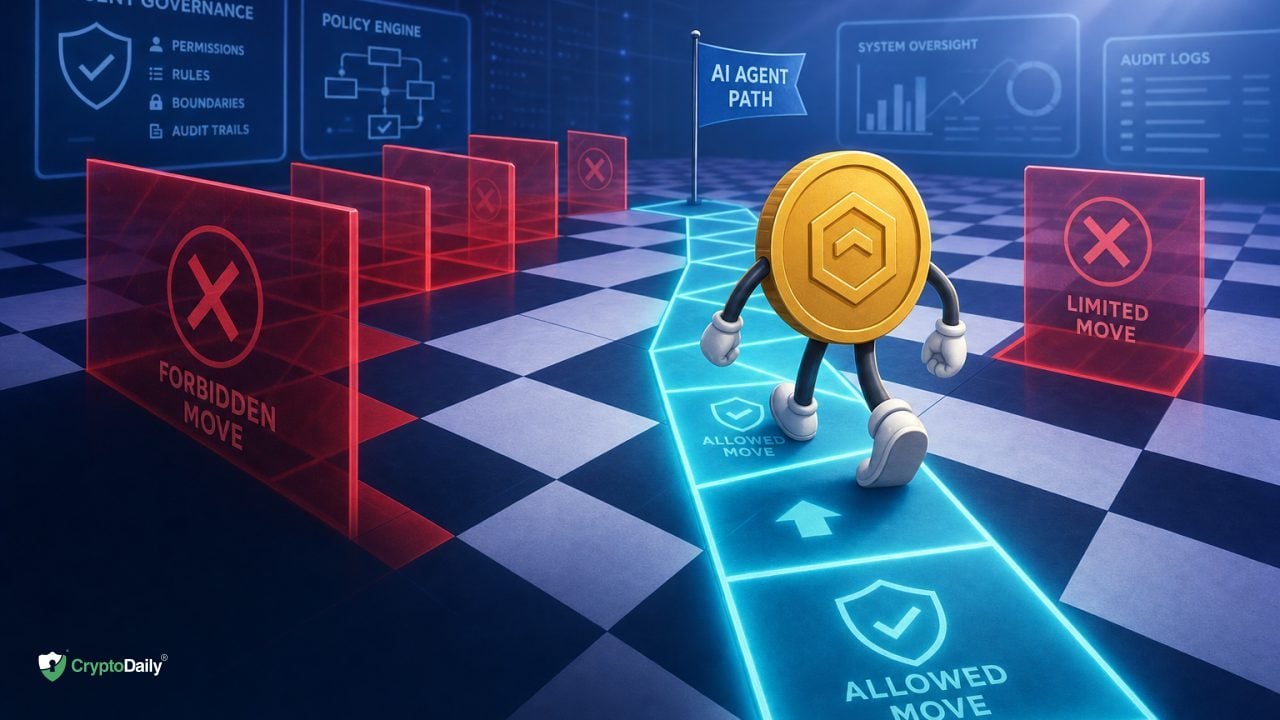
Position limits, daily loss caps, inventory skew, and circuit breakers live here. The agent raises flags when slippage jumps or when a venue’s book thins out. In sane setups, the bot can only trade inside a sandbox of max size and leverage.
A minimal shipping checklist
- Define the agent’s remit: instruments, size limits, and time-of-day rules.
- Wire data with redundancy: two feeds per venue where possible.
- Backtest with realistic costs and partial fills, not fantasy fills.
- Dry run in paper or shadow mode behind a human for 2 to 4 weeks.
- Start live tiny. Track realized slippage by venue and by hour.
- Set kill-switches: drawdown limits, position ceilings, API key rotation.
- Review weekly. If the thesis drifts, pause. Don’t let it “learn” itself into a hole.
Where they actually shine right now
Research amplifier
Give an agent a clean brief and it can comb disclosures, pull historical metrics, cluster events, and summarize narratives at a speed that turns hours into minutes. That lines up with what the Bank of England observed - AI is paying its rent in research and surveillance first (Bank of England — Financial Stability Report).
Coding and backtest scaffolding
LLM copilots crank out indicator code, data loaders, and test harnesses fast. That’s not alpha. It is productivity. A senior quant spends more time on assumptions. The machine handles boilerplate.
Surveillance and policy checks
From exchange status and API health to KYC flags and net exposure, an agent can watch the boring stuff without blinking. It does not get tired at 3 a.m. - a big win for 24-7 markets.

Where they stumble in crypto markets
Here’s the part people feel on day three of live trading.
Costs crush pretty pictures
A July 2026 audit of candle-based ML selectors on Binance spot found negative executable policy value in simulation. One unchanged daily selector across ten pairs lost 6.72 percent over 19 July cycles at an assumed 31 bps completed-cycle cost (arXiv — Predictive Extrema, Unprofitable Policies (Ayoub Jadouli)). Translation: frictions ate the edge. If your agent leans on frequent switching or chases tiny signals, costs will likely eat you too.
Overfitting to calm regimes
Agents trained on long stretches of range-bound chop often blow up on regime flips. Crypto gives you quiet books that snap into panic in seconds. If your model never saw that, it will do the wrong thing at the worst time.
Liquidity is patchy and adversarial
What looks like depth can be ghost liquidity. Post-only orders get stepped over. Hidden and iceberg interest moves the mid. If your execution logic is naive, you end up buying highs and selling lows, all while paying taker fees.
| What AI agents can do reliably | What they usually cannot do yet |
|---|---|
| Automate research digests and data labeling | Run fully autonomous multi-venue portfolios without human review |
| Generate and refactor backtest code fast | Turn backtest alpha into live alpha without cost modeling |
| Execute small orders in stable liquidity windows | Consistently beat seasoned execution algos in volatile regimes |
| Flag anomalies in API health and position risk | Explain causality for sudden market regime shifts in real time |
| Standardize playbooks and guardrail enforcement | Self-correct bias or drift without explicit constraints |
Bias, guardrails, and alignment
LLMs are not blank slates. They carry statistical preferences that can bleed into allocation. A July 2026 paper showed that manipulating an internal feature in a financial LLM causally shifted Bitcoin weights. Amplification boosted BTC share by 5.2 percentage points. Suppression cut it by 4.6 points (arXiv — Auditing Asset-Specific Preferences in Financial LLMs (Wenbin Wu)).
If your agent is deciding between BTC and ETH tilt from prose or news, that hidden bias can move real money. You may think you are neutral. The model may not be.
Practical alignment steps
- Force allocation caps per asset and per sector. No single name creeps above a hard ceiling.
- Require dual triggers. News-based signals must agree with at least one quant feature.
- Log rationales. Make the agent write a short reason for each tilt in plain text for audit.
- Randomize small decisions. Break ties with controlled randomness to avoid deterministic ruts.
- Run A-B live tests. Compare a bias-audited agent versus vanilla to measure drift.
- Retrain on rolled windows and stress sets with crash and illiquidity scenarios.
Building a realistic agent stack
Do not start with “make money.” Start with problems the agent can own without wrecking the car. Think surfacing anomalies, staging orders, and enforcing rules. Then step it up.
Scope it like a product, not a science project
Pick two instruments. Pick one venue. Cap size to what the book can swallow quietly. Measure everything - quote-to-fill times, slippage by hour, cancel-to-fill ratios.
Architecture options
| Layer | DIY | Managed / SaaS | Notes |
|---|---|---|---|
| Market data | Direct exchange websockets, self-hosted cache | Aggregators with normalized feeds | Redundancy matters more than model choice |
| Signal engine | In-house features and LLM prompts | Plug-in strategy marketplace | Beware black-box vendors and survivorship bias |
| Execution | Custom slicers, venue scorers | Broker algos with smart order routing | Costs and fills decide outcomes here |
| Risk and limits | Local rules with circuit breakers | Custodian or broker risk layer | Keep a hard kill-switch you control |
| Monitoring | Grafana-style dashboards, pager duty | Hosted alerts and audit trails | Record everything for post-mortems |
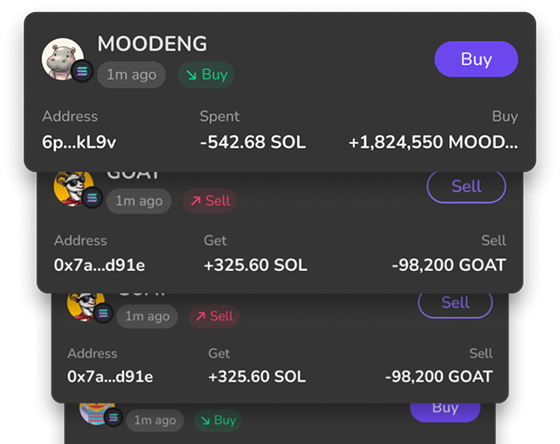
Wallet V app screenshot showing agent trade cards and the platform’s cohort metrics (e.g., 688 agents, 42% profitable, peak ROI +307%), illustrating how AI agent performance and UX are presented to users. — Source: Wallet V (walletv.io)
Implications for different players
Retail and small desks
Use agents to remove busywork and to enforce discipline. Let them stage orders and say “no” when you try to revenge trade. Keep strategies simple, costs low, and position sizes tiny until live stats earn trust.
Funds and market makers
AI is already useful for signal triage and code acceleration. The frontier is execution. If your desk has venue relationships, fee tiers, and colocation, an agent can coordinate across venues for real savings. The tricky bit is model governance and auditability.
Exchanges and brokers
Your customers will connect agents, so expose safer primitives: pre-trade checks, post-only hints, and sandbox environments. Publish fill quality metrics. The better your transparency, the smarter the agents get without over-trading your book.
Risks & What Could Go Wrong
- Fee and slippage underestimation. Backtests that ignore partial fills or queue position will overstate edge and flip negative live.
- Hidden model bias. LLM preferences for certain assets can skew allocation without you noticing, as recent audits showed.
- Data and venue outages. A single broken websocket can cascade into bad orders and forced liquidations.
- Prompt injection and jailbreaks. If your agent reads external text, adversarial content can flip behavior.
- Key and permission sprawl. Over-privileged API keys turn mistakes into disasters.
- Regulatory surprises. New rules on automation, copy trading, or robo-advice can change what is allowed in your region.
- Governance theater. Writing “risk policy” is easy. Enforcing kill-switches at 3 a.m. is the test.
Assume the agent will do the worst possible thing once. Architect so that once is survivable.
If you want a steady stream of context without the noise, Crypto Daily tracks the mix of AI, market microstructure, and policy in one place. Worth keeping on your radar: Crypto Daily.
Frequently Asked Questions
Are AI crypto trading agents profitable right now?
Some are, some are not. The line often comes down to costs and execution quality. A July 2026 audit of candle-based ML selectors on Binance spot showed negative value after realistic costs, with a daily selector losing 6.72 percent over 19 cycles at 31 bps per round trip (arXiv — Predictive Extrema, Unprofitable Policies). Use that as a reminder to model friction ruthlessly.
Can I let an AI agent trade fully autonomously?
You can, but most firms are not doing that at scale today. The Bank of England noted that as of early 2026, AI is more often used for research, coding, and surveillance than for running portfolios end-to-end (Bank of England — Financial Stability Report). A human-in-the-loop remains common sense.
How do I stop LLM bias from skewing allocations?
Set explicit caps per asset, require dual confirmation between text signals and quant features, and log rationales. A July 2026 study showed that tweaking an internal LLM feature shifted Bitcoin portfolio share by about 5 percentage points either way, so treat bias as measurable and controllable (arXiv — Auditing Asset-Specific Preferences).
What backtest settings matter most in crypto?
Use venue-specific fees and maker-taker tiers, enforce partial fills and queue priority, add slippage that scales with size, and simulate outages. If you do not, your “edge” is likely just an accounting error.
Do agents need on-chain data or is market data enough?
Market data gets you far for short-horizon execution. On-chain flows and wallet heuristics can help for event risk and cross-venue positioning, but they add complexity and latency. Start simple, then add signals with clear lift.
Which pairs are safer for beginner agents?
High-liquidity majors with stable books are more forgiving for small size. Thin long-tail tokens magnify slippage and spoof risk. Even on majors, keep size modest until your realized costs and error rates are stable.
What is a reasonable rollout plan?
Paper trade for a few weeks, then go live with minimal size and tight risk limits. Review daily for the first month. If the agent earns its keep after costs and survives a volatility spike, scale one notch at a time.
Disclaimer: This article is provided for informational purposes only. It is not offered or intended to be used as legal, tax, investment, financial, or other advice.
Related Stories