Is Singapore Slowly Becoming a Top Tier Web3 Incubator?
 Laurie Dunn
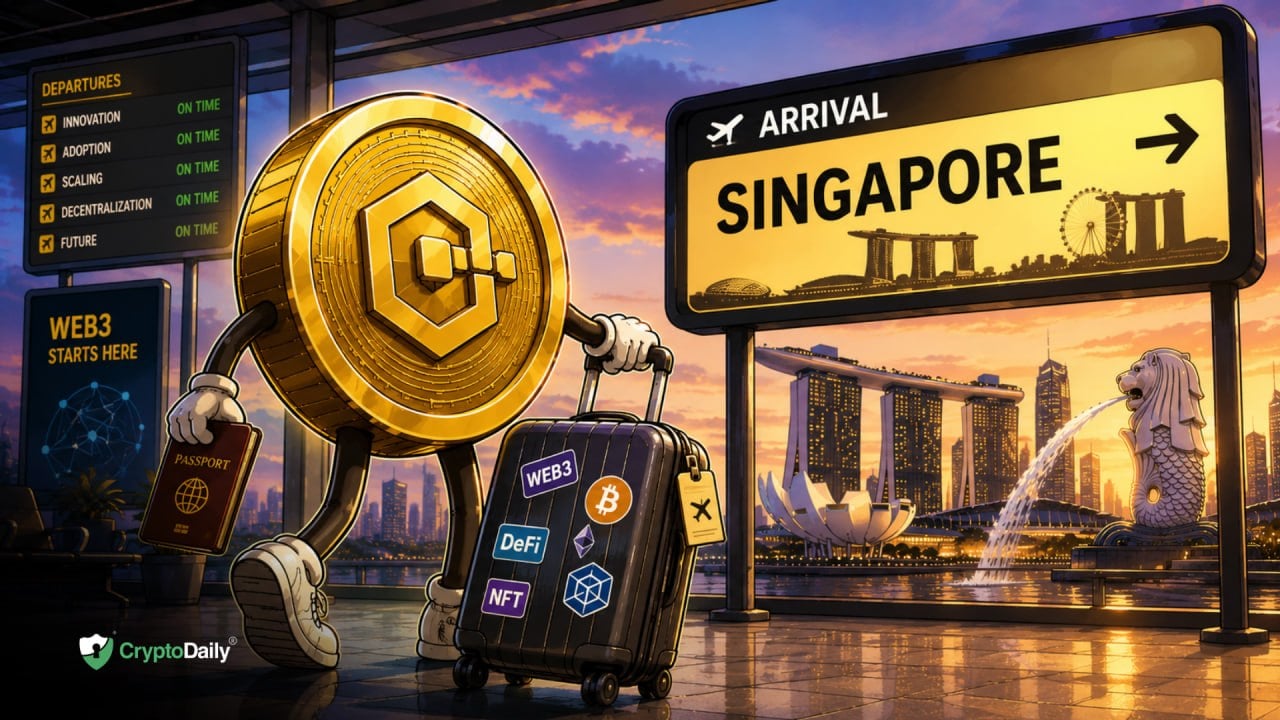
North America innovates, Europe regulates, Asia adopts and scales up — that’s how the Web3 market feels these days, with Singapore and its laws on crypto slowly becoming a Tier-1 business incubator for Blockchain-related startups. Read on to learn why and how Singapore kicks the Web3 sector into motion.
Why has Singapore become a hotspot for Web3 Innovation?
Investment influx. The bull market of 2021 drove $1.48B+ in funding to Singapore’s Blockchain and Crypto sector, amounting for half of the total Asia-Pacific venture capital. According to KPMG, 6% of global crypto funds were located in Singapore, keeping toe to toe with Switzerland and Hong Kong.
Entire tech sectors started to move: Dyson moved HQ to Singapore, Huobi Group moved its HQ from China, imToken followed and did the same, GuardforceAI, and even Crypto.com all moved to Singapore. The crypto ownership rate in the region changed from 11% to 24% in just under a year.
Money moves following crackdowns. After China started to crack down on mining and crypto trading in 2021, capital started to change geolocations. After the FSMA act, institutions followed, and in 2022 Paxos received regulatory approval to work in Singapore.
Three Arrows Capital collapse in 2022 inspired motivation to change. To ensure appropriate regulatory measures, the Monetary Authority of Singapore (MAS) introduced new legislation. Single-Currency Stablecoin (SCS) and Digital Payment Token (DPT) frameworks were set up. The goal was to make the region safer for broader investors to participate in, and it made Singapore a hotspot for Web3 and Blockchain talent seeking regulatory certainty.
In 2023 Singapore became the country of choice for blockchain and crypto-related startups. After moving in, Crypto.com established an R&D Lab in Singapore which aimed to build blockchain tech, expand on Web3 core ideas, and research the potential for AI. In October of the same year, cryptocurrency exchange LocalTrade followed the relocation trend and moved its HQ to Singapore after its Linkomo acquisition.
What makes Singapore a sought after Web3 hub?
The Managing Director of the Monetary Authority of Singapore (MAS) said it best in his 2022 speech, when he remarked:
"Yes to digital asset innovation, no to cryptocurrency speculation."
Instead of over-regulation, Singapore chooses innovation by building one of the world’s most transparent licensing frameworks for digital payment token service providers under the supervision of the MAS.
In just 3 years Singapore adopted the Single-Currency Stablecoin (SCS) — the basis for the legality of stablecoin issuers of the likes of Circle and Tether. The next step was the Digital Payment Token (DTP) framework, which ensured that every crypto-related operation would benefit from regulatory uncertainty. Without regulatory risks, the sector became a prime location for long-term planning, without the risk of losing business to overbearing governments.
Smart Money Hotspot. A high concentration of ‘smart money’ finishes the Incubator cycle in Singapore. The total AUM of investment funds based in Singapore reached $4T+, with over 1029 registered funds. Among them are big names like Antler, Temasek Holdings, Vertex Ventures, Jungle Ventures and CIG. With the largest concentration of venture capital funds, family offices and financial institutions, Singapore creates the breeding grounds for high level tech companies.
Trend — Asia moves at the speed of market innovations
After Singapore was established as a regulatory safe haven for Web3 innovations, strategic acquisitions followed. The crypto market moves fast, and so companies found ways to adapt by acquiring established exchanges, digital asset infrastructure, and crucial ecosystem projects.
The development of ecosystem expansion via acquisitions:
-
2022. Circle acquired Cybavo, a Singapore-based enterprise-grade asset cybersecurity and custody project, pioneering the Infrastructure-as-a-Service approach;
-
2023. Treehouse acquired NFT analytics platform Origins. Thanks to its on-chain and off-chain data analysis capabilities, Origins helped to reinforce the Treehouse Hyperion portfolio management platform, and thereby satisfy the NFT exposure demands of its clients;
-
2023. Fireblocks Singapore bought BlockFold, a smart-contract developer with expertise in tokenization, crucial for Fireblock's approach to multi-signature and fund management;
-
End of 2023. Singapore-based software developer Linkomo acquires LocalTrade, a cryptocurrency exchange platform, in order to meet goals for its 2026-2027 roadmap. The acquisition aimed to bolster Linkomo’s ecosystem with trading products, and provide secure financial services in the region.
Singapore just makes sense from a long-term standpoint for Web3 projects. The Monetary Authority of Singapore is for innovation and progress, contrary to the draconian anti-crypto measures taken by China. Instead, legal frameworks and policies that only reinforce the opportunities for growth instead of blocking them, plus safe and fully regulated access to venture capital, makes it easier to secure investment.
The formula other regions should follow is simple: transparent and fair crypto laws, policies aimed at growth rather than control, and innovative investment hubs. Singapore has proved this is possible, potentially offering a template for the future of Web3 that all countries can follow.
Disclaimer: This article is provided for informational purposes only. It is not offered or intended to be used as legal, tax, investment, financial, or other advice.
Related Stories